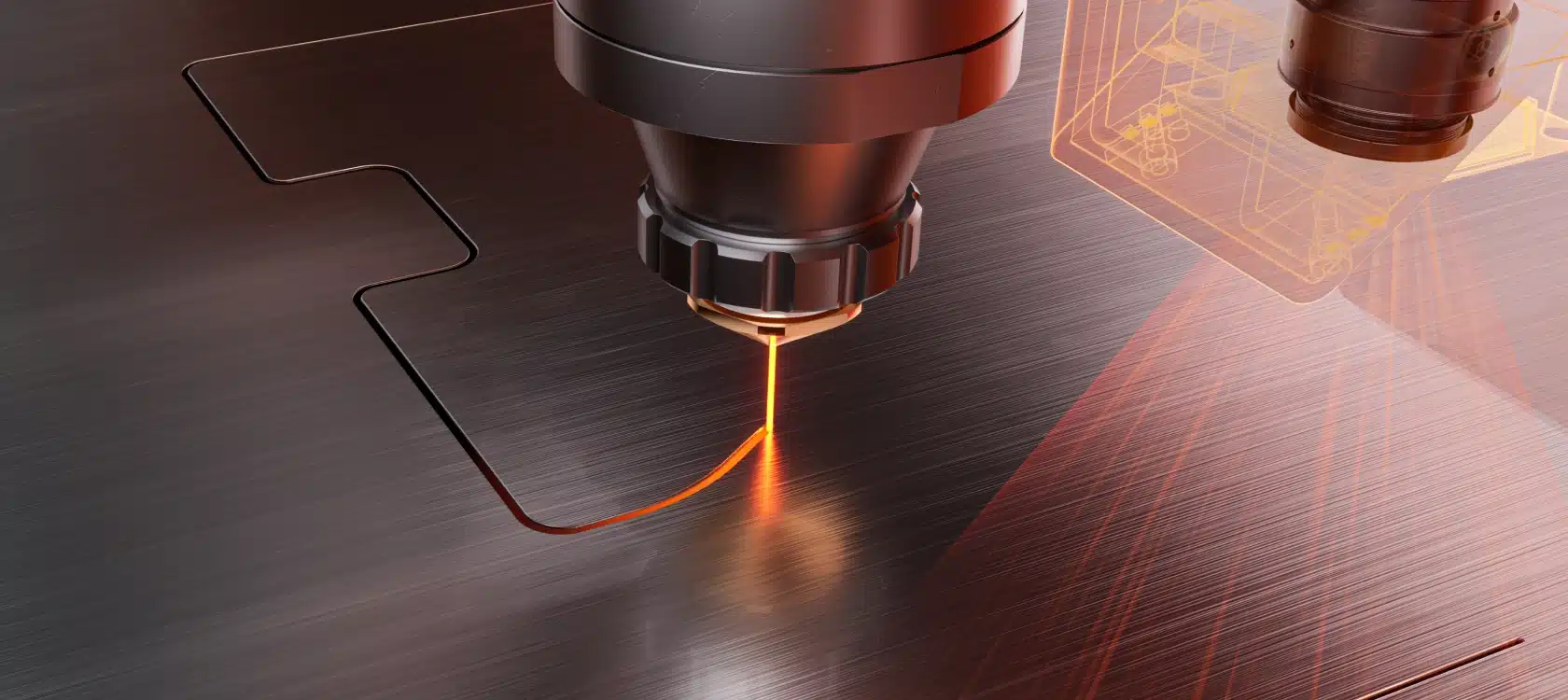
Fiber laser technology has displaced plasma, waterjet, and CO₂ laser as the default choice for metal cutting across most industrial sectors in Canada. But "fiber laser cuts metal" is not a useful spec. This guide breaks down where fiber laser excels by industry and application type, and where you should still consider alternatives.
Materials Fiber Laser Cuts Well
Fiber laser is optimized for conductive metals. The 1.06 µm wavelength is absorbed efficiently by all common industrial metals:
- Mild steel (S235, A36, A572): The primary application for most job shops. Excellent speed and edge quality from 1mm to 25mm+.
- Stainless steel (304, 316, 430): Clean, bright edges with nitrogen assist. No scale or discoloration.
- Aluminum (5052, 6061, 3003): Very high cutting speeds on thin gauge. High-power machines handle up to 30mm.
- Copper and brass: Challenging reflective metals that require specialized cutting heads and parameters, but achievable at medium power levels.
- Titanium and high-alloy steels: Handled well with correct assist gas and parameters.
Fiber laser cannot cut non-metals: wood, acrylic, PVC, glass, leather, foam, or composites. For these materials, CO₂ laser remains the appropriate technology. Do not attempt to cut PVC with any laser — it releases toxic chlorine gas.
Industry Applications
HVAC and Sheet Metal Fabrication
High-volume thin-gauge cutting — ductwork flanges, brackets, panels, and fittings — is the highest-volume application for fiber laser in Canada. Typical material is 16–22 gauge mild steel or galvanized, where fiber laser speed advantages over CO₂ are most pronounced. Shops running HVAC components see 40–60% productivity increases versus prior-generation CO₂ systems.
Automotive Parts Manufacturing
Body panels, chassis components, engine brackets, heat shields, and structural reinforcements. The combination of tight tolerances (±0.05mm), clean edges (no secondary finishing before welding), and automation compatibility makes fiber laser the default for tier-2 and tier-3 automotive suppliers.
Agricultural Equipment
Farm equipment manufacturing requires heavy-gauge mild steel cutting — implements, buckets, structural frames, guards. High-power fiber lasers (12kW+) are replacing plasma in this sector due to better edge quality and the ability to cut thinner gauges on the same machine without re-setup.
Signage and Architectural Metalwork
Decorative cutting, lettering, grilles, screens, and custom architectural panels. Fiber laser delivers the detail and clean edges needed for visible metalwork. Stainless steel and aluminum are common materials in this sector.
Fitness Equipment and Consumer Products
Tubular steel frames, brackets, and sheet metal components for fitness and consumer product manufacturing run well on fiber laser. The tube cutting attachment (common on many production machines) handles round, square, and rectangular tube without dedicated tube laser investment.
Where to Consider Alternatives
- Waterjet: For materials that cannot tolerate any heat-affected zone (hardened tool steel, tempered glass composites), waterjet remains the right choice.
- Plasma: Still cost-competitive for very thick structural steel (40mm+) in low-tolerance applications where edge quality is secondary to cut cost.
- CO₂ laser: Remains relevant for non-metal cutting (acrylic, wood, foam) and for shops with existing CO₂ infrastructure and light workloads.
For most Canadian metal fabrication shops cutting steel, stainless, and aluminum in the 1–25mm range, fiber laser is the correct technology. The remaining decision is power level and automation level — not technology choice.