Energy costs are one of the top operating expenses for Canadian metal fabrication shops — and one of the clearest financial arguments for switching from CO₂ laser or plasma to fiber laser technology. Fiber lasers are 30–50% electro-optically efficient. CO₂ lasers are 5–10%. That gap compounds into real money over a machine's working life.
Why Fiber Lasers Use Less Energy
A CO₂ laser generates its cutting beam by exciting a gas mixture (CO₂, nitrogen, helium) using high-voltage RF discharge. Roughly 90% of the input electrical energy is lost as heat. A fiber laser generates its beam by passing diode light through a ytterbium-doped optical fiber — converting electricity to laser light at 30–50% efficiency with very little waste heat.
The practical result: a 6kW fiber laser draws roughly 18–22 kW total load (laser source plus chiller). An equivalent-output CO₂ laser draws 40–60 kW or more.
| Machine Type | Electrical Draw (6kW output) | Wall-Plug Efficiency | Monthly Power Cost (1 shift) |
|---|---|---|---|
| Fiber Laser (6kW) | 18–22 kW | 30–50% | ~$500–$700 CAD |
| CO₂ Laser (6kW) | 40–60 kW | 5–10% | ~$1,100–$1,600 CAD |
| Plasma (equivalent cut area) | 25–40 kW | N/A | ~$700–$1,100 CAD |
For a single-shift operation, switching from CO₂ to fiber laser saves approximately $7,000–$11,000 per year in electricity alone at Ontario industrial rates. For two shifts, double that figure.
Assist Gas: The Hidden Energy Cost
Beyond electricity, assist gas is the second major variable operating cost. Fiber lasers can use compressed air as an assist gas for thin steel and aluminum — CO₂ lasers generally cannot achieve acceptable edge quality with air. Compressed air costs $0.03–$0.05/m³ versus $0.15–$0.30/m³ for nitrogen.
For shops cutting significant volumes of thin mild steel or aluminum, switching to air-assist cutting alone can save $500–$2,000/month in gas costs.
Maintenance Energy: No Laser Gas, No Cooling Gas
CO₂ lasers consume laser gas (CO₂ / N₂ / He mixture) continuously — this is not a trivial cost, often running $3,000–$8,000/year for a mid-size system. Fiber lasers have no laser gas. The optical fiber is a solid-state medium that requires no replenishment over the machine's service life.
Real-World Savings for Canadian Shops
Rise Tek has tracked energy and operating cost data across dozens of Canadian installations. The consistent finding:
- Shops upgrading from CO₂ laser to fiber laser reduce total operating costs by 40–60%
- Shops replacing plasma with fiber laser see mixed results on electricity (plasma is sometimes comparable), but eliminate dross removal labor and post-processing time
- The payback on the energy savings component alone typically covers 15–25% of the machine's purchase price over a 5-year horizon
Energy savings are not the reason to buy a fiber laser — speed and quality are. But they are a material factor in the ROI calculation that many shops underestimate.
The Bodor P-Series: High Power, High Efficiency
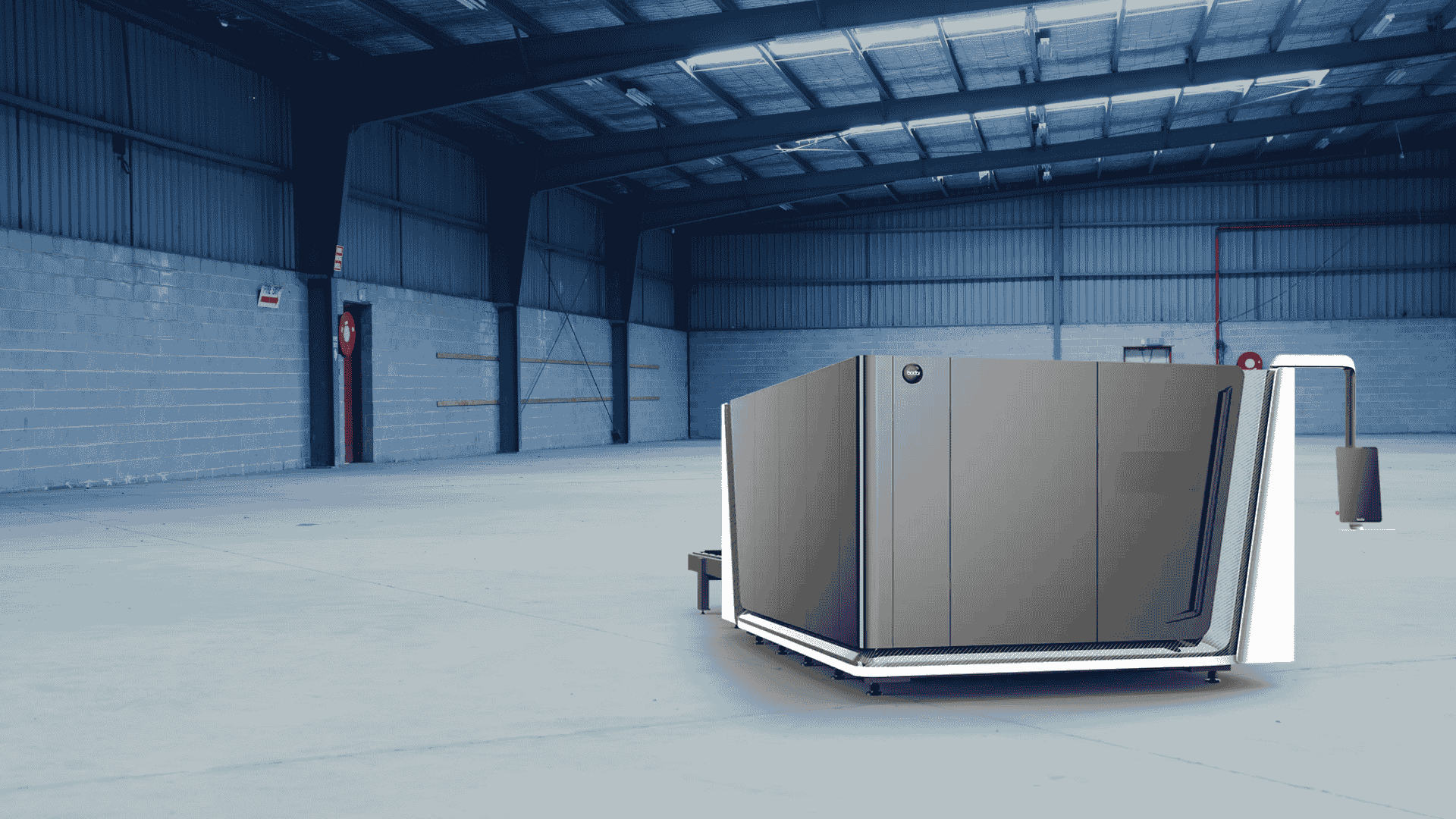
Rise Tek's P-Series machines (6kW through 40kW) are designed for continuous high-power cutting with efficient thermal management. The water chiller circuit is sized to minimize cooling overhead, and the servo drive system recovers regenerative braking energy during deceleration — small savings that add up over millions of cutting cycles.