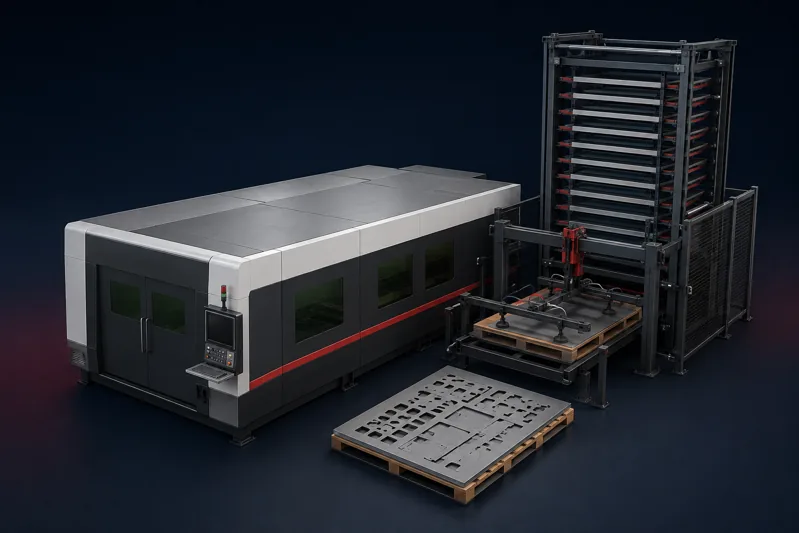
A fiber laser installation checklist should start with the exact machine configuration, approved site drawings and a written division of responsibilities. Before delivery, confirm access, placement, utilities and the people responsible for commissioning. A machine that fits the available floor space can still require changes to material flow, electrical service or extraction.
This guide helps Canadian fabrication shops organize the buying and preparation process. It is a planning checklist, not an installation procedure. Electrical, structural, gas and extraction requirements must come from the selected equipment documentation and the qualified professionals responsible for the site.
1. Freeze the configuration before preparing the shop
Record the model, laser source, cutting-bed size, enclosure, exchange table and any loading or storage equipment. Include the chiller and extraction system in the layout. Ask which dimensions describe the machine itself and which describe the complete operating area.
Bring three representative jobs to the discussion: your most common sheet, your largest regular part and the job that is hardest to unload. Walk through how each enters the building, reaches the cutting table and moves to the next operation. This exposes handling questions that a rectangle on a floor plan cannot answer.
If the configuration is still uncertain, start with the fiber laser buying guide and ask for the layout associated with the quoted options.
2. Confirm the site against the manufacturer's requirements
Manufacturer guidance illustrates why requirements cannot be transferred from one installation to another. Mazak discusses model-specific layouts, electrical arrangements, air quality and assist-gas connections. Haas also publishes laser pre-installation requirements and distinguishes installation costs from machine price. Use the documentation for the machine you are actually buying: Mazak checklist and Haas pre-installation guide.
| Confirm | Record before delivery |
|---|---|
| Delivery and rigging | Route, access dimensions, unloading plan and responsible contractor. |
| Layout and floor | Approved drawing, foundation review and operating/service clearances. |
| Electrical service | Equipment requirements and qualified electrician's site assessment. |
| Gas and compressed air | Required supply specifications and responsibility for connections. |
| Cooling and extraction | Equipment, routing and site requirements confirmed with the supplier. |
| Material handling | Storage, loading, unloading and scrap routes. |
Assign an owner and completion date to each row. Keep the latest approved drawing with the checklist; a drawing for an earlier configuration can create avoidable rework. Ask the supplier to confirm any proposed substitution before purchasing supporting equipment.
3. Put responsibilities into the quote
Separate machine delivery, unloading, placement, utility work, commissioning and operator training. For each item, identify who performs the work, who pays and what must be finished first. Ask what happens if a required contractor or utility connection is unavailable on the scheduled date.
Do not assume that “installation included” means building modifications or rigging are included. Use our fiber laser quote-comparison checklist to record exclusions and unresolved items.
4. Agree on first-production acceptance
Choose representative drawings, material grades, thicknesses and finish requirements before the commissioning visit. Agree how the results will be measured and recorded. Keep cutting time separate from the complete job cycle, including programming, loading, unloading and any secondary finishing.
Arrange operator availability and record the topics to be covered in training. At handover, collect the applicable manuals, maintenance instructions, software information and support contact details. Record outstanding work with an owner and target date rather than relying on a verbal understanding.
Questions to resolve before ordering
Can I prepare the floor before selecting the model?
You can assess space and delivery access, but do not finalize construction from a generic layout. Obtain the selected configuration's drawings and have site requirements reviewed by the appropriate professionals.
How long will installation take?
Ask for a schedule tied to your machine, site readiness and training scope. A useful schedule identifies prerequisites and responsibilities; a generic number of days does not establish when your shop can start production.
What should I send with an enquiry?
Include your material range, representative drawings, planned location, available floor plan and target timing. These details help frame a productive discussion about the machine options and the information still needed.