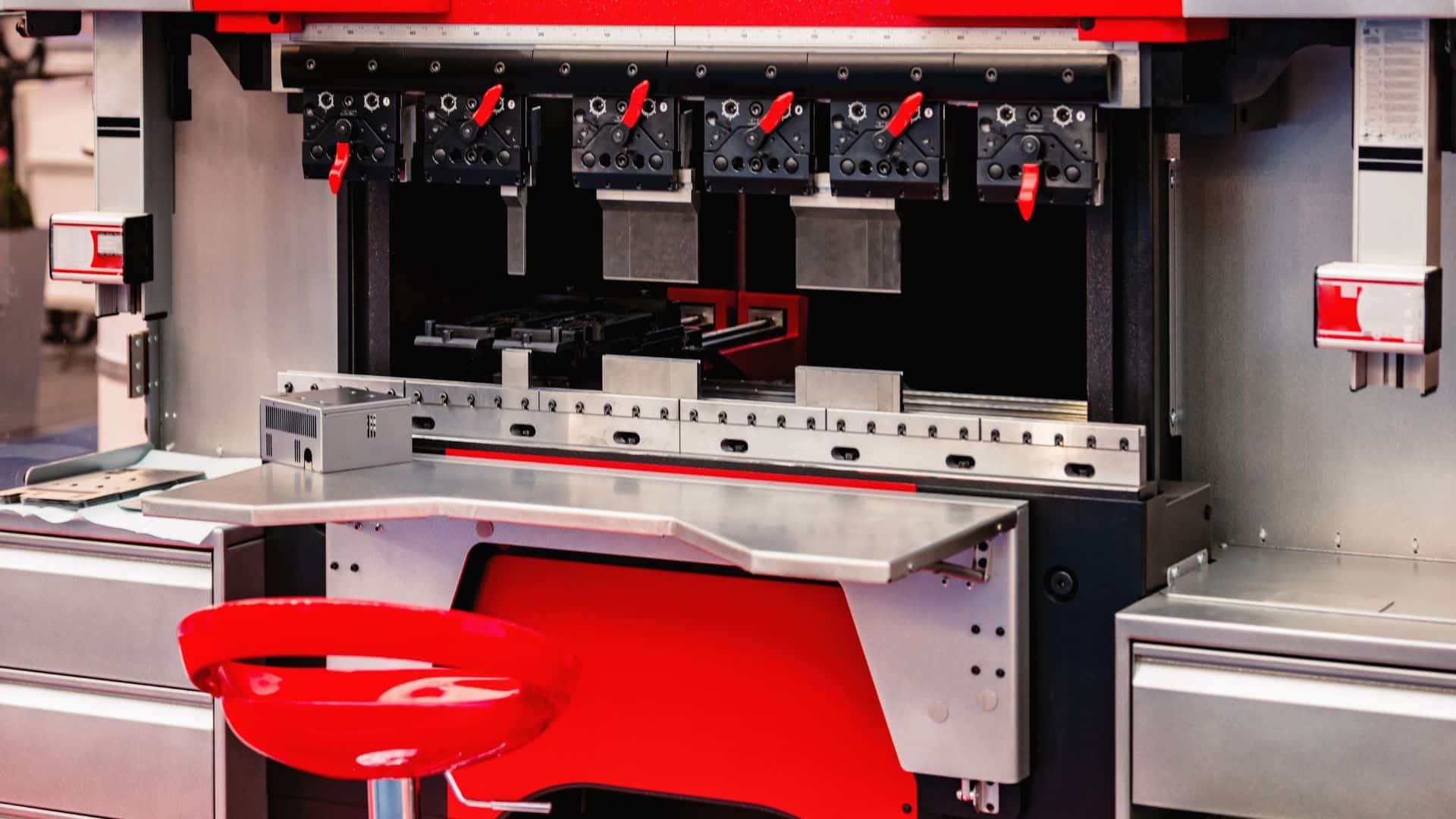
The press brake is one of the oldest tools in metal fabrication — and one of the most transformed by modern automation technology. In the past decade, the combination of servo-electric drives, offline programming, robotic tending, and real-time sensing has converted what was traditionally a skilled-labor-intensive operation into a high-precision, high-throughput manufacturing process. Here are the six technologies making the biggest impact in Canadian shops today.
1. Robotic Press Brake Automation
Industrial robots are now a mature, cost-accessible technology for press brake tending. A robotic cell handles part feeding, flipping, and stacking — allowing a single CNC press brake to run continuously through a shift with minimal operator intervention. Modern robotic bending cells from providers like Dener and Bystronic include vision-guided gripping that adapts to part variation without reprogramming.
- Best suited for: high-volume, repetitive parts with consistent geometry
- ROI driver: eliminates operator fatigue errors and enables multi-machine management
- Payback: typically 18–36 months for high-volume shops
2. Servo-Electric Press Brakes
Traditional hydraulic press brakes use a constant-running hydraulic pump. Servo-electric drives activate only when bending force is required — consuming up to 50% less energy than hydraulic equivalents. The additional benefit is precision: electric servo drives achieve positioning accuracy of ±0.01mm, versus ±0.05mm for standard hydraulic systems.
Servo-electric press brakes consume 30–50% less electricity than hydraulic equivalents. For a shop running two shifts, annual energy savings of $3,000–$8,000 CAD per machine are common.
3. Offline Programming and Simulation
Offline programming software (DELEM, CypBend, Bend-Tech) allows operators to program bending sequences on a workstation, simulate the full bending process virtually, and transfer the proven program to the machine — eliminating physical setup trials and the associated material waste.
- Reduces first-article setup time by 40–70% on complex parts
- Identifies tooling and sequence conflicts before the first bend
- Programs can be stored and recalled instantly for repeat jobs
4. Automatic Tool Changers
For shops running high-mix production, automatic tool changers eliminate the manual time required to swap punches and dies between jobs. Robotic tool changers can reconfigure the press brake tooling in under two minutes — a setup that would take an experienced operator 15–30 minutes manually.
This technology is most impactful for shops running 10+ different part families per day, where setup time consumes a significant fraction of available machine hours.
5. Autonomous Safety Systems
Modern press brakes incorporate laser-based safety systems (AKAS, Fiessler) that monitor the closing zone in real time and adjust ram speed or stop the press based on tooling configuration and detected obstructions. Unlike older fixed-speed safety systems, autonomous safety adjusts automatically when tooling changes — reducing the setup risk that accompanies frequent tool changes.
6. Data Analytics and Machine Monitoring
Production monitoring software connected to CNC press brakes tracks actual vs. programmed cycle times, bend angle deviations, and maintenance intervals. Shops using production monitoring report 10–20% utilization improvements simply from visibility into where machine time is going — idle between jobs, setup time, operator-caused delays, or actual bending time.
Automation in press brake operations does not replace skilled operators — it multiplies their output. The best results come from experienced operators who can manage robotic cells and offline programming, not from replacing bending expertise entirely.
Which Technology Should Your Shop Invest In First?
If you are running high-mix, low-volume production — offline programming delivers the fastest ROI. If you're running repetitive medium-to-high volume — robotic tending pays off first. Servo-electric machines are the right choice for any new press brake purchase, regardless of volume. The energy savings and precision advantages are built in from day one.