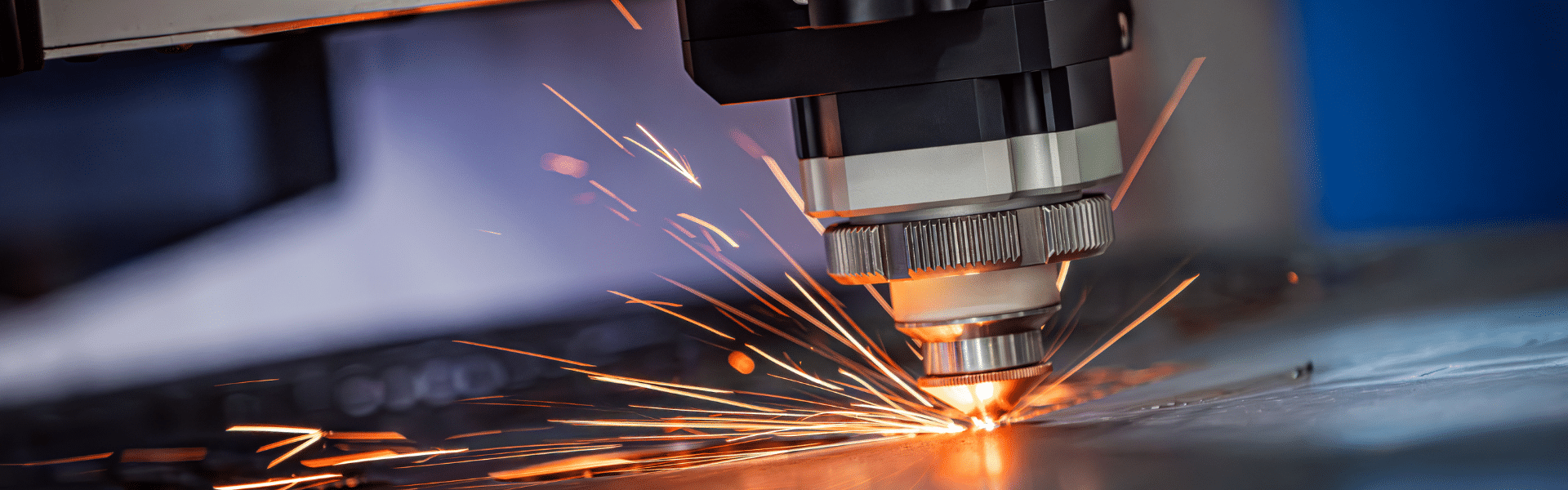
Power is the number that shows up first on every fiber laser spec sheet — and it is the decision that determines maximum cutting thickness, cutting speed, and total machine cost. Choose too little and you hit the ceiling on your first heavy job. Choose too much and you've spent $80,000–$120,000 more than the work requires.
The right answer depends entirely on your materials, your thickest part, and how many hours a day you run the machine. This guide walks through what each power class actually delivers — with cutting thickness limits, speed comparison tables, and a clear framework for matching power to your shop's needs.
How Fiber Laser Power Translates to Cutting Capability
A fiber laser's rated power — 3kW, 6kW, 12kW — is the continuous output power of the laser source delivered to the cutting head. More power means two things: higher maximum cutting thickness and faster cutting speed at every thickness.
The relationship is not linear. Going from 3kW to 6kW roughly doubles cutting speed on material above 4mm, but going from 6kW to 12kW adds less than double again — diminishing returns set in as the material's thermal conductivity becomes the limiting factor rather than available laser power.
Assist gas also plays a major role. Oxygen reacts with mild steel, adding combustion energy that extends effective cutting depth well beyond what the laser alone would achieve at a given power class. Nitrogen and air are inert — they blow the melt out of the kerf but add no energy, so thickness limits are lower. This means a 6kW machine with oxygen can cut mild steel that would require 12kW+ with nitrogen.
The Power Tiers: What Each Class Delivers
1.5kW – 2kW
- Mild steel to ~8mm (O&sub2;)
- Stainless to ~4mm (N&sub2;)
- Aluminum to ~3mm (N&sub2;)
- Lowest machine cost
- Thin sheet only — prototyping, signage, HVAC light gauge
3kW
- Mild steel to ~16mm (O&sub2;)
- Stainless to ~8mm (N&sub2;)
- Aluminum to ~6mm (N&sub2;)
- Moderate cost premium over 1.5kW
- Light-to-medium fabrication, mixed gauges
6kW
- Mild steel to ~25mm (O&sub2;)
- Stainless to ~15mm (N&sub2;)
- Aluminum to ~12mm (N&sub2;)
- Most common Canadian shop specification
- Full mixed-gauge capability, structural to medium plate
12kW
- Mild steel to ~40mm (O&sub2;)
- Stainless to ~20mm (N&sub2;)
- Aluminum to ~16mm (N&sub2;)
- ~2× faster than 6kW on 6–12mm material
- Production shops, heavy fabrication, two-shift operations
Cutting Speed Comparison by Material and Thickness
The table below shows approximate cutting speeds in metres per minute. These are production-representative speeds at standard parameters — actual speeds vary by machine model, head design, assist gas pressure, and cut quality requirements. Speeds marked — indicate the thickness is beyond practical capability at that power level.
Mild Steel — Oxygen Assist
| Thickness | 1.5kW | 3kW | 6kW | 12kW |
|---|---|---|---|---|
| 2mm | 8 m/min | 12 m/min | 18 m/min | 22 m/min |
| 4mm | 3.5 m/min | 6.5 m/min | 11 m/min | 17 m/min |
| 6mm | 1.5 m/min | 3.5 m/min | 6.5 m/min | 11 m/min |
| 10mm | — | 1.2 m/min | 3.5 m/min | 6.5 m/min |
| 16mm | — | 0.4 m/min | 1.5 m/min | 3.5 m/min |
| 20mm | — | — | 0.8 m/min | 1.8 m/min |
| 25mm | — | — | 0.4 m/min | 1.0 m/min |
Stainless Steel (304) — Nitrogen Assist
| Thickness | 1.5kW | 3kW | 6kW | 12kW |
|---|---|---|---|---|
| 1mm | 18 m/min | 30 m/min | 45 m/min | 50+ m/min |
| 3mm | 2.5 m/min | 5.5 m/min | 10 m/min | 18 m/min |
| 6mm | — | 1.5 m/min | 4.0 m/min | 7.5 m/min |
| 10mm | — | — | 1.2 m/min | 3.0 m/min |
| 15mm | — | — | 0.4 m/min | 1.2 m/min |
Aluminum — Nitrogen Assist
| Thickness | 1.5kW | 3kW | 6kW | 12kW |
|---|---|---|---|---|
| 2mm | 5 m/min | 10 m/min | 18 m/min | 30 m/min |
| 4mm | 1.8 m/min | 4.5 m/min | 9 m/min | 17 m/min |
| 6mm | — | 2.0 m/min | 5.5 m/min | 10 m/min |
| 10mm | — | — | 2.0 m/min | 4.5 m/min |
| 12mm | — | — | 1.0 m/min | 3.0 m/min |
On 1–2mm material, a 6kW machine and a 12kW machine may produce similar cycle times. At thin gauges, the cutting head acceleration, corner deceleration, and pierce time account for a large fraction of total cycle time — not the linear cutting speed. Higher power's throughput advantage is most pronounced on material 4mm and thicker, where the actual cutting feed rate dominates the job time.
The Assist Gas Decision: Oxygen, Nitrogen, or Air
Your assist gas strategy directly affects which power class makes sense for your shop. The three options produce fundamentally different results.
Oxygen — Reactive Assist for Mild Steel
Oxygen reacts with the iron in mild steel, adding combustion energy at the cut zone. This allows a lower-power laser to cut thicker mild steel than it could with nitrogen. A 6kW machine with oxygen can cut 25mm mild steel — material that would require 10–12kW with nitrogen. The edge carries a thin oxide layer (dark surface on the cut face) which is acceptable for structural and industrial applications but requires cleaning before painting or plating.
Nitrogen — Clean Edge, No Oxidation
Nitrogen is used to limit oxidation at the cut edge. Select gas purity, pressure and cutting parameters from the machine supplier's guidance for the material and required finish. Confirm any cleaning or finishing requirements with the downstream process; a bright cut edge does not establish that every part is ready for welding, painting or plating.
Compressed Air — Confirm Process Suitability
Compressed-air cutting is an option on some machine configurations. Its suitability depends on the material, thickness, approved process parameters and acceptable edge condition. Do not assume that it is universally suitable or unsuitable for a material: validate the proposed process with the supplier and representative sample parts. Include compression, drying and filtration in any cost comparison.
If your production requires nitrogen, compare delivered gas with on-site generation using quoted equipment costs, required purity, flow and utilization. A generator changes the supply arrangement; it does not eliminate electricity, maintenance or gas-quality requirements.
Process reference: TRUMPF laser-cutting overview. Confirm settings with the supplier of your specific machine.
20kW and Beyond: When Is Ultra-High Power Justified?
At 20kW and above, fiber laser begins to compete with plasma cutting on thick mild steel plate — producing laser-quality edges at speeds approaching plasma throughput. The business case for 20kW+ requires:
- Heavy plate as a primary product — regular cutting of 20mm+ mild steel, or 15mm+ stainless
- Two-shift or three-shift operation — the machine cost premium requires high utilization to achieve ROI
- Automation integration — at this power level and speed, manual load/unload becomes the bottleneck; a loading tower or FMS system is typically paired with the machine
- Replacing multiple plasma tables — the economics improve sharply when the fiber laser consolidates two or three plasma cutting operations
For the majority of Canadian fabrication shops, 6kW is the practical ceiling where ROI is clearest. Shops with regular heavy plate requirements should evaluate 12kW. 20kW+ is a specialized investment suited to dedicated heavy plate operations.
5-Question Decision Framework
Run through these five questions to narrow the power class that fits your operation:
1. Thickest Material
What is the thickest piece you will regularly cut? Identify the material type and thickness, then check the speed table above. If your maximum is 10mm mild steel, 6kW is sufficient. Above 16mm regular plate work, evaluate 12kW.
2. Primary Material
Mild steel with oxygen extends cutting range significantly. If you predominantly cut stainless or aluminum, you need more raw power — the reactive assist advantage doesn't apply. Stainless-heavy shops should size up by one class.
3. Daily Hours of Cutting
Single-shift shops with moderate volume can justify 3kW or 6kW. Two-shift shops running mixed plate work need 6kW minimum. If the machine will run 16+ hours per day, the speed premium of 12kW pays back in additional parts per shift.
4. Thin Sheet Fraction
If 80%+ of your work is 1–3mm sheet metal, a 3kW machine does nearly everything a 6kW does on thin gauge — at lower machine cost and operating cost. The 6kW advantage is on material above 3mm.
5. Growth Trajectory
Size for your mix in 3 years, not today. A shop adding structural fabrication to an existing sheet metal business typically grows into 6–10mm material within two years of acquiring a fiber laser. Buy one class higher than your current worst case.
Simple Summary
Thin sheet only (under 6mm): 3kW. Mixed production (1–12mm): 6kW. Heavy plate or high volume (10mm+ regular): 12kW. Industrial heavy plate: 20kW+.
Rise Tek's Han's Laser Lineup in Canada
Rise Tek Machinery is the authorized Canadian dealer for Han's Laser fiber laser cutting systems — one of the world's largest laser equipment manufacturers, with machines operating across automotive, aerospace, structural fabrication, and precision sheet metal industries globally.
Our most commonly specified configurations for Canadian fabricators:
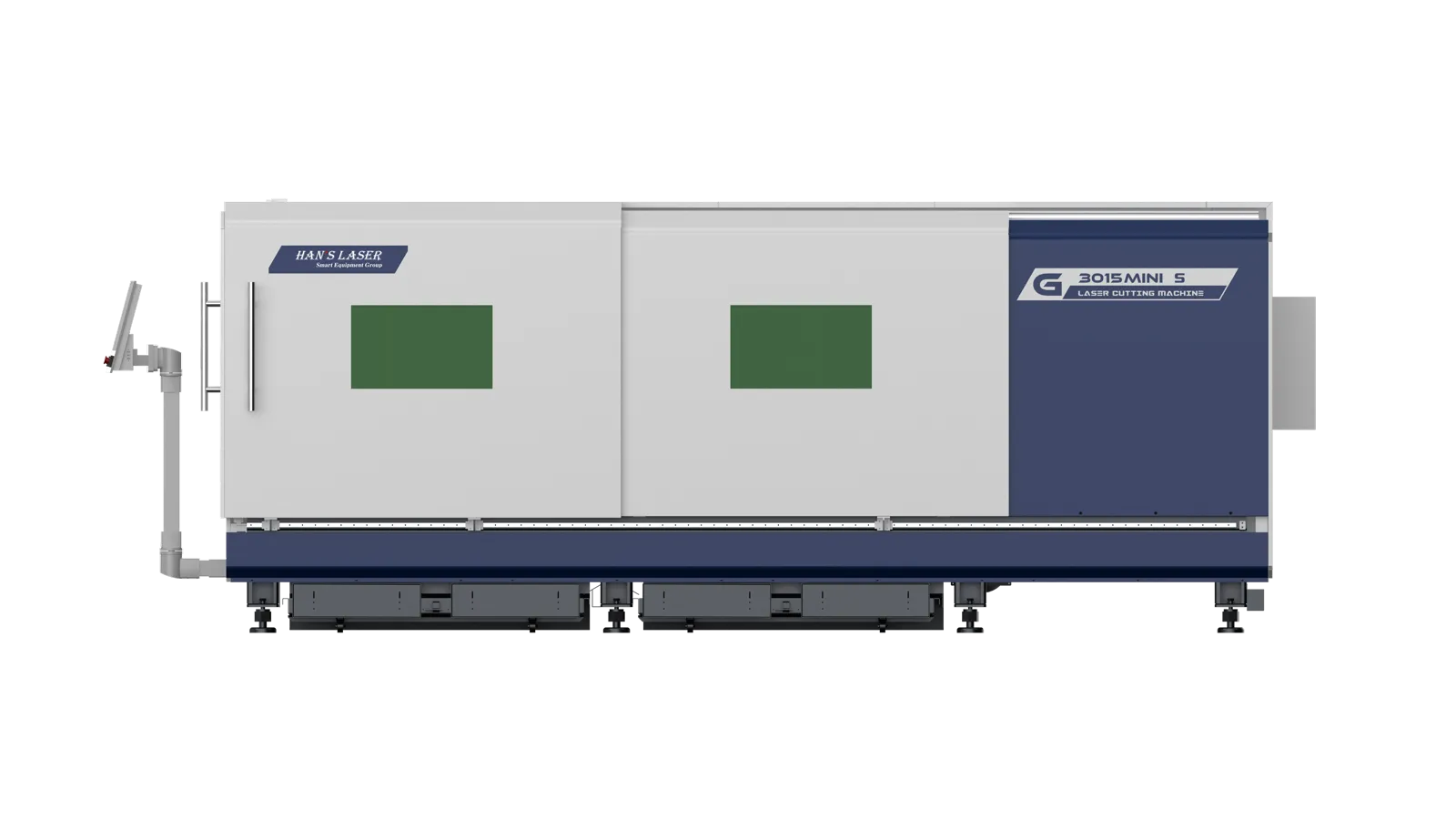
- Han's Laser G3015 Mini S (1.5–3kW) — compact footprint, suited to smaller shops, prototyping, thin-gauge dedicated production
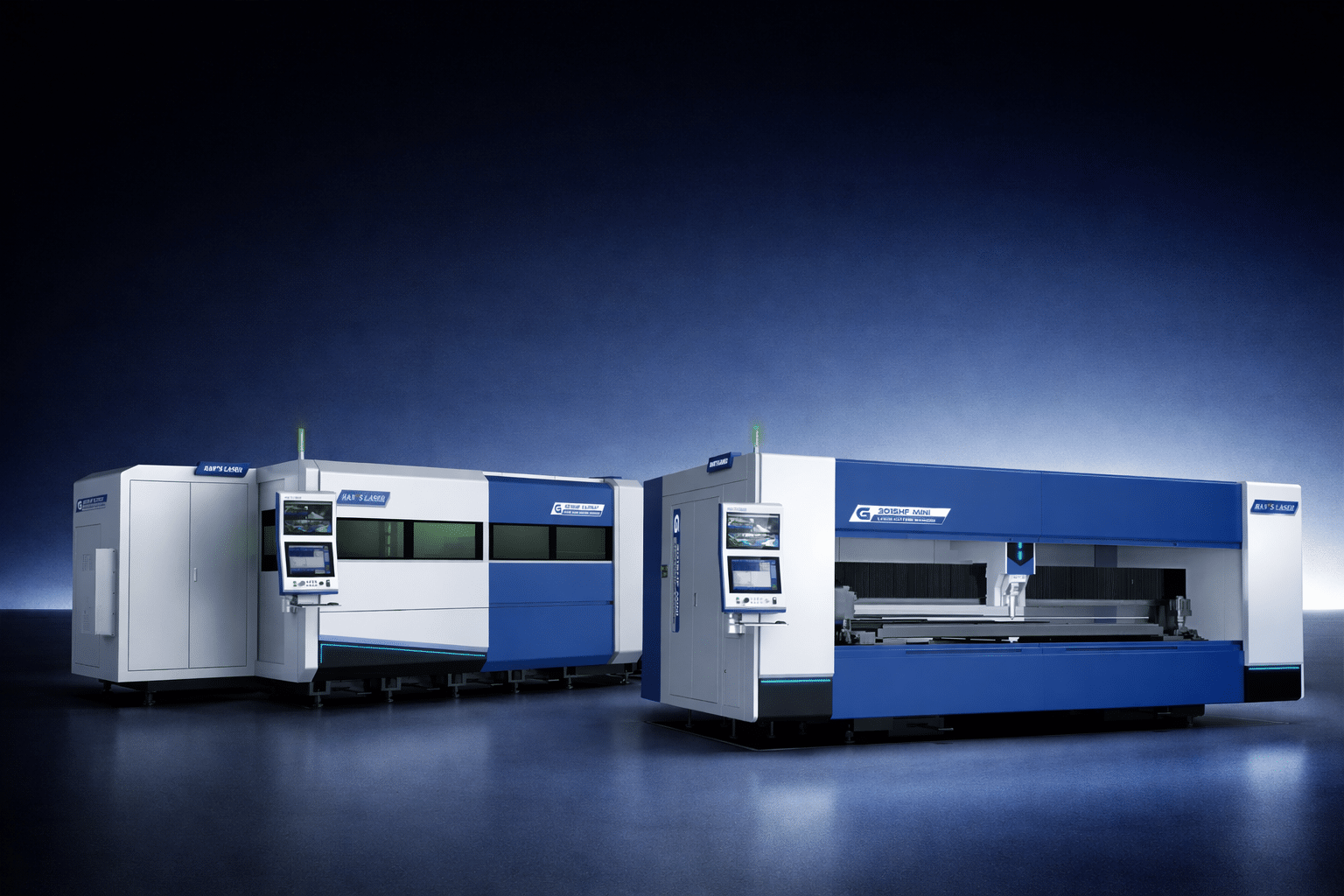
- Han's Laser G3015 HF Expert (3–12kW) — the production standard for Canadian job shops; available with standard or automation-ready configurations
- High-power configurations (12–40kW) — for dedicated plate fabrication operations, typically paired with tower automation or FMS integration
All configurations include Canadian installation, operator training, and ongoing service from our Mississauga base. View our full fiber laser machine lineup or contact us to discuss which power class fits your production profile.
▶