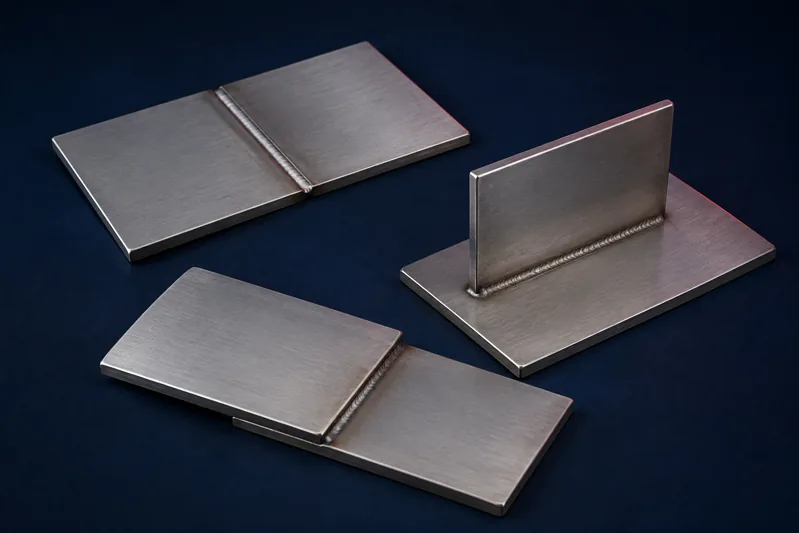
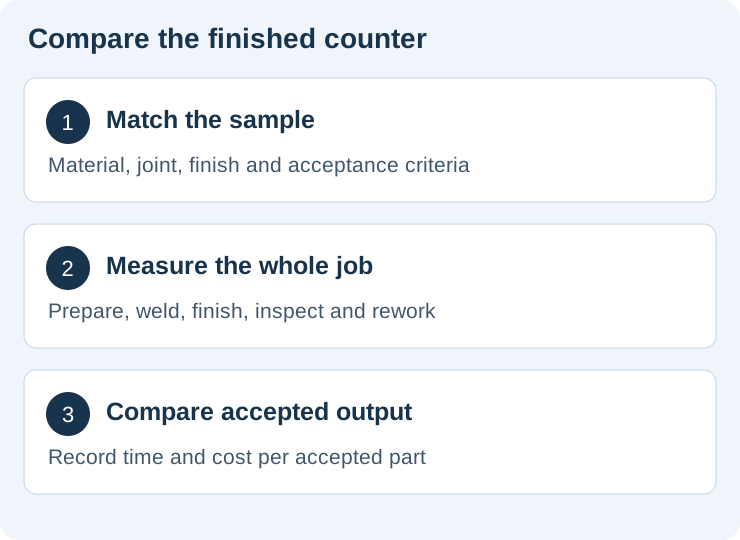
Compare laser welding vs TIG for stainless counters by the cost of an accepted, finished part. Include joint preparation, fixturing, welding, straightening, surface finishing and inspection. Faster welding may help, but the buying decision depends on what happens before and after the seam is made.
This guide is for Canadian shops making counters, cabinets and related stainless assemblies. It helps you prepare an application trial before selecting a fiber laser welder. It does not prescribe welding settings or establish that a particular machine can meet your drawing.
Define the stainless counter you actually sell
Choose a drawing with a typical visible seam and another with a difficult corner or access constraint. Record the stainless grade, thickness, surface finish, joint design and dimensions. Include the required appearance after finishing and how the assembled counter must fit. Keep protective-film handling and any surface restoration in the process record.
The application matters because a shop may spend substantial effort achieving a consistent visible finish. TRUMPF's FEGA customer example describes stainless counter and cabinet production where finishing is part of the manufacturing challenge. It is useful application context, not evidence of savings on a Rise Tek machine.
Laser welding vs TIG: compare the complete route
| Stage | What to compare |
|---|---|
| Preparation and fit-up | Time to prepare and position the actual parts; record gaps and any corrective work. |
| Access and holding | Whether the proposed equipment can reach each joint and hold the assembly through the trial. |
| Welding | Complete elapsed time, operator involvement and the demonstrated configuration. |
| Finishing | Work needed to achieve the specified appearance, including cleaning and surface restoration. |
| Inspection and rework | Accepted quantity, dimensional results, rejected parts and corrective effort. |
Record the exact machine, accessories, consumables and process used. IPG's LightWELD capabilities page describes welding and cleaning functions on its equipment. Treat those as manufacturer-specific capabilities to investigate, not features or performance automatically included in another supplier's quotation.
Keep your established TIG route as the baseline. If the sample has easier access or better fit-up than production work, write that down. A favourable trial should identify which part family it represents and which jobs remain unverified. Include more than one sample so the record does not depend on a single selected result.
Measure finishing and acceptance separately
Photograph each identified sample under consistent lighting before and after finishing. Record the time required to reach the agreed appearance and keep dimensional inspection results alongside the images. A photograph helps document finish; it cannot establish joint integrity, service suitability or every requirement on a drawing.
Have the responsible quality or welding professional define the inspection and testing needed for the application before the trial. For food-contact equipment, agree who reviews hygienic design and acceptance requirements. Buying a laser welder does not itself certify the completed equipment, and a visually neat seam does not replace the required assessment.
Build the cost comparison from shop measurements
For each route, total the costs included in your agreed scope and divide by the number of accepted parts. Keep labour time separate from machine elapsed time where work overlaps. Record setup as a batch cost and state the batch size, rather than spreading it over an assumed annual production figure.
Use separate lines for consumables, finishing materials, inspection and rework. State whether machine ownership costs are included so that you do not compare a fully costed process with a labour-only estimate. Check a small batch and a representative repeat batch: setup and utilization can change the investment decision.
List introduction costs separately: installation, work-area changes, training, service and the safety measures established for your site. IPG's handheld-system documentation identifies interlocks and protective equipment among its safety provisions. Plan the proposed system with the supplier and a qualified laser-safety professional; an ordinary welding helmet alone is not a complete laser-safety plan.
Turn the trial into a buying decision
Classify the result by part family: suitable for further evaluation, needs another trial, or not demonstrated. Ask for unresolved configuration and acceptance items to be included in the written quotation. Keep TIG available where its established process remains the better fit; the trial should support a specific production decision.
Download the blank stainless-counter welding review. For a broader process comparison, see laser welding versus MIG. To discuss your application, send Rise Tek the drawing, material and finished-part requirements.
Check these out
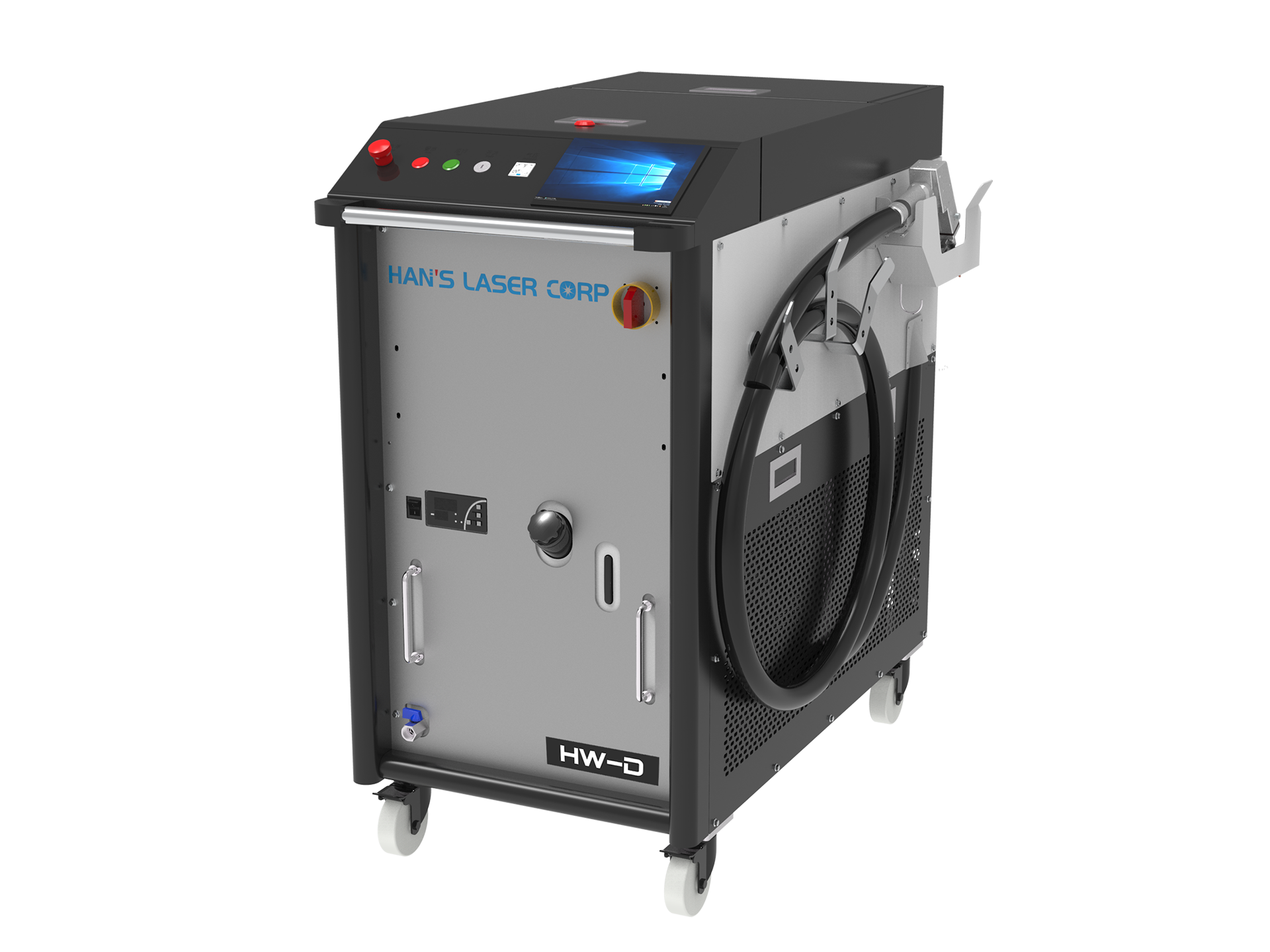
Explore these Rise Tek machines. Confirm the configuration and suitability for your application with our team.
Frequently asked questions
Is laser welding always cheaper than TIG?
No. Compare the complete job, including preparation, fixturing, welding, finishing, inspection and the cost of introducing the equipment. The result depends on the parts and production volume.
Can a good-looking weld prove that a counter is suitable for food contact?
No. Appearance alone does not establish suitability. The design, materials, joint condition and applicable acceptance requirements need review by the responsible qualified people.
Should we replace every TIG operation at once?
Evaluate each part family first. A trial may support laser welding for some joints while existing TIG equipment remains useful for other work.