A shear cutting-capacity rating applies to a specified material and cutting condition. Before buying, match the machine's approved capacity to your material grade, strength, thickness and cut length. A headline mild-steel thickness does not establish the permitted thickness for stainless steel, aluminum or high-strength plate.
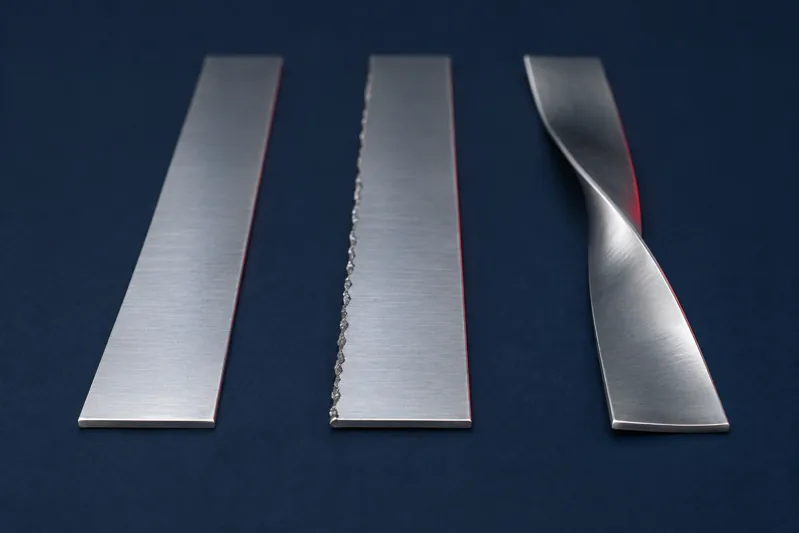
The next question is whether the machine can produce the edge and blank shape your process requires. Separating capacity from finished-part quality helps avoid choosing a machine that can sever a sheet but cannot make the required blank consistently.
Read the material basis behind the number
Ask the supplier to identify the material properties used for the rating, along with the allowable cutting length and machine configuration. For example, Dener's shear catalogue labels capacity for mild steel separately from cutting length. That wording is part of the specification, not a general rating for all metals.
Provide material certificates or a clear purchasing specification where available. A broad description such as “steel” leaves too much uncertainty. Include the grade, condition, nominal thickness and tolerance, particularly when comparing a job near the proposed machine's limit.
| Requirement | Evidence to request |
|---|---|
| Material and condition | Written confirmation for the specified grade and strength range. |
| Thickness | Approved range including applicable material thickness tolerance. |
| Cut length | Confirmation that capacity covers the required full cut, not only a short sample. |
| Blade and machine configuration | Applicable blade specification and any limits stated by the manufacturer. |
| Blank quality | Agreed dimensional, edge and distortion criteria demonstrated on representative material. |
Why a universal material conversion is unreliable
Do not turn a mild-steel rating into a stainless or aluminum rating using an unsourced percentage. Grades and material conditions differ, and the blade and machine limits still apply. Obtain the manufacturer's approved capacity for the intended work.
Likewise, do not assume that a shorter cut automatically authorizes thicker material. Ask for an approved capacity table or written application confirmation. Motor power by itself is not a capacity chart.
Include thin sheet and narrow strips in the trial
The thickest job is only one part of the buying decision. If your shop makes narrow strips or thin blanks, include those jobs in the demonstration. Define acceptable straightness, squareness, edge condition and surface marking according to the downstream operation.
Measure the output rather than relying only on photographs. Record where dimensions are taken, the strip width and whether the result changes along a long cut. Have the supplier explain any required handling or finishing steps and include those steps in the cycle-time comparison.
For example, a blank intended for a visible enclosure may have different cosmetic requirements from a blank that will be machined later. Neither acceptance standard should be silently substituted for the other when comparing machines.
Evaluate the production cycle and quote scope
Ask how sheets are supported, located, cut and removed for the quoted configuration. Count operator handling and changeover time separately from machine strokes. Record the number of acceptable blanks produced during a representative batch.
Confirm what the quote includes: front support, backgauge range, rear handling, blades, commissioning, training and service. If a demonstration uses accessories absent from the quote, request the cost and installation implications before using its output rate in your comparison.
Use our shear versus fiber laser guide when the work includes profiles or features that change the process choice. For an existing shear with declining results, begin with the troubleshooting guide and qualified service rather than treating poor results as a new capacity rating.
Prepare a practical capacity request
Download the blank shear capacity review sheet. List routine jobs and occasional demanding jobs separately. Send it with representative material information and acceptance requirements when requesting a shear quotation.
Frequently asked questions
Can a shear rated for 6 mm mild steel cut 6 mm stainless steel?
That rating alone does not answer the question. Ask for the approved capacity for the exact stainless grade, condition and cutting length.
Does blade clearance increase the machine's rated capacity?
No. Follow the manufacturer's setup instructions within the approved capacity. A setting change does not authorize an overload.
What proves that a shear suits our work?
Use written capacity confirmation together with inspected samples, a repeatable production trial and a clear equipment scope. Keep the evidence attached to the purchase decision.