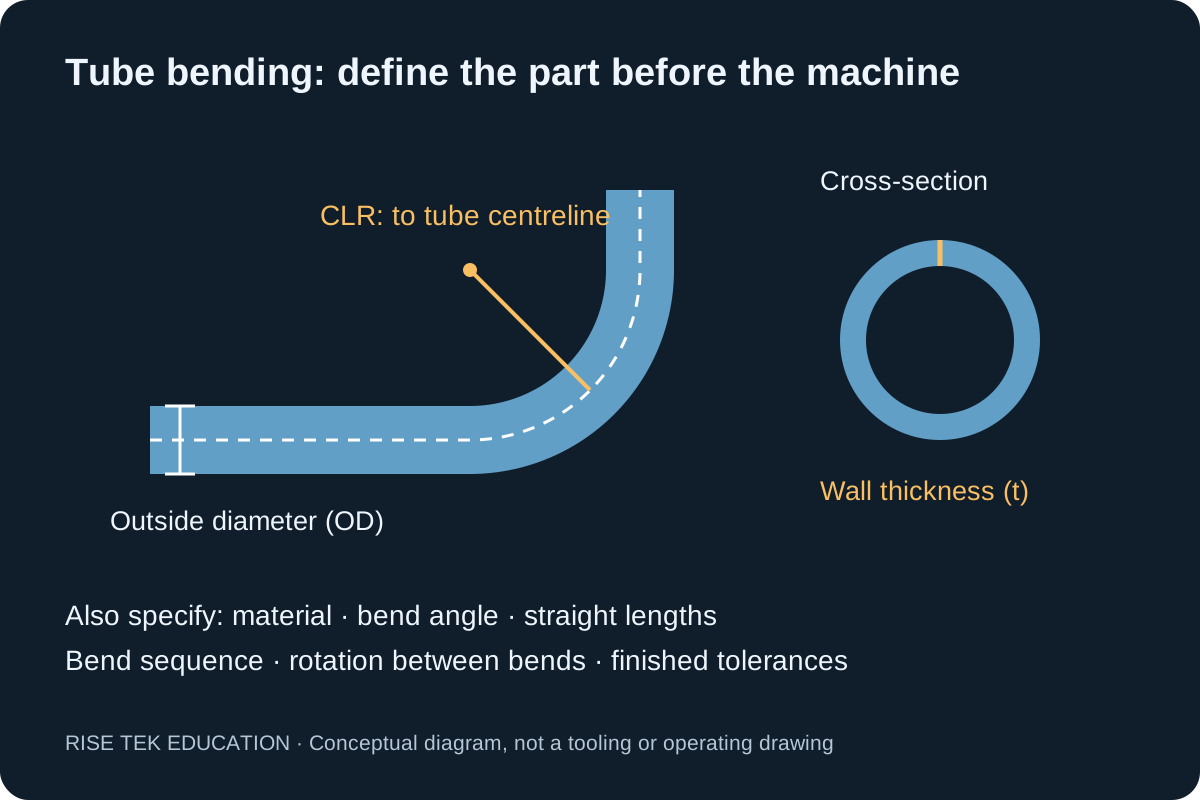
A useful tube bender quote starts with a finished-part drawing, the actual tube specification and agreed acceptance criteria. Outside diameter alone does not establish whether a machine can make your part. Canadian buyers should also specify wall thickness, material condition, centreline bend radius, straight lengths and the complete bend sequence.
This checklist helps you compare industrial CNC and mandrel tube benders on the same job. It is a purchasing worksheet, not a machine setup procedure. Start with your most demanding recurring part and a representative production part rather than asking every supplier to quote a different example.
1. Define OD, wall thickness and material
OD means the measured outside diameter of the tube. Wall thickness is a separate dimension. A nominal pipe size is not its measured outside diameter: include the applicable pipe specification and schedule when buying equipment for pipe. For square or rectangular sections, provide the outside dimensions, corner geometry and wall thickness rather than a round-tube OD.
Identify the alloy or steel grade, material condition, welded or seamless construction and available material documentation. Include the range of stock you will actually buy. A machine rating for one tube material and wall does not establish capacity for another grade. Mark every drawing dimension in millimetres or inches, and keep converted dimensions clearly labelled.
2. Specify the centreline radius and finished bend
Centreline radius (CLR) is measured to the tube centreline through the bend. It differs from the inside and outside bend radii. Include the finished bend angle and its tolerance, plus straight lengths before, between and after bends. For a three-dimensional part, provide the rotation between bends or a usable 3D model with the drawing revision.
For example, a 50 mm OD tube with a 2 mm wall and 100 mm CLR has an OD-to-wall ratio of 25 and CLR-to-OD ratio of 2. These describe geometry; they are not a machine-capacity approval or a universal tooling rule. A tighter relative radius and a thinner relative wall can increase the need for internal support and tooling review.
3. Ask for a complete tooling and clearance review
A mandrel supports the tube internally during bending. Tooling selection also considers the bend die, clamp and pressure die, and whether a wiper is appropriate. Ask the supplier to identify the tooling included for each OD, wall and radius combination, and which changes require another tooling set.
Send the whole part, not just one bend. Short straight sections can affect clamping and the sequence available to the machine. Nearby bends, flanges, end fittings and long legs can create clearance or removal constraints. Ask for a review of the proposed sequence and the completed part’s movement around the machine.
4. Compare what the controls actually do
“CNC,” “NC” and “mandrel” answer different questions. CNC and NC describe controls; mandrel describes internal tube support. Ask which feed, rotation and bend movements are programmed on the quoted model, what an operator positions manually, and how programs are stored and recalled.
For repeated work, compare new-job setup with repeat-job setup. Include loading, positioning, bending, unloading and inspection when measuring a cycle. A short demonstration of one bend is not the finished-part cycle time. Confirm tooling changes and programming assistance in the written offer.
For a movement-by-movement comparison, read CNC vs NC tube benders: which fits your parts?
5. Agree sample acceptance before ordering
Define the required final angles and locations, permitted ovality, minimum wall where specified, surface finish and how wrinkles or marks will be assessed. State the measurement method and whether results are taken after release from the tooling. Limits must come from your drawing and application requirements, not an assumed industry-wide percentage.
Use your actual stock for a representative trial where feasible. Record the material, drawing revision, tooling and configuration with each sample. Ask for several consecutive parts and a repeat setup when repeatability is important. Confirm any inspection method that requires sectioning or specialist measurement before the trial.
6. Request a comparable Canadian quotation
Ask for currency, quote expiry, delivery scope, tooling, software, freight, unloading, rigging, commissioning, training and service responsibilities as separate items. Supply your electrical service and access information. Confirm the documentation and site work for the delivered configuration with the supplier and your installer.
Download the blank tube-bender quotation checklist. Attach it to your drawing package and ask each supplier to fill gaps in writing. Explore the RollTek tube-bending range once the application is defined.
Before a demonstration, use the tube-bend sample-acceptance guide to agree measurements, consecutive samples and a repeat-setup review.
Check these out
Send your drawing for a model-specific application review.
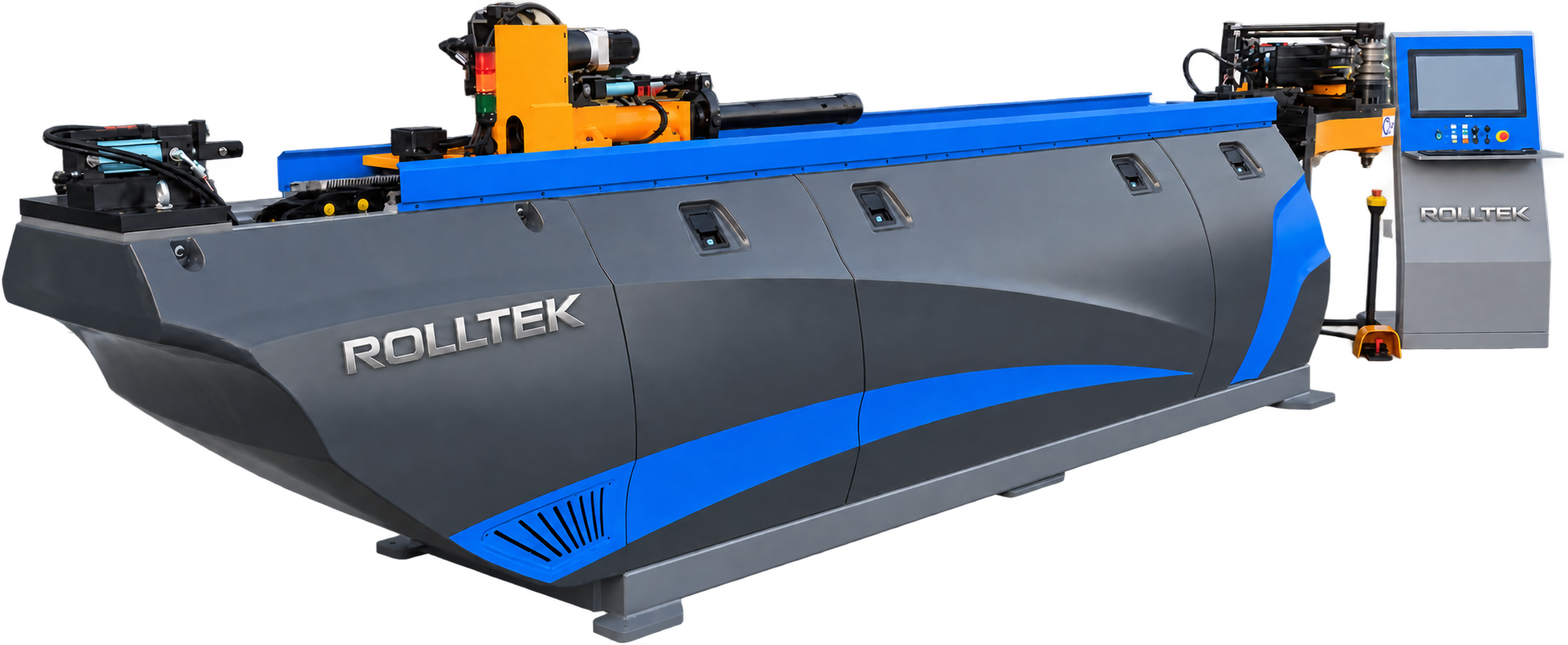
RollTek ORBIT tube benders
Compare the quoted control functions, tooling and full-part clearance. Image is an existing branding visualization; confirm the supplied configuration.
Explore machines →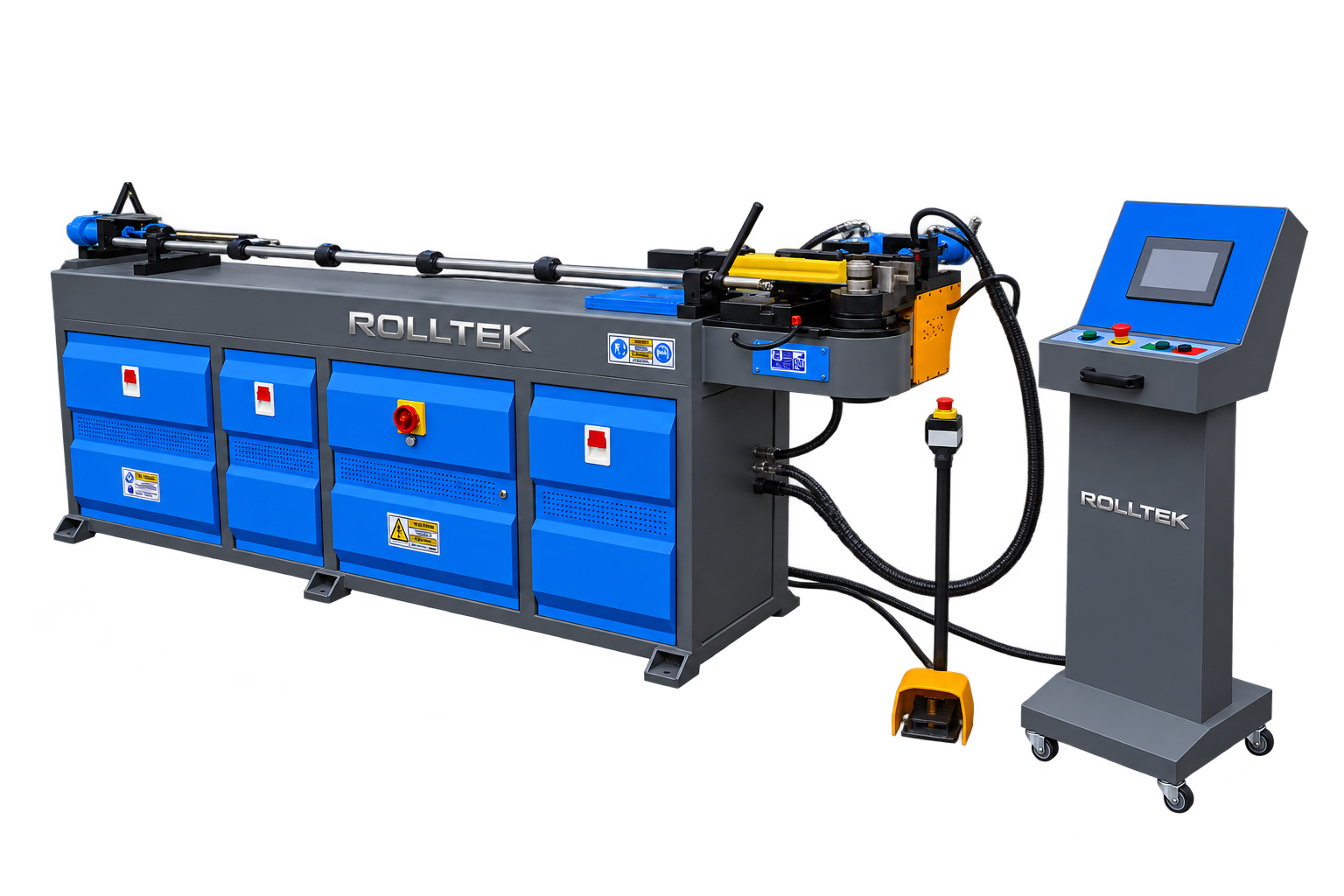
RollTek MANDRA tube benders
Discuss mandrel tooling and the actual tube specification. Image is an existing branding visualization; model suitability requires review.
Explore machines →Frequently asked questions
What information is needed for a tube bender quote?
Provide the drawing revision, material, outside dimensions, wall thickness, centreline radius, bend angles, straight lengths, bend sequence, tolerances and batch quantity. Ask the supplier to confirm tooling and full-part clearance.
Is a CNC tube bender always a mandrel bender?
No. CNC describes control functions; a mandrel provides internal tube support. Confirm both the programmed movements and the tooling included with the exact model.
Is CLR the inside bend radius?
No. CLR is the radius to the tube centreline. Mark the radius convention on the drawing so suppliers do not quote a different geometry.
Can OD alone establish tube-bending capacity?
No. Wall thickness, material, radius, part geometry, tooling and finished-part criteria also affect suitability. Request confirmation for the complete application.