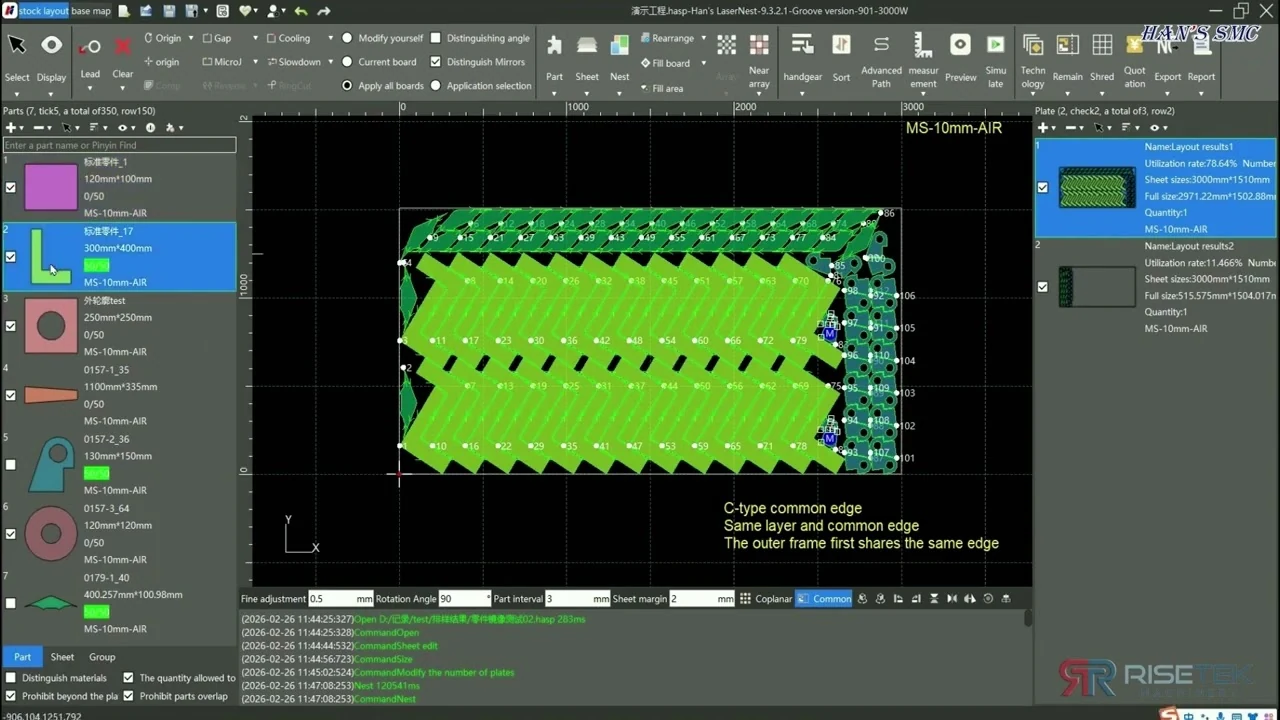
Most shops cut a core of repeat parts. The part library is what stops those being re-imported, re-checked and re-corrected every time they come round. Prepare once, recall thereafter.
Tutorial 041:37
Part Library Management
Building the job
The part list is the job: what is being cut, in what quantity, on what material. It is also the last place quantities can be corrected cheaply. Getting it right before nesting is what avoids a second setup for the handful of parts that were missed.
Tutorial 052:12
Part List
Working the list
The list functions are what make a large job manageable — handling many line items without losing track of what belongs to which order or which material.
Tutorial 072:07
Part List Functions
Where the time actually goes
On repeat work, library discipline saves more hours than any nesting optimisation. A part prepared properly once and recalled cleanly for two years is worth more than a percentage point of sheet yield.
Anything you cut more than once. A part that has been imported, checked and corrected is worth saving so that work is never repeated, particularly for regular customers whose parts come round on a cycle.
What is the difference between the part library and the part list?
The library is your permanent catalogue of prepared parts. The part list is the current job — which of those parts, in what quantities, on what material, for this run.
Why confirm quantities before nesting?
Because a missed quantity means a second setup. Nesting is arranged around the quantities in the list, so correcting them afterwards generally means nesting again.
How do I manage a job with many line items?
That is what the part list functions are for — handling large lists without losing track of which items belong to which order or material. Tutorial 07 covers them.
Does library discipline actually save much time?
On repeat work it saves more than nesting optimisation does. Preparing a part properly once and recalling it cleanly for years is worth more than a marginal gain in sheet yield.
Running a Han’s Laser machine in Canada?
Operator training is included with every machine we deliver, and our technicians support LaserNest alongside the hardware.