The machine frame and motion system typically last 15–20 years with proper maintenance. Wear parts — optics, nozzles, chiller components — are serviced over that life, but the core fiber laser is a long-term capital asset with no moving parts in the source itself.
Based on typical fiber laser source ratings and field service experience compiled by Rise Tek Machinery. Actual life depends on duty cycle, maintenance, and operating environment.
Fiber lasers earned their reputation for longevity because the light is generated in a solid-state fiber source with no mirrors, tubes, or gas to maintain like older CO2 systems. The result is a machine whose core cutting engine degrades slowly and predictably rather than failing suddenly.
Lifespan by Component
| Component | Typical Life | Notes |
|---|---|---|
| Laser Source | ~100,000 hrs | Degrades gradually; no moving parts |
| Machine Frame & Motion | 15–20 years | Rails, bearings, drives wear slowly |
| Cutting Head Optics | 5–10 years | Focusing optics; longer with clean operation |
| Chiller | 8–12 years | Serviceable; coolant maintained on schedule |
| Protective Lenses | Weeks–months | Routine consumable; cheap and quick to swap |
| Nozzles & Ceramics | Days–weeks | Consumables replaced with normal use |
What "100,000 Hours" Really Means
The rating sounds abstract until you convert it to shop time. At typical single-shift utilization:
- 2,000–3,000 operating hours per year is common for a single-shift shop
- At that rate, 100,000 hours represents 30+ years of laser-on time
- Even running two or three shifts, the source outlives the machine's useful technology life
In practice, most shops replace a fiber laser for capacity or technology reasons — they need more power, a bigger bed, or automation — long before the source is worn out. The source rating is rarely the limiting factor.
A fiber laser source doesn't "die" at 100,000 hours. The laser diodes degrade gradually, so output tapers slowly over time rather than stopping — many sources keep cutting well past their nominal rating.
What Actually Wears Out
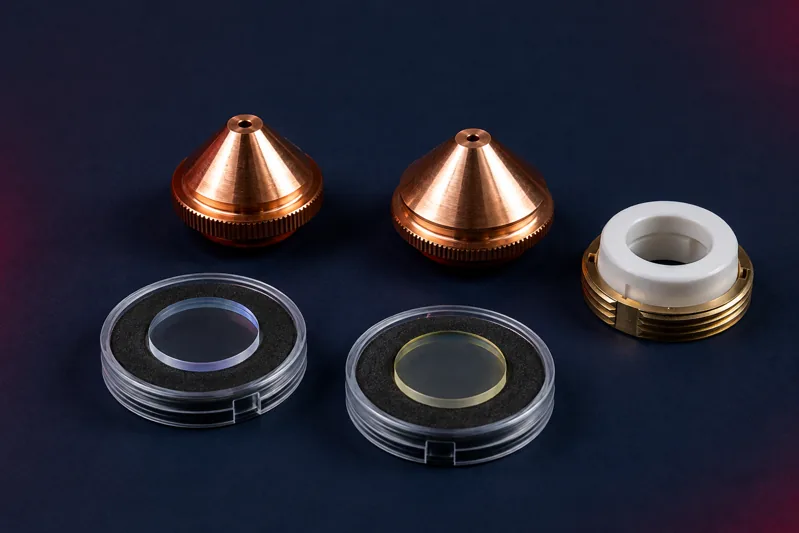
The parts that need attention are almost all in the cutting head and support systems, not the source:
- Protective lenses — the sacrificial glass that shields the focusing optics; a routine, low-cost swap
- Nozzles and ceramic rings — consumables that affect cut quality when worn
- Focusing optics — last years with clean operation; contamination shortens life
- Chiller and coolant — need scheduled service to protect the source
- Motion components — rails, bearings, and drives wear over many years
How to Reach Full Rated Life
Maintenance is the single biggest factor in whether a machine reaches its potential. The essentials:
- Keep optics and protective lenses clean — contaminated optics cause heat damage and lost power
- Service the chiller and coolant on schedule — thermal stability protects the source
- Use proper assist gas purity and clean, dry compressed air
- Keep the enclosure and beam path free of dust and spatter
- Follow the manufacturer's preventive maintenance intervals
Because the source lasts around 100,000 hours and the frame 15–20 years, a fiber laser typically outlives its financing term by many years — meaning years of production after the machine is paid off. Combined with low energy use and minimal maintenance versus CO2, that long tail is a major part of the fiber laser value case.
For the full investment picture, see our breakdowns of fiber laser machine cost in Canada and whether fiber laser is worth it.