
Updated October 14, 2026: comparison claims and configuration guidance reviewed.
A supplier may describe equipment as a 3-in-1 welder when welding, cleaning and cutting functions are offered together. That label does not define capacity, included accessories or whether one system can replace three production processes. Confirm each required function for the exact quoted model.
Compare Each Function Separately
Welding
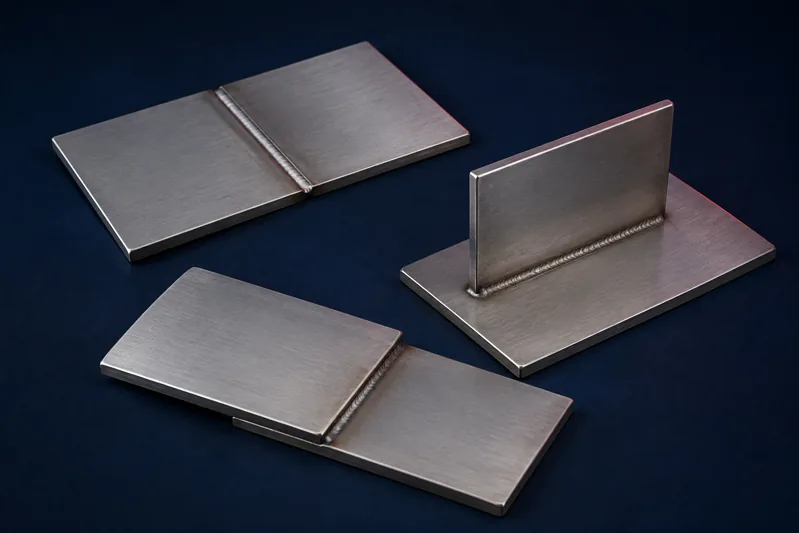
Trial your actual material grades, thicknesses, joint designs and fit-up. Confirm whether filler wire is needed and record the shielding gas and consumables used. Inspect penetration and other required characteristics using the agreed acceptance method; appearance alone does not prove joint integrity.
Cleaning
If cleaning is offered, confirm the equipment and operating procedure. Test the actual coating and substrate, inspect the resulting surface and account for extraction, residue handling and accessory changes. Do not assume that cleaning causes no substrate damage or eliminates every finishing consumable.
Cutting
If cutting is offered, demonstrate the actual material, shape and thickness. Inspect dimensional results, kerf, dross and any finishing work. Compare complete job time with your current cutting route; a handheld function should not be assumed to replace a dedicated sheet-cutting machine.
Material Compatibility Requires an Application Review
Ask the supplier to document suitability for the specific alloy, coating and joint. Avoid universal yes/no material charts or power-to-thickness rules that omit configuration and acceptance requirements. Do not infer a suitable welding procedure from the machine power alone.
Compare the Cost of Accepted Parts
Keep the established TIG or MIG route as the baseline. Record preparation, fixturing, welding, cleaning, finishing, inspection and rework for each proposed route. Include shielding gas, filler wire where used, protective optics and other wear items. Apply the same costing scope and batch size to both routes.
A compact system can still require separate work-area preparation and supporting equipment. Ask what is included in the quotation and what remains your responsibility. Do not budget on the assumption that one purchase replaces three dedicated machines.
Plan Safety and Training for the Supplied System
Review the operating manual, proposed work area and process with the supplier and a qualified laser-safety professional before commissioning. Have protective equipment and exposure controls selected for the actual equipment and application. This guide does not specify an eyewear optical density, extraction filter or universal certification requirement.
General laser hazard information is available from CCOHS. Agree on training, installation responsibilities and any required process qualification in writing.
Questions to Ask Before Ordering
Can it replace our TIG or MIG equipment?
Evaluate each part family first. Retain the established route where the new process has not demonstrated the required results.
What can a 2 kW machine weld?
Ask for results on your exact joint and material. A power rating alone does not establish penetration or acceptable finished-part quality.
What gas and extraction equipment do we need?
Obtain application-specific requirements for the proposed machine, materials and coatings. Include consumption, maintenance and site responsibilities in the comparison.
Manufacturer reference and scope
The Han's Laser HW-D reference describes a particular machine and its options. Its speed comparison is manufacturer marketing about TIG, not a measured MIG comparison or a guarantee for your parts. Confirm the specification offered for your order. This guide does not prescribe welding settings or certify a finished weld.
Check these out
Explore the HW Series handheld laser welder and review its manufacturer reference specifications. Send your drawings, material grades, joints and acceptance criteria with a quote request. Use the laser welder quotation checklist to confirm accessories and installation scope.