>
Metal FinishingMetal Sanding · Deburring & Finishing

Metal Sanding Machines

MT · MTS · WDE-M Series

Our metal sanding machines handle stainless steel, aluminum, titanium, copper, and laminated steel. Three series cover light finishing through heavy industrial multi-process sanding — all configurable to your exact working width and head combination.
Industrial metal sanding machine
3 Series
Light, Heavy & Combination
600–1,300 mm
Working Width Options
🖥
PLC Touch
CNC Touch Screen Control
🇨🇦
CSA Certified
Canadian Market Ready

Machine Series

Choose the Right Sander

From light stainless finishing to multi-head industrial lines. Each series is available in multiple working widths and roller configurations.

MT Series Light Duty Metal Sander
Light Duty
MT Series

Light Duty Metal Sander

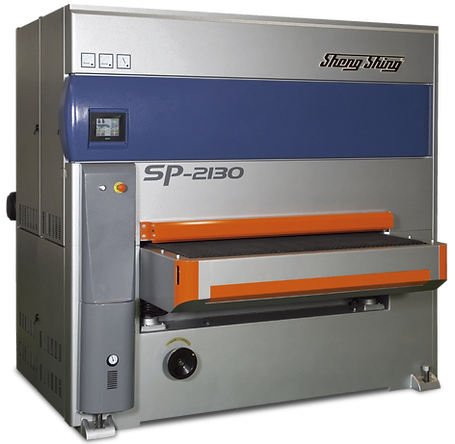
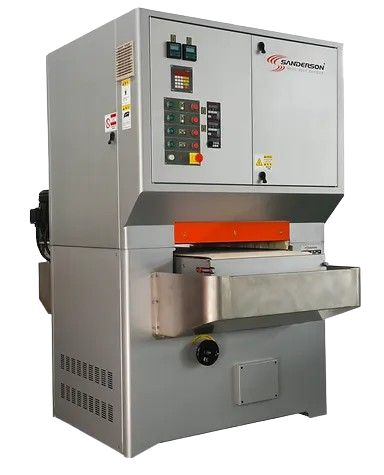
Designed for stainless steel light finishing and polishing. Available in 600, 900, and 1,300 mm working widths with single or double roller configurations. Wet or dry sanding options.

View Details
MTS Series Heavy Duty Metal Sander
Heavy Duty
MTS Series

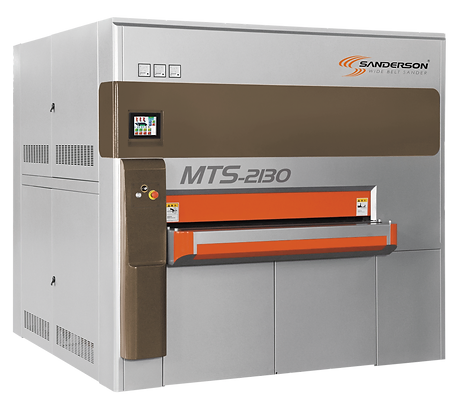
Heavy Duty Metal Sander

Industrial-grade finishing for stainless, aluminum alloy, titanium, iron, and copper plate. Double, triple, or four-roller configurations. Digital readout panel and variable feed motor.

View Details
WDE-M Combination Head Metal Sander
Combination
WDE-M Series

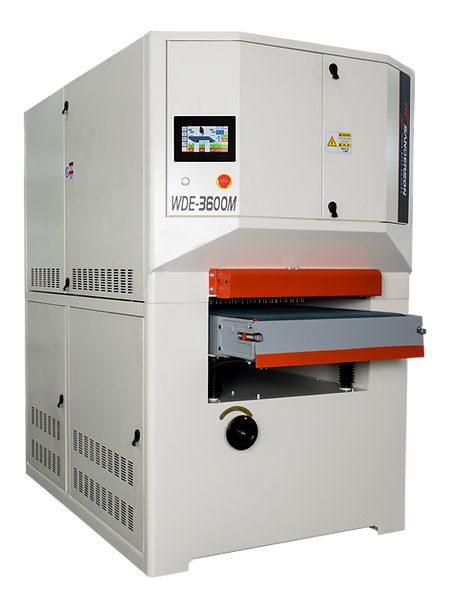
Combination Head Sander

Multi-process sanding in a single pass. Mix A-type rollers, D-type disc brushes, P-type rotating brushes, and NB nylon brushes. PLC touch screen with servo motor feed control.

View Details

Applications

What a Metal Sanding Machine Handles

Engineered for metal surface finishing across every common production requirement.

Deburring after laser cutting, punching, and stamping
Surface polishing and No. 4 finish on stainless steel
🔧
Weld seam grinding and mark elimination
Rust removal and scale elimination
🌟
Brushed and hair-line finish on aluminum panels
🛠
Flat sanding of castings, stampings, and sheet metal parts

Choosing a Metal Sanding Machine

Four decisions determine which machine fits, and they are easier to answer in this order.

1. Working width

Set by the widest part you run regularly, not the average. Anything wider than the belt has to be finished by hand or fed twice, which costs the consistency the machine was bought for. Widths of 600, 900 and 1,300 mm are available.

2. Head count and type

One head does one job. Single and double roller machines cover straightforward finishing. Triple and four-roller machines let you stage grit progression, so a part leaves the machine finished instead of queuing for a second pass. Where parts have internal cutouts, brush heads reach edges and hole perimeters a flat roller cannot.

3. Wet or dry

Dry is simpler to install and maintain and suits most steel and aluminum work. Wet controls dust and heat, which matters on stainless where heat discolouration is a defect, and wherever airborne dust is a fire or health concern.

4. Material mix

Stainless, aluminum, titanium, copper, iron and laminated steel all behave differently under abrasive. A shop running one material can specify tightly; a shop running several needs head configurations that tolerate the range.

Deburring After Laser Cutting

The most common reason a fabrication shop buys its first metal sander is that laser-cut parts are leaving the floor with dross and a sharp, work-hardened edge, and someone is removing it by hand.

Hand deburring does not scale and does not repeat. Two operators produce two different edges, and the time cost is invisible until you price it per part. A wide-belt machine feeds the part under a fixed head at a set rate, so every part leaves the same.

If you are already running a fiber laser cutting machine, deburring is usually the bottleneck that appears next — the laser outpaces the finishing bench long before it outpaces anything else.

Finish Types

Finish is a function of belt grit, head type and feed rate rather than machine class, which is why the same machine can produce very different results.

  • No. 4 brushed — the standard architectural and food-industry stainless finish. Directional, uniform, and the most commonly specified.
  • Hairline — a finer, longer-grain directional finish used on aluminum and stainless panels where the grain should read as texture rather than scratch.
  • Deburred and edge-rounded — not a cosmetic finish. Removes the sharp edge and dross so parts are safe to handle and ready to coat.
  • Weld seam dressed — grinding a seam flush and blending it into the surrounding surface so the joint disappears under finish.
  • Descaled — removing mill scale and rust from hot-rolled stock before fabrication or coating.

Metal Sanding Questions

What is a metal sanding machine used for?
Wide-belt metal sanding machines handle surface finishing and edge preparation on flat parts: deburring after laser cutting, punching and stamping; polishing stainless to a No. 4 or hairline finish; grinding down weld seams and marks; removing rust and mill scale; and flat sanding castings, stampings and sheet parts. The work is done in a single pass at a controlled feed rate rather than by hand.
Can you use a belt sander to smooth metal surfaces?
A handheld belt sander will smooth metal, but it cannot hold a consistent finish across a panel because pressure and dwell time vary with the operator. A wide-belt machine feeds the part under a fixed head at a set rate, so the finish is uniform edge to edge and repeatable between parts. For deburring production volumes, the difference is quality consistency rather than whether the metal can be sanded at all.
Which machine gives a No. 4 finish on stainless steel?
A No. 4 brushed finish comes from the belt grit and head configuration rather than the machine class. Light-duty single or double roller machines are normally specified for stainless finishing and polishing work, while heavier multi-roller machines suit thicker plate and mixed material. Send a sample or specify the finish standard with a quote request and we will match the head and belt configuration to it.
How do I deburr parts after laser cutting?
Laser-cut edges carry dross and a hardened heat-affected edge, and a wide-belt sander with the right head configuration removes both in one pass. Rotating and disc brush heads reach edges and hole perimeters that a flat roller cannot, which is why combination machines are specified where parts have internal cutouts.
What working width do I need?
Working width is set by the widest part you run, not the average, since anything wider has to be finished by hand or in two passes. Machines are available in 600, 900 and 1,300 mm working widths. Choose the width that covers your largest regular part with clearance rather than sizing to the median job.
Should I choose wet or dry sanding?
Dry sanding is simpler to install and maintain and suits most steel and aluminum finishing. Wet sanding controls dust and heat, which matters on stainless where discolouration from heat build-up is a defect, and on materials where airborne dust is a fire or health concern. Light-duty machines are available in either configuration.
How many sanding heads do I need?
One head does one job. Single and double roller machines cover straightforward finishing. Triple and four-roller machines let you stage grit progression or combine processes so a part leaves finished rather than needing a second pass. Combination machines mix head types — abrasive roller, disc brush, rotating brush and nylon brush — to deburr, edge-round and finish in one pass.
Are these machines CSA certified?
Yes. The metal sanding machines we supply are CSA certified for the Canadian market, and include delivery, installation and operator training. Service and parts are supported Canada-wide from our Mississauga, Ontario base.

Metal Surface Finishing

Get a Metal Sanding Machine Quote

Tell us your material, part dimensions, required finish, and production volume. We’ll recommend the right series and working width.