 Polar Finishing Equipment · A Canadian brand
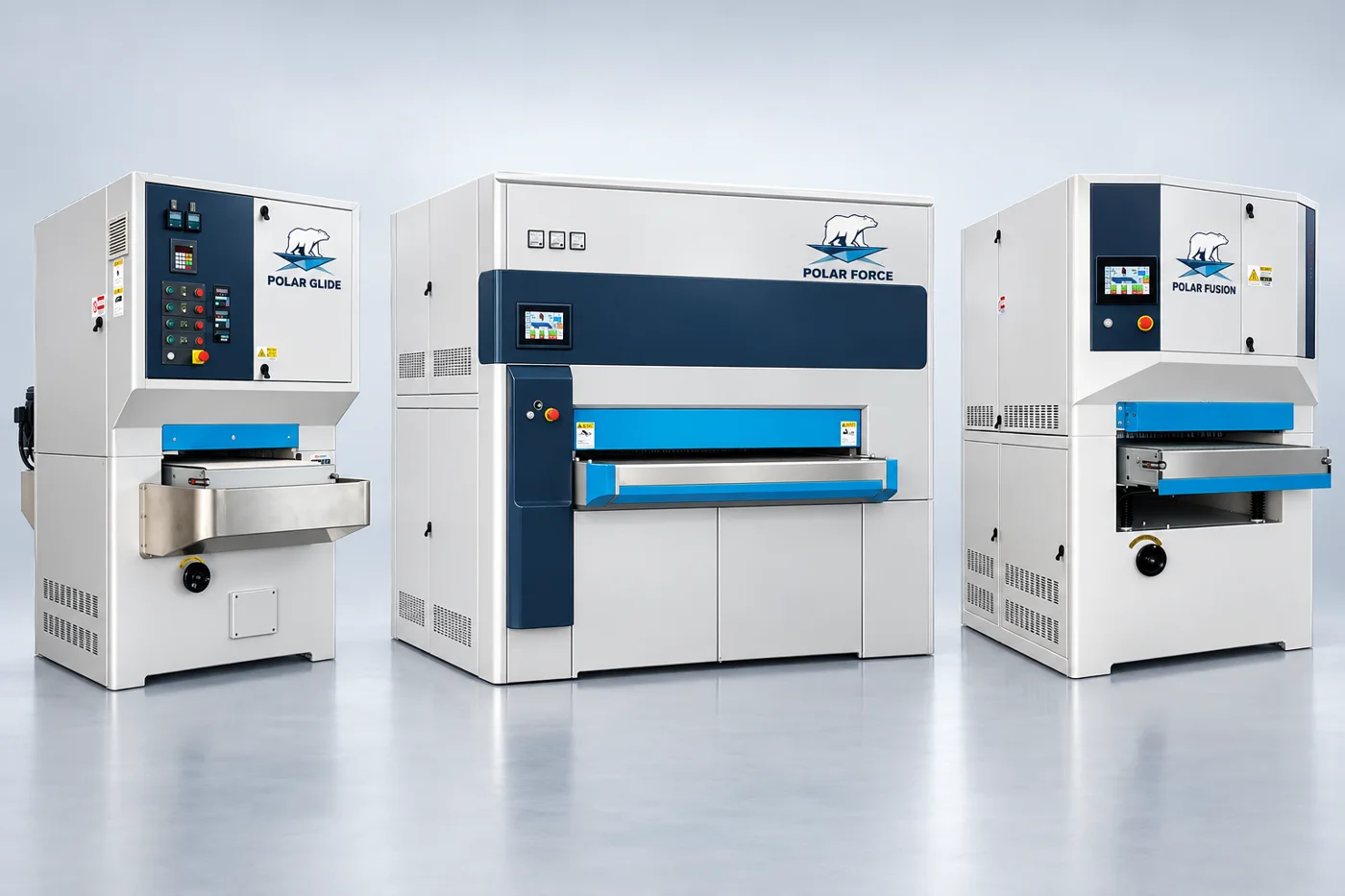
Choose metal finishing equipment by the result your parts must meet, then check how the proposed machine will hold, process and release those parts. Match the incoming burr, cosmetic face, edge requirement and batch pattern to a confirmed head arrangement. Working width and a model name alone do not establish suitability.
For Canadian shops bringing laser cutting or sheet-metal production in-house, finishing can become the next bottleneck. A surface finishing machine that produces an attractive face on one sample may still leave an internal edge untreated, mark the underside or take too long to load. Build the selection around accepted parts per shift, including handling and inspection.
This guide helps you choose a process and prepare a useful enquiry. For the terminology, see metal sanding vs deburring vs surface finishing.
Start with the feature that needs to change
| Your requirement | Process to evaluate | What must be demonstrated |
|---|---|---|
| Remove a projecting cut-edge burr | A deburring arrangement matched to the burr and accessible edges | Remaining burr at external contours, holes and slots; protected faces and dimensions |
| Create or restore a directional face finish | An abrasive-belt sanding sequence | Grain direction, consistency and agreed surface/roughness checks |
| Round edges to a specified acceptance requirement | A compatible brushing or edge-treatment stage | Specified edges and radius or agreed edge standard, separately from face appearance |
| Treat both faces | A confirmed bottom/top arrangement or documented part-reversal process | Both-face acceptance, total passes, handling and underside marking |
| Process small loose parts in batches | Compare an approved holding arrangement with vibratory finishing | Part retention or batch separation, media lodging, dimensional change and part-to-part marking |
Describe the incoming part, not just the desired finish
Send material grade, thickness, width, length and a drawing with openings and narrow features. Include photos of burrs and dross, existing scratches, distortion and protective film. A broad, flat plate and a narrow perforated bracket can have the same overall width yet require different support and holding arrangements.
Identify the cosmetic face, whether film must stay in place and which edges need treatment. Discuss surface contamination and compatible abrasives for stainless steel with the supplier. Confirm what changes to thickness, flatness, hole size or edge shape are acceptable. A grit designation is a process input, not a complete finish specification.
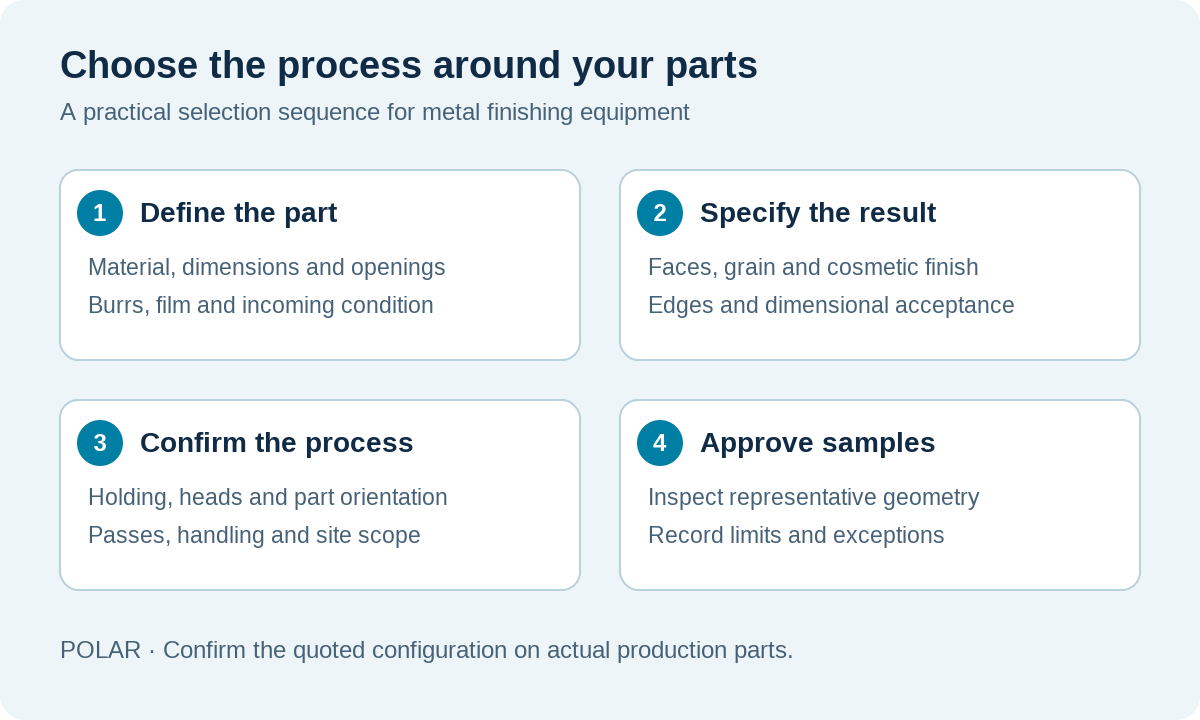
Compare Polar Glide, Force and Fusion by application
Use the Polar family to start a configuration discussion. The comparison below describes the published range positioning; it is not a promise that every head, brush, holding system or wet-processing option is included.
| Range | Starting point | Confirm in the written offer |
|---|---|---|
| Polar Glide | Lighter sanding work and a focused abrasive-belt process | Actual head arrangement, material-removal task, working dimensions and representative result |
| Polar Force | Evaluation of a heavier-duty sanding platform | Incoming burr/surface condition, selected drives and heads, handling and duty requirements |
| Polar Fusion | Evaluation of sanding and finishing stages in a combination-head platform | Head types and order, brush compatibility, passes and which faces are processed |
Do not infer minimum part length from working width or assume a combination-head machine processes both faces in one pass. Confirm minimum dimensions, holding equipment, support and allowed part orientation for the exact configuration. Our small-part holding guide explains what to send for that review.
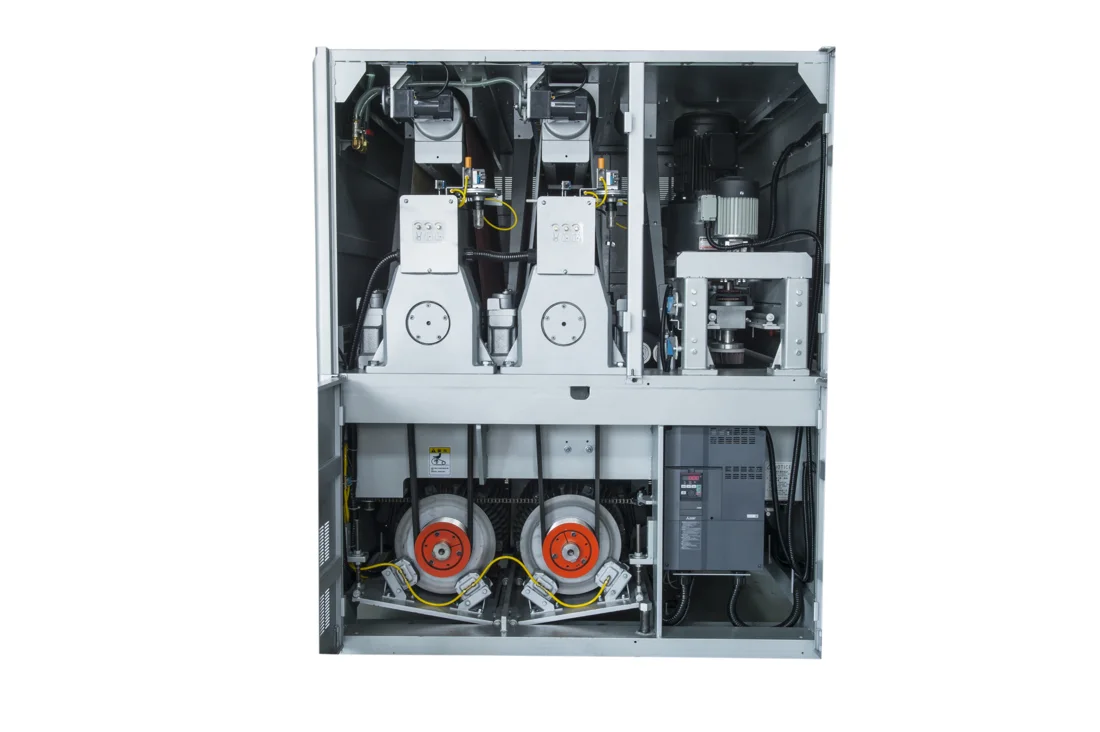
When a vibratory bowl belongs on the shortlist
For batches of small loose parts, compare a bowl process with a conveyor-based process rather than assuming that smaller parts always call for a smaller belt machine. A bowl trial must address feature access, media lodging, edge change, part-to-part contact and separation. A directional cosmetic face may need a different process.
Read vibratory bowl vs metal sanding machine, or explore Machinist’s Vault vibratory finishing machines. Validate a sample before choosing either route.
Compare complete sample cycles
Choose representative parts from the actual production mix: a common part, the smallest or most difficult geometry, and the cosmetic part most likely to show marking. Include realistic incoming variation rather than only a prepared showpiece. Agree on inspection locations and the reference finish before the trial.
Record loading, processing, turning, unloading, cleaning and inspection time, plus the number of passes and rejected parts. Compare accepted parts per batch or shift under the same scope. Conveyor speed alone excludes handling, and a demonstration cycle is not a production throughput guarantee.
Use the stainless-steel finish acceptance worksheet to separate appearance, grain direction, measured requirements and edge condition. Ask what changes would require a new trial, such as another material, thinner stock or a different brush arrangement.
What to include in a Canadian equipment quotation
- Parts: material grade, drawing revision, size range, flatness, openings, burr condition and film.
- Result: faces and edges to treat, finish reference, permitted marking and dimensional acceptance.
- Production: batch size, mixed-part frequency, staffing, changeovers and handling space.
- Machine scope: heads, brushes, abrasives, holding equipment, supports, guarding and consumables supplied.
- Site scope: electrical supply and approval requirements, extraction or wet-system arrangements, utilities, access and installation responsibilities.
- Commercial scope: stated currency, freight/rigging, commissioning, training, warranty, consumables, availability and schedule.
Confirm these items in the written offer. Do not infer included delivery, installation or a fixed lead time from a general equipment description. Find our office locations and share the machine’s installation destination when requesting a quotation.
Check these out
Polar Finishing Equipment is a Canadian brand offered by Rise Tek. Select by your application and approved sample results.
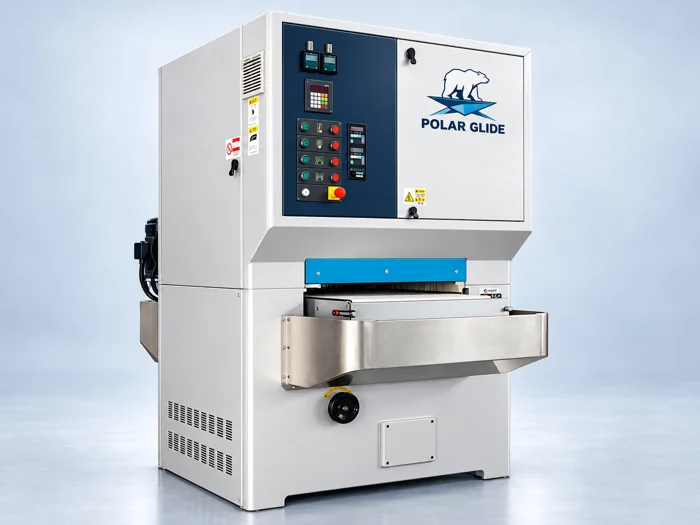
Polar Glide
Explore the light-duty sanding platform. Confirm the incoming surface, abrasive arrangement and target finish on representative parts.
Explore Glide →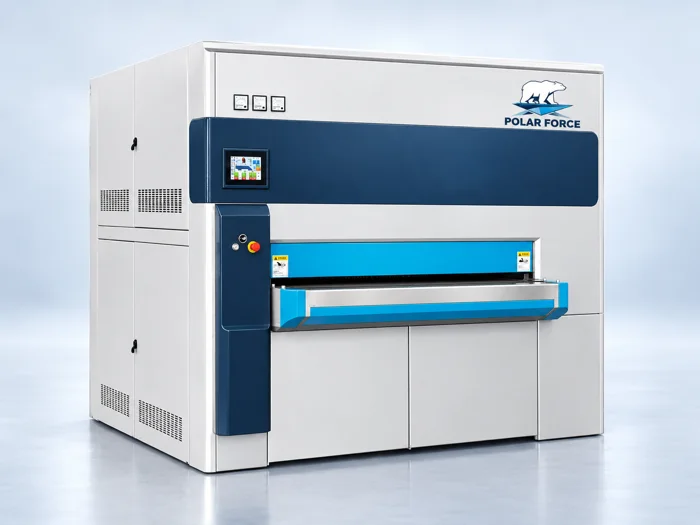
Polar Force
Explore the heavier-duty sanding platform. Review removal requirements, handling and the selected configuration before agreeing a trial.
Explore Force →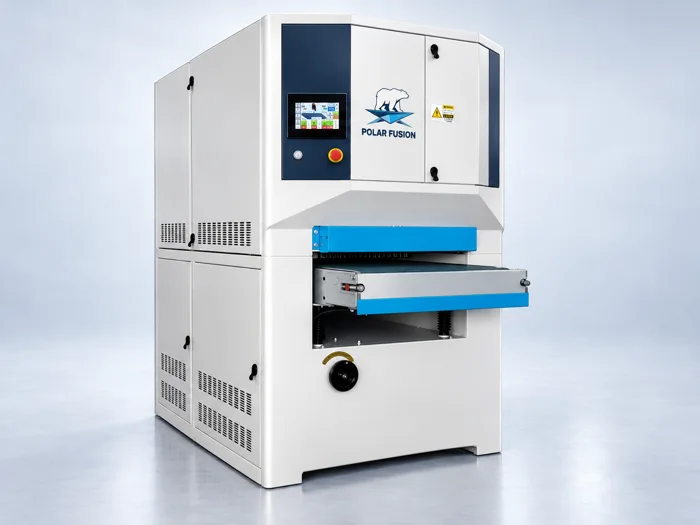
Polar Fusion
Explore combination-head sanding and finishing. Confirm the head sequence, abrasives and any additional passes required.
Explore Fusion →Machine cards use branding illustrations. Final appearance, capability and included equipment depend on the quoted configuration.
Frequently asked questions
Which Polar metal finishing machine should I choose?
Start with your part geometry, incoming condition and required face and edge result. Review Glide for lighter sanding work, Force as a heavier-duty platform and Fusion for a combination-head process, then confirm the configuration through representative samples.
Does a surface finishing machine also round edges?
Only if the selected process is suitable for the required edge result. An attractive surface does not establish that burr removal or the specified edge condition has been achieved.
Can a machine finish both sides in one pass?
Do not assume this from a combination-head description. Confirm whether the proposed machine processes one face, uses a separate top/bottom arrangement or requires part reversal.
What should I send for a metal finishing quotation?
Send a drawing, material grade, dimensions, incoming-condition photographs, cosmetic and edge requirements, batch pattern and installation destination. Ask the offer to state the configuration, acceptance trial and included services.