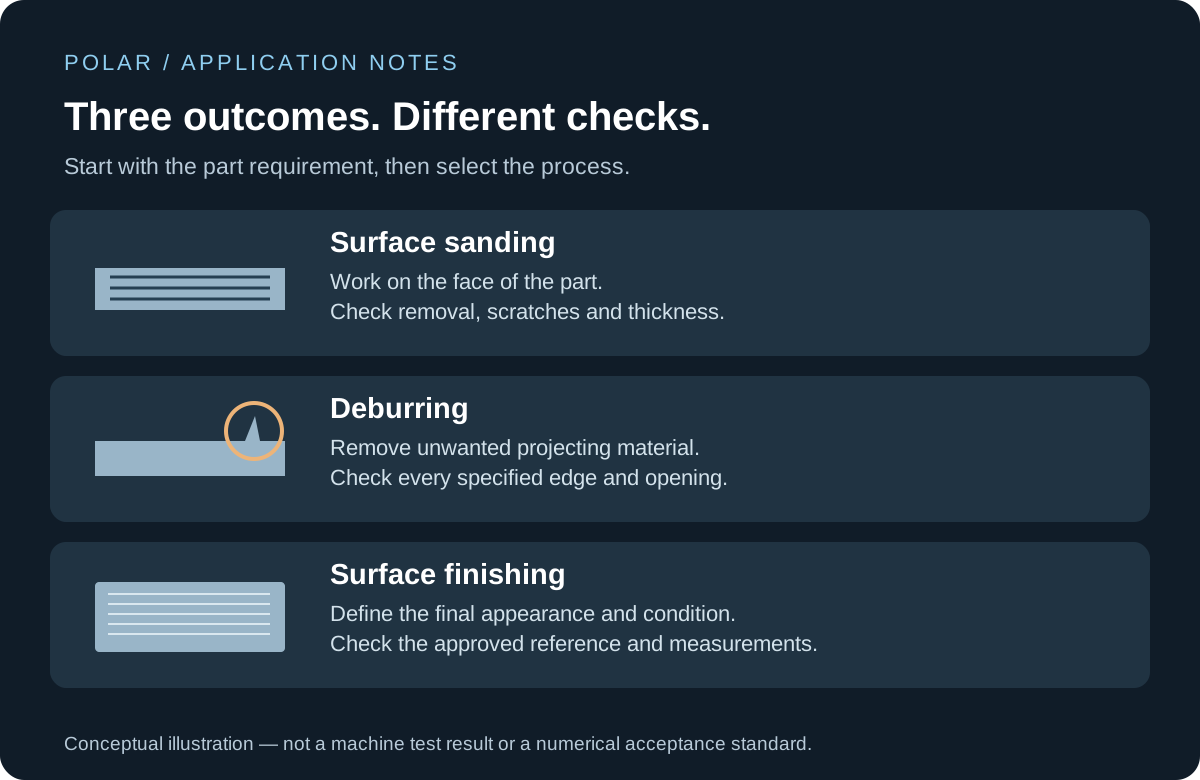
Metal sanding works on a surface with an abrasive; deburring removes unwanted material projecting from an edge; surface finishing describes the intended final surface condition. They can overlap, but a good-looking face does not prove that every edge is deburred. Choose equipment by the result your part needs.
For a Canadian fabrication shop comparing metal finishing equipment, the useful starting point is a representative part and a clear acceptance requirement. A stainless panel with visible scratches, a laser-cut bracket with burrs and an architectural cover with a specified grain pattern present different problems. The same machine label does not settle all three.
Metal sanding, deburring and finishing compared
| Process | Main objective | What to check |
|---|---|---|
| Metal sanding | Abrasive work on the face: removal, scratch refinement or a directional texture. | Remaining thickness, local removal, visible scratches, flatness where specified and surface consistency. |
| Deburring | Remove unwanted projecting material at specified cut or machined edges. | External edges, holes and openings; accessible faces; remaining burrs and any damage to dimensions. |
| Surface finishing | Achieve the specified appearance or surface condition. Mechanical finishing is only one part of this wider category. | Reference appearance, grain, reflectivity and any specified roughness or downstream requirements. |
| Edge rounding | Produce a specified edge shape or radius, where required. | The defined edge geometry and measurement method; burr removal alone does not establish a radius. |
1. Start with what arrives at the machine
Record the alloy, thickness, part envelope, incoming finish and previous cutting or forming process. Identify which face is visible in the final assembly, which edges require treatment and which dimensions must be preserved. Include holes, cut-outs, narrow sections and formed areas in the application review.
A supplier needs to see the actual condition. A photo can explain the problem, but a representative sample gives a better basis for agreeing what to test. Mark the burr side and grain direction, and keep an untreated comparison piece. Describe variation across your normal incoming parts instead of sending only the easiest example.
2. Match the head arrangement to the required work
Review the role of each abrasive belt, roller or brush in the proposed sequence. Ask which face and edges it reaches, what it is intended to remove and what surface condition it leaves for the next stage. A combination-head machine is a platform choice, not proof that all desired operations happen in one pass.
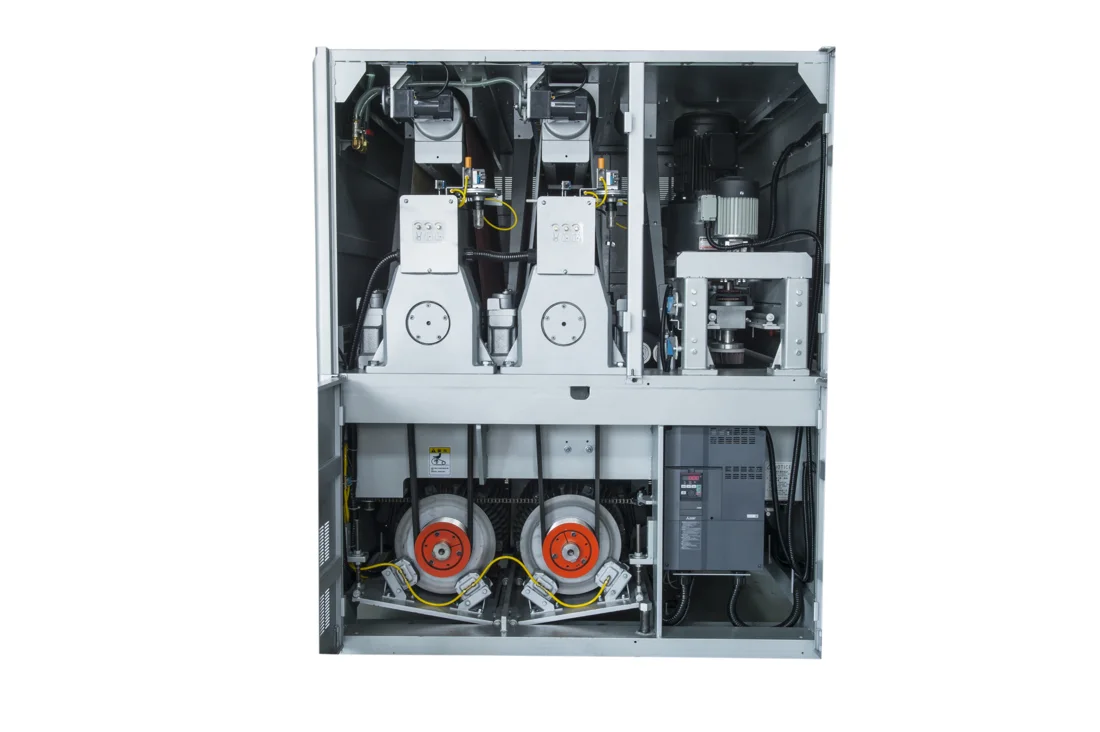
The Polar top and bottom head examples show alternative arrangements. Do not assume that every model processes both faces simultaneously. Likewise, a brush option should be reviewed for the actual material, edge access and required result rather than selected from appearance alone.
For burr-removal applications, the abrasive must remove the unwanted material without compromising the workpiece. 3M’s deburring application guidance distinguishes the abrasive choices available for different burr-removal work. That general guidance does not establish a Polar machine’s capacity.
3. Separate a finish name from an acceptance requirement
Terms such as brushed, satin or No. 4 help start a conversation, but they do not describe every visible detail of a finished part. Agree a physical reference sample, the intended grain direction and the viewing conditions. Where roughness matters, define the required measurement separately from the visual comparison.
The International Molybdenum Association’s finish-specification guidance recommends defining both measured and appearance-related parameters with the supplier. A grit number alone should not be treated as your entire purchase specification.
Use our stainless-steel finish acceptance guide to build a sample record before committing to a process.
4. Compare complete quotation scope
| Requirement | Ask the supplier to confirm |
|---|---|
| Part handling | Usable width and thickness range, minimum part size, holding method, infeed/outfeed and handling of your actual geometry. |
| Process | Head arrangement, abrasive and brush choices, intended sequence, trial conditions and any repeat passes. |
| Utilities and site | Electrical supply, wet or dry configuration, extraction scope, consumables and installation responsibilities. |
| Acceptance | Sample identification, agreed finish and edge criteria, inspection method, records and disposition. |
| Production expectations | Observed trial cycle with loading, inspection and unloading identified; changeovers and consumable replacement considered separately. |
Do not turn a feed-speed setting into a finished-parts-per-hour promise. Ask for an application-specific trial and a written account of what was included in the timing. Confirm delivery, installation and training in the quotation rather than assuming they are standard.
Which Polar machine should you investigate?
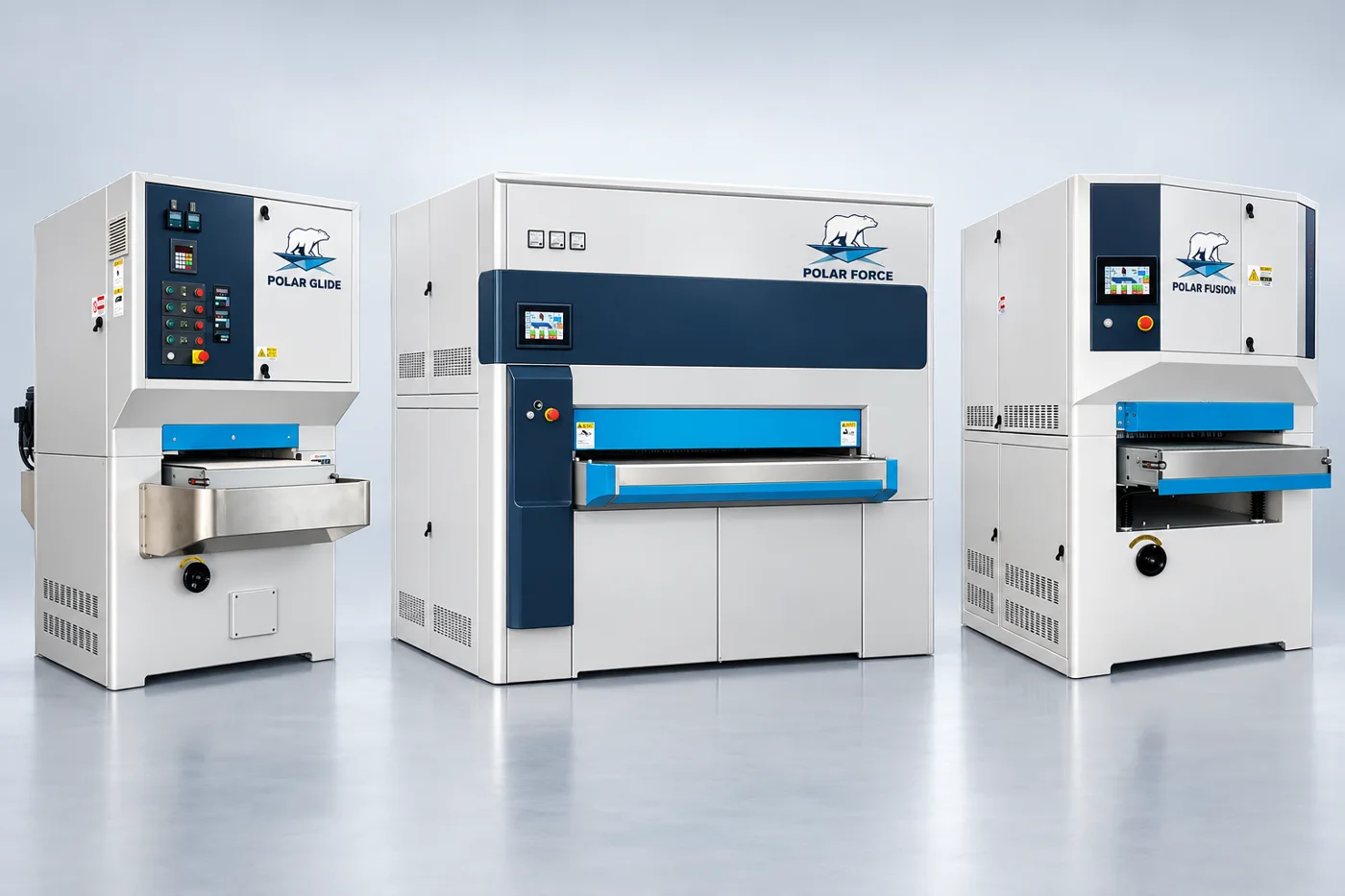
Glide is the light-duty starting point, Force is the heavier-duty sanding platform and Fusion is the combination-head route. These labels help organize the range; they do not replace a configuration review. If deburring or a defined edge radius is essential, state it explicitly and request evidence on your representative part.
Check these out
Polar Finishing Equipment is a Canadian brand offered by Rise Tek. Select by your application and approved sample results.
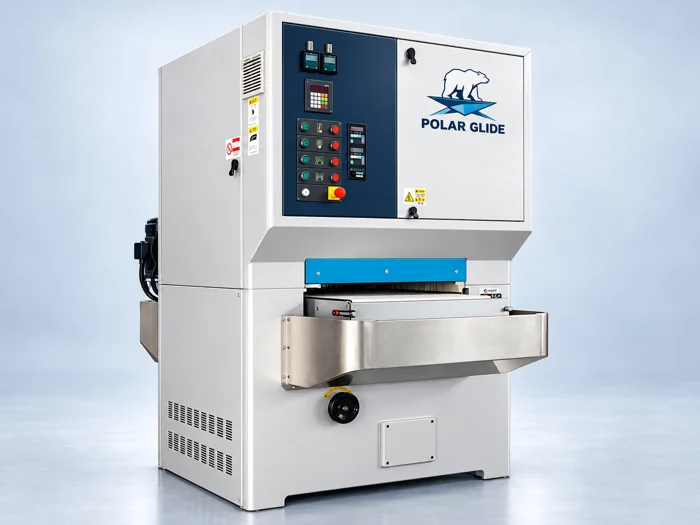
Polar Glide
Explore the light-duty sanding platform. Confirm the incoming surface, abrasive arrangement and target finish on representative parts.
Explore Glide →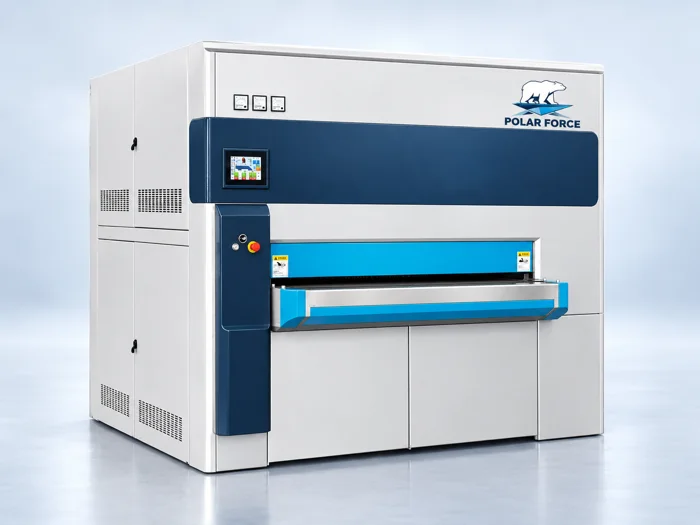
Polar Force
Explore the heavier-duty sanding platform. Review removal requirements, handling and the selected configuration before agreeing a trial.
Explore Force →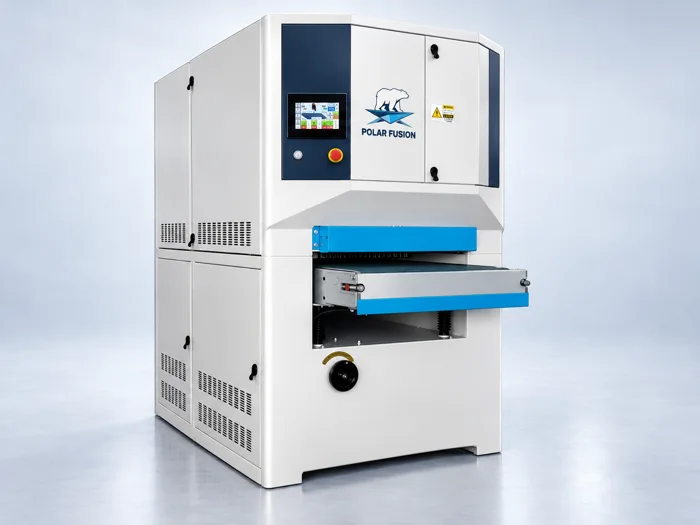
Polar Fusion
Explore combination-head sanding and finishing. Confirm the head sequence, abrasives and any additional passes required.
Explore Fusion →Machine cards use branding illustrations. Final appearance, capability and included equipment depend on the quoted configuration.
Your next step
Send a drawing, material and thickness, incoming-condition photos, desired finish reference and expected batch pattern. Start with the finish acceptance worksheet, then request a Polar application quotation. The result should be a defined machine scope and sample plan, not a choice based only on a model name.
Frequently asked questions
Is metal sanding the same as deburring?
No. Sanding describes abrasive work on a surface; deburring targets unwanted projecting material at specified edges. One process may contribute to both, but face appearance does not prove edge acceptance.
Does deburring guarantee a rounded edge?
No. A required edge shape or radius must be specified and verified separately. Burr removal alone does not establish the required radius.
Can one Polar machine sand and finish in one pass?
That depends on the selected head arrangement, incoming part and target result. Confirm the sequence and number of passes through an agreed representative trial.
Which Polar machine is right for stainless steel?
Start with the material, geometry, incoming condition and required finish. Review Glide, Force or Fusion against a confirmed configuration and sample plan rather than choosing by the model name alone.