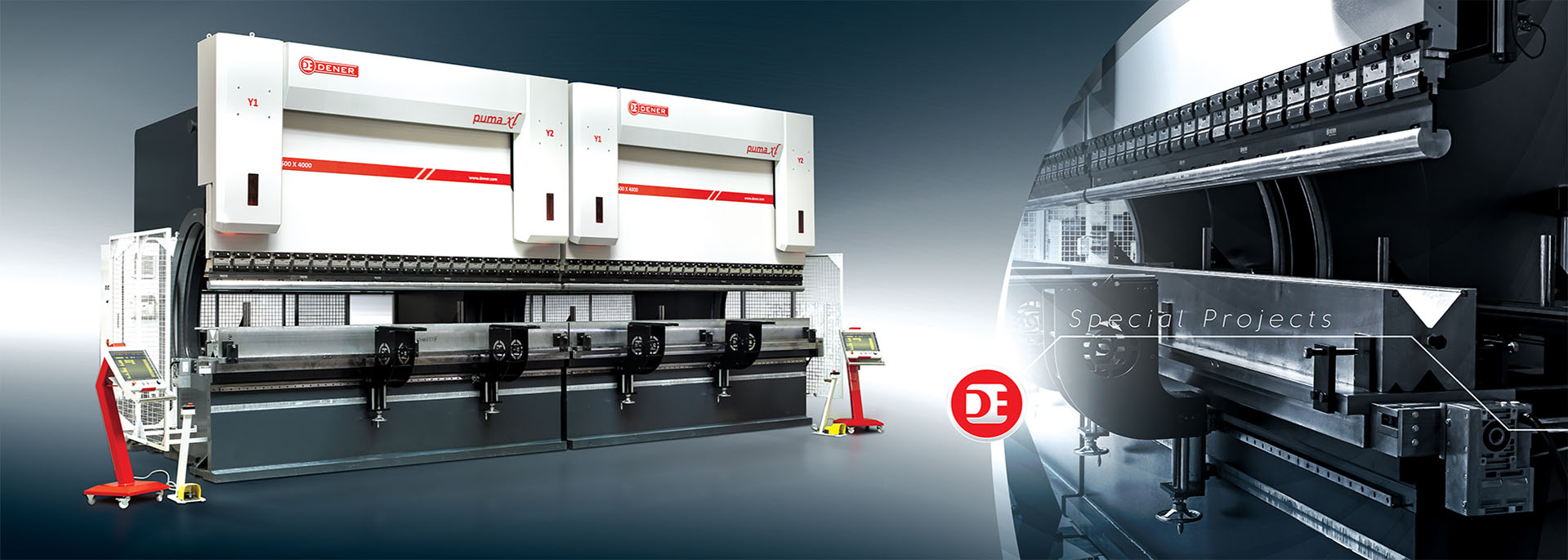
The first question most shops ask when evaluating a CNC press brake purchase is: hydraulic or servo-electric? The answer depends almost entirely on what you bend, how much of it, and what your shop floor environment looks like. There is no universally correct choice — but there is a clearly correct choice for your specific situation.
This guide walks through the differences that actually matter in a Canadian fabrication context: tonnage range, energy costs, maintenance burden, precision, and total cost of ownership over a five-year horizon. If you want a foundational overview of how press brakes work before diving into the comparison, start with What is a CNC Press Brake?
How Each Drive System Works
Hydraulic: Oil-Pressure Ram Drive
A hydraulic press brake uses a motor-driven pump to pressurize hydraulic oil. That pressurized oil feeds into cylinders mounted on either side of the ram, pushing it down with controlled force. A servo-proportional valve regulates oil flow to manage ram speed and position. The CNC controller reads linear encoders on the ram and issues valve corrections in real time to hold the programmed depth.
The pump motor runs continuously whenever the machine is powered on — whether it is actively bending or sitting idle between parts. Oil circulates through a cooler to maintain operating temperature. The force output is proportional to oil pressure and cylinder bore area, which is why hydraulics can generate very high tonnage without requiring motors of impractical size.
Servo-Electric: Belt-and-Pulley Ram Drive
A servo-electric press brake replaces the oil circuit entirely with synchronous servo motors that tension belts over a main pulley system to generate bending force. The belts transmit motor torque to the ram and drive it down under controlled force. Return movement is assisted by springs — which also contributes to energy efficiency, since the springs recover energy during the return stroke instead of requiring motor power to lift the ram.
The motors only draw power under load during the actual bending stroke. When the machine is idle or between parts, current consumption is near zero. The pump motor on a hydraulic machine, by contrast, runs continuously whether the machine is bending or not. This is why servo-electric machines consume significantly less electricity — they do not run a pump for eight hours to make 400 bends.
The ball screw press brake is a second all-electric design — distinct from both hydraulic and belt-drive servo-electric. Instead of belts and pulleys, ball screws convert servo motor rotation directly into linear ram force. Both servo-electric designs (belt-drive and ball screw) are fully electric with no hydraulic oil. The differences are in the torque-speed profile, force ceiling, and price. Dener's ball screw series is addressed at the end of this article.
Head-to-Head Comparison
| Attribute | Hydraulic CNC | Servo-Electric CNC |
|---|---|---|
| Tonnage range | 40 – 2,000+ ton | up to 200 ton |
| Ram repeatability | ±0.02 mm typical | ±0.02–0.03 mm typical |
| Energy consumption | High — pump runs continuously | Low — motor draws power only under load |
| Approach / retract speed | Fast (100–200 mm/s approach) | Very fast (200–300 mm/s approach) |
| Bending speed control | Excellent — proportional valve | Excellent — servo torque control |
| Maintenance requirements | Oil changes, filters, seals, cooler | Belt/pulley inspection, spring check — minimal |
| Cleanliness / leak risk | Oil leak risk, cooler drip, oil mist | No oil — suitable for clean environments |
| Noise level | Moderate — pump whine when idle | Very quiet — near-silent when idle |
| Stainless / thick plate | Yes — full tonnage range available | Up to 200 ton — handles medium-heavy plate |
| Purchase price (equivalent config) | Lower at mid-tonnage | 10–20% premium over comparable hydraulic |
| Annual energy cost savings | — | ~$3,000 – $8,000 vs hydraulic (2-shift) |
| 5-year TCO | Moderate — energy + maintenance adds up | Lower — energy and maintenance savings close the price gap |
Tonnage and Material Range: The Most Important Difference
Dener's servo-electric belt-drive press brakes reach up to 200 tons — enough for a significant portion of Canadian production bending. But hydraulic machines still go far beyond that, to 600+ tons and higher. If your material profile regularly includes:
- Mild steel plate over 12mm
- Stainless steel over 6mm at full bed length
- Structural profiles, heavy angle, or thick-wall tube
- Long bends (4m+) in 8mm+ material where tonnage accumulates across the full bed
— then hydraulic is the right call. The 200-ton ceiling on servo-electric still handles a wide range of general fabrication, but heavy structural and heavy-plate work sits firmly in hydraulic territory.
If your typical work is:
- Sheet metal under 6mm — enclosures, brackets, HVAC, electrical panels
- Medium-gauge stainless under 4mm
- High-mix, short-run production with frequent changeovers
- Any production that fits within a 200-ton tonnage envelope
— then servo-electric covers your requirement entirely, and you pay an ongoing energy and maintenance penalty running a hydraulic machine you do not need.
The most common miscalculation we see: a shop running primarily 2–4mm mild steel buys a 300-ton hydraulic "for future capacity" — then spends thousands per year more in electricity than a servo-electric would have cost. Calculate your actual peak tonnage requirement. If it lands under 200 tons, that extra hydraulic headroom is money on the floor.
Energy Efficiency: Real Numbers for Canadian Shops
At Canadian commercial electricity rates (averaging $0.12–$0.18/kWh depending on province), the energy difference between hydraulic and servo-electric is material over a five-year ownership horizon.
A typical 110-ton hydraulic press brake draws 11–15 kW continuously from its pump motor — even when not bending. Running two 8-hour shifts, 250 days per year, that is roughly 44,000–60,000 kWh annually. At $0.15/kWh: $6,600–$9,000/year in electricity alone.
The equivalent servo-electric machine draws power only during the bending stroke — approximately 25–30% of cycle time. Effective annual consumption falls to 11,000–18,000 kWh. At the same rate: $1,650–$2,700/year.
Dener rates their servo-electric machines at up to 50% lower energy consumption versus hydraulic. In practice, a two-shift shop can expect to recover $3,000–$6,000 per year in electricity savings depending on machine size and shift utilization. Over five years, that is $15,000–$30,000 recovered — often closing the gap on the purchase price premium of the servo-electric machine.
Ontario TOU commercial rates and BC Hydro industrial rates both have demand charge components. The servo-electric machine's lower peak demand draw (no pump motor spike) can also reduce your monthly demand charge by $150–$400 depending on your utility tariff — an additional savings layer beyond base energy consumption.
Precision and Repeatability
Both machine types, when properly calibrated with a modern controller (Delem DA-66T, ESA S660), achieve production-grade angle repeatability. Repeatability specs on servo-electric and hydraulic machines at equivalent tonnage classes are closely matched — both typically in the ±0.02–0.03mm ram range. The real precision advantage of servo-electric comes from a different source:
- Cold-start consistency: Hydraulic oil viscosity changes with temperature, introducing minor positional variation during machine warm-up. A servo-electric machine is consistent from the first bend of the day — no warm-up period required. In unheated Canadian shops in winter, this matters during the first 20–30 minutes of operation.
- No valve hysteresis: Hydraulic machines use proportional valves to control oil flow, which introduce a small hysteresis band. Servo-electric belt drive is mechanically direct — the motor position is the ram position with no intermediate fluid state.
- Batch consistency: On high-mix production running hundreds of identical parts, the servo-electric's immunity to thermal drift produces tighter part-to-part angle consistency over a full shift.
For most production bending work at 1mm and above with tolerance requirements of ±0.5° or looser — both machine types deliver equivalent results. The servo-electric edge shows most clearly in long runs of precision thin-sheet work.
Maintenance and Total Cost of Ownership
Hydraulic press brake maintenance is predictable but continuous:
- Hydraulic oil: Full system change every 2,000–4,000 operating hours (approximately 1–2 years on a two-shift machine). Cost: $800–$1,500 per change including fluid and disposal.
- Filter replacement: Return-line and pressure filters every 500–1,000 hours.
- Seal inspection: Cylinder rod seals, valve body seals — inspect annually, replace as needed.
- Oil cooler: Clean heat exchanger fins annually; check refrigerant level if air-cooled chiller type.
- Hose inspection: High-pressure hydraulic hoses have a service life recommendation of 5–7 years regardless of condition.
Servo-electric maintenance is minimal by comparison. The belt-and-pulley drive system requires periodic belt tension checks and pulley wear inspection. The spring-return mechanism needs condition checks at regular intervals. There is no hydraulic oil, no cooler, no seals, and no filters. Annual maintenance cost for a servo-electric machine is typically $800–$1,500 less than the equivalent hydraulic.
Over five years, the combined energy and maintenance savings of a servo-electric machine typically range from $15,000 to $35,000 — in a two-shift shop. This is the TCO calculation that flips the purchase price comparison in favour of servo-electric for shops where the tonnage fits.
Speed and Cycle Time
Dener rates their servo-electric machines at up to 35% faster cycle times versus hydraulic, citing improved CNC and drive communication response with minimum waiting time between strokes. The speed advantage comes primarily from faster approach and retract — the non-bending portion of the stroke where the belt drive can accelerate and decelerate more responsively than a proportional hydraulic valve system.
For heavier material where bending speed must be slowed to 5–10 mm/s at contact — to manage material flow and tonnage buildup — the cycle time difference narrows. On thick plate at the upper end of the servo-electric's tonnage range, the speed advantage over hydraulic is modest. The 35% figure applies most directly to thin sheet, high-cycle production where approach/retract time represents a large fraction of total cycle time.
Who Should Choose Which
Choose Hydraulic When:
- You bend material 12mm and above regularly
- Your mix includes stainless steel over 6mm at full bed length
- You need over 200 tons of capacity
- You bend structural profiles, heavy angle, or thick-wall tube
- Budget constraint favours lower upfront cost at high tonnage
- Two-year capacity forecast includes heavy-plate work
Choose Servo-Electric When:
- Material profile fits within 200 tons of bending force
- Primary work is sheet metal under 6mm — enclosures, HVAC, panels
- Shop runs two shifts — energy savings compound quickly
- Cleanroom, electronics, or food equipment environment
- High-mix, high-cycle production where speed and quiet operation matter
- Maintenance bandwidth is limited — minimal service requirement preferred
- Sustainability or energy targets drive procurement decisions
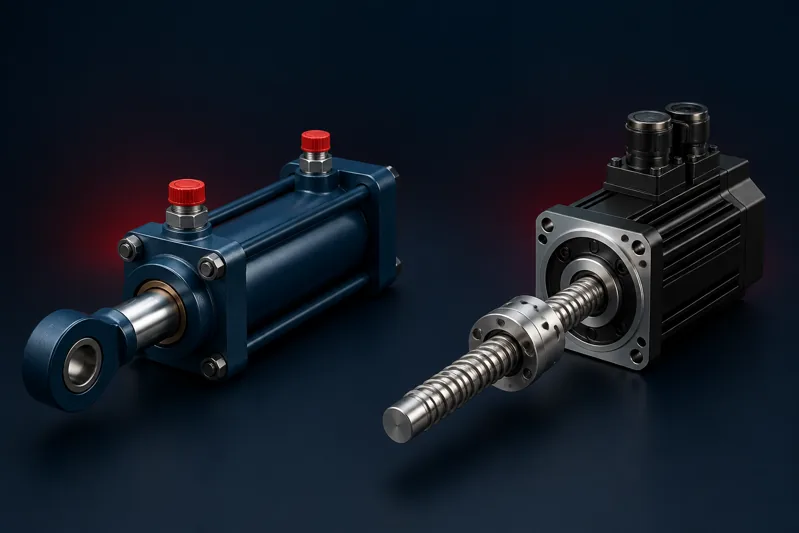
The Third Option: Ball Screw Press Brakes
Dener's ball screw press brake is a second all-electric design — fully distinct from both hydraulic and the belt-drive servo-electric. Instead of servo motors driving belts over a pulley system, ball screws convert servo motor rotation directly into linear ram displacement. There is no hydraulic oil involved — this is an electric-only machine like the servo-electric, just using a different transmission mechanism.
The ball screw design typically achieves higher sustained force at lower speeds compared to the belt-drive configuration, which can translate to higher tonnage capacity in the electric range. It shares the servo-electric's key advantages — no oil, low energy consumption, quiet operation, minimal maintenance — but with a different torque-speed profile suited to heavier gauge work within the electric drive's range. Price is typically at a premium over the belt-drive servo-electric.
CNC press brakes imported into Canada may be subject to MFN duty rates depending on country of manufacture. Dener (Turkey) and Haco (Belgium) machines qualify for CETA preferential tariff rates where applicable. Ask your dealer to confirm the applicable duty classification — it affects landed machine cost by 3–6% and should be factored into any TCO calculation.
What Rise Tek Sells in Canada
Rise Tek Machinery is an authorized Canadian dealer for both machine types:
- Dener hydraulic press brakes: 40 to 600+ tons, 2500mm to 6000mm bed, standard Delem DA-66T controller. The Dener EM series covers the 40–220 ton sweet spot for Canadian general fabrication shops. Available with 4-axis and 6-axis back-gauge configurations.
- Dener servo-electric press brakes: up to 200 tons, belt-and-pulley drive, spring-assisted return, ESA 875 3D controller. The correct choice for HVAC, electronics enclosures, precision sheet metal, and any shop where energy efficiency and clean operation are priorities.
- Dener ball screw press brakes: all-electric ball screw drive, for shops wanting the oil-free advantages of electric drive with a different torque-speed profile than the belt-drive series.
- Haco EuroMaster S hydraulic series: Belgian-built, 40–320 ton, ESA S660 controller. An alternative hydraulic platform with strong European tooling compatibility.
All machines include Canadian delivery, rigger coordination, on-site installation, and operator training. Rise Tek's service network covers Ontario, Quebec, Alberta, and BC, with remote controller support via VPN for all other provinces.
🔧The Bottom Line
If you regularly bend material that requires over 200 tons of force — heavy plate, structural profiles, thick stainless at full bed length — you buy hydraulic. For everything within 200 tons, the servo-electric belt-drive machine is worth a serious look: up to 50% lower energy consumption, spring-assisted return, no hydraulic oil, quieter operation, and up to 35% faster cycle times on thin sheet. In a two-shift shop those advantages recover the purchase price premium within a few years of ownership.
The most common mistake is buying hydraulic as a hedge against future capacity when the shop's actual work profile never changes. Calculate your peak tonnage requirement honestly. If the servo-electric covers it, it almost certainly costs less to own over five years — even though it costs more to buy.
Related Reading
- What is a CNC Press Brake? Complete Guide for Canadian Fabricators
- CNC Press Brakes at Rise Tek — Hydraulic, Servo-Electric & Ball Screw
- CNC Press Brake Buyer's Guide: Tonnage, Length & Control Type Explained
- Press Brake Maintenance Schedule: Daily, Weekly, Monthly & Annual
- Press Brake Tonnage Calculator — Education Center