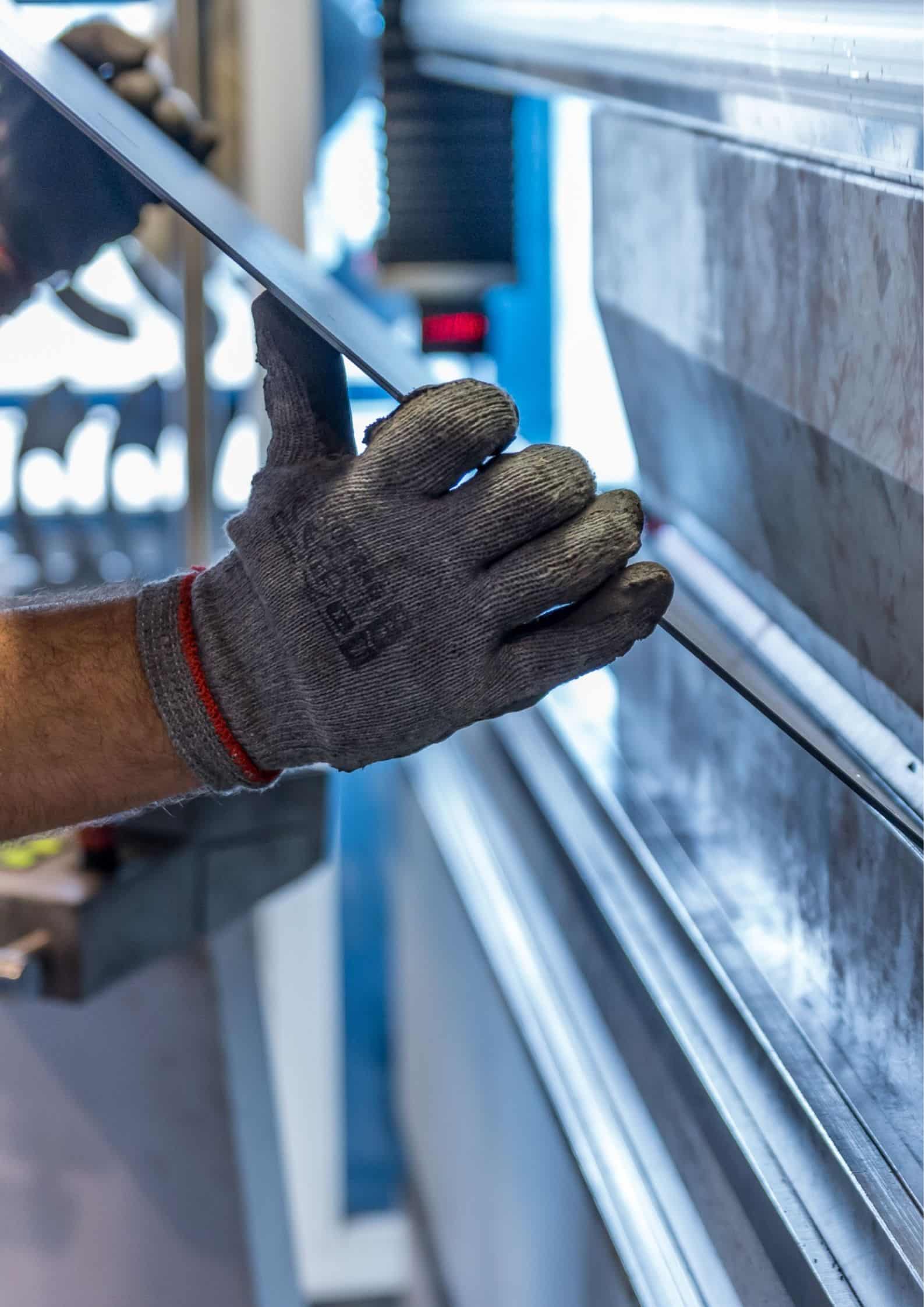
A CNC press brake is the workhorse of any serious metal fabrication shop. It is the machine that takes flat sheet metal and bends it — repeatedly, precisely, and repeatably — into brackets, enclosures, frames, panels, and structural components. If you work in metal fabrication in Canada and you are evaluating a press brake purchase, or you are simply trying to understand what this machine actually does, this guide covers everything you need to know.
What is a Press Brake?
A press brake is a machine tool that bends sheet metal or plate by pressing a punch (the upper tool) down into a V-die (the lower tool). The material is positioned between the two tools and the ram — the moving beam that carries the punch — descends under controlled force to create the bend.
The term "press brake" comes from old brake mechanisms used in bending. Today the name refers to the entire class of machines that form metal by bending rather than cutting or stamping.
CNC stands for Computer Numerical Control. In a CNC press brake, a dedicated controller manages the position of the back-gauge (which positions the sheet for each bend), the ram depth (which determines the bend angle), and the bending sequence across a multi-step program. Instead of manually adjusting stop positions and dial indicators between each part, the operator programs the job once and the machine executes the entire sequence automatically.

How a CNC Press Brake Works
The core bending cycle is the same regardless of machine type:
- The operator places the sheet against the back-gauge fingers, which position the material at the correct setback distance from the bend line.
- The ram descends, pressing the punch into the material and into the die below.
- The ram reaches the programmed depth, which determines the inside bend angle based on the material's springback.
- The ram retracts, the back-gauge moves to the next position, and the cycle repeats for the next bend.
The CNC controller calculates the required ram depth based on material type and thickness, punch geometry, die opening, and target bend angle. Modern controllers like the Delem DA-66T and ESA S660 include graphical 3D bend sequence simulation and automatic springback compensation.
Hydraulic machines remain the most common choice in Canadian shops. Our guide to CNC hydraulic press brakes covers frame construction, hydraulic system design, and the applications each configuration suits best.
When metal is bent, it wants to spring back toward its original flat position after the punch releases. The amount of springback depends on the material grade and thickness. The CNC controller overbends by a calculated amount to compensate — so the part springs back to exactly the specified angle.
Types of CNC Press Brakes
There are three main drive types used in CNC press brakes today, each with a different mechanism for moving the ram:
1. Hydraulic CNC Press Brakes
Hydraulic press brakes use oil-pressure cylinders to drive the ram. They are the most established technology in the industry and remain the standard choice for mid-to-heavy fabrication. Key characteristics:
- Available from 40 tons to 2,000+ tons of clamping force
- Handles thick plate and stainless steel that servo-electric machines cannot
- Lower initial purchase price at mid-tonnage ranges
- Requires hydraulic oil cooling and periodic fluid maintenance
- Ram speed varies — modern machines have fast approach/retract speeds with slow bend speed at contact
Rise Tek sells the Dener hydraulic CNC press brake and the Haco EuroMaster S hydraulic series across Canada. Both feature European-standard tooling, Delem/ESA controllers, and full Canadian installation and service.
2. Servo-Electric CNC Press Brakes
Servo-electric press brakes replace hydraulic cylinders with electric servo motors driving precision ball screws. The result is:
- Higher positioning accuracy (often ±0.01mm ram repeatability)
- 60–70% lower energy consumption vs. hydraulic — motors only run under load
- No hydraulic oil, no cooler, no oil leaks — cleaner operation
- Faster cycle times on thin material
- Available up to approximately 110 tons — not suitable for very thick plate
The Dener servo-electric press brake is Rise Tek's cleanroom and precision shop solution — ideal for electronics enclosure fabrication, HVAC components, and precision sheet metal shops.
3. Ball Screw (Electro-Hydraulic) Press Brakes
Some manufacturers use a hybrid design combining hydraulic force with electric-driven ball screw positioning. This provides high-tonnage capability with the positioning precision of servo-electric systems. Dener's ball screw press brake is an example of this approach — offering a middle path between the raw power of hydraulic and the precision of pure servo-electric.
| Feature | Hydraulic | Servo-Electric | Ball Screw |
|---|---|---|---|
| Tonnage range | 40–2,000+ ton | 25–110 ton | 40–400 ton |
| Ram repeatability | ±0.02mm | ±0.01mm | ±0.01mm |
| Energy use | High | Low | Medium |
| Maintenance | Oil/seals/cooler | Minimal | Low |
| Best for | Heavy plate, stainless | Thin sheet, precision | Balanced production |
| Price | Low–High | Medium | Medium–High |
Key Specifications to Understand
Tonnage
Tonnage is the maximum clamping force the press brake can generate across its full bending length. A 135-ton press brake can apply up to 135 tons of force across its 3-metre bed. The tonnage required for a specific bend is calculated based on material tensile strength, thickness, bending length, and V-die opening. The key formula for mild steel: Tonnage = (575 × t² × L) / V, where t is thickness in mm, L is bending length in metres, and V is die opening in mm.
Always size with 20–30% headroom above your peak calculated tonnage. Running a press brake at its absolute maximum is damaging to the machine and reduces tooling life significantly.
Bending Length (Bed Length)
The bed length determines the maximum part length you can bend in a single pass. Common sizes are 2500mm, 3000mm, 3200mm, and 4000mm. Choose based on the longest parts you regularly produce — adding length also adds cost and footprint.
Back-Gauge Axes
The back-gauge positions the material for each bend. More axes mean more automation for complex parts:
- 2-axis (X + R): Standard — front-to-back distance and finger height
- 4-axis (X + R + Z1 + Z2): Independent left/right back-gauge positioning for taper bending
- 6-axis: Full 3D back-gauge movement for complex bent profiles
Open Height and Stroke
Open height is the clearance between the punch and die when the ram is fully raised — determines the maximum workpiece height you can insert. Stroke is the total ram travel distance. Both matter for deep boxes and tall flanges.
CNC Controllers
The controller is the brain of the press brake. The two most common controllers on European-standard machines are:
- Delem DA-66T: Touchscreen, 3D graphical bend simulation, automatic tonnage calculation, multi-touch gesture interface. Standard on Dener and Haco hydraulic machines sold by Rise Tek.
- ESA S660: Alternative touchscreen controller with similar capability — bend sequence simulation, automatic springback, offline programming via PC software.
Both support USB program import/export and can be programmed offline using PC software, reducing machine downtime during job changeover.
Press Brake Tooling
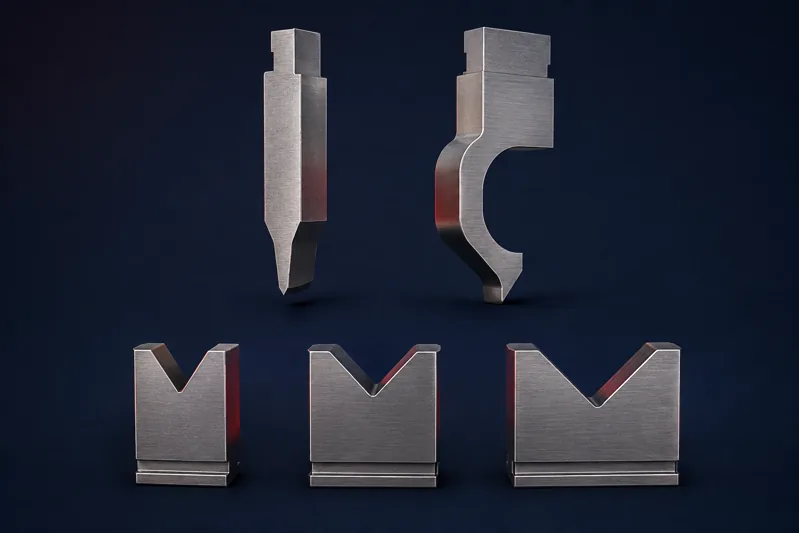
Tooling — the punch and die set — determines the bend radius, bend angle, and material clearances. The tooling system is as important as the machine itself.
- Punches (upper tools): Available in straight, gooseneck (for deep flanges), radius, and acute angle profiles. Tip radius determines the inside bend radius of the finished part.
- V-dies (lower tools): V-opening width must be matched to material thickness (standard: 6–8× material thickness for mild steel). Width affects the bend force required and the inside radius.
- Tooling standard: Most Dener and Haco machines use European standard (Wila-compatible) tooling — the most widely available and interchangeable system globally.
What to Look for in a Canadian Press Brake Dealer
Buying a press brake in Canada is not just about the machine — it is about the support chain behind it. Key questions to ask any dealer:
- Do you stock tooling and consumables locally? A machine without available tooling is a productivity problem waiting to happen.
- Is service available in my province? Rise Tek covers all major Canadian metro areas from our Mississauga base. Remote service via VPN to the CNC controller is available for software issues.
- Are training and programming support included? Rise Tek includes on-site operator training and programming setup as part of every press brake sale.
- What is the warranty and parts lead time? Dener and Haco both maintain European spare parts inventory — most critical components ship within 5–10 business days.
Choosing the Right Press Brake for Your Shop
The right press brake comes down to your material profile, part complexity, and production volume:
- Thin sheet (under 6mm), high mix, precision parts → servo-electric. Lower tooling wear, faster cycle times, excellent repeatability.
- Mixed thickness, structural, stainless steel up to 12mm → hydraulic 135–220 ton. The workhorse configuration for most Canadian shops.
- Heavy plate, 10mm+, structural steel → hydraulic 300+ ton. Raw clamping force is the priority.
- Budget-constrained growth → consider a used/refurbished hydraulic CNC. CNC Pro Equipment lists inspected machines regularly.
The most common mistake Canadian shops make is buying to their current spec instead of their two-year spec. A press brake you outgrow in 18 months costs you the machine cost plus the switchover disruption. Buy the next size up.
Related Reading
- Press Brake Tonnage Calculator — free tool
- CNC Press Brakes at Rise Tek — Hydraulic, Servo-Electric & Ball Screw
- CNC Press Brake Buyer's Guide: Tonnage, Length & Control Type Explained
- Press Brake Maintenance Schedule: Daily, Weekly, Monthly & Annual
- CNC Press Brake Safety: Light Curtains, LOTO & CSA Compliance
- Press Brake Safety Features: What to Look for Before You Buy
- Press Brake Training Hub — Education Center