A CANADIAN BRAND · POLAR FINISHING EQUIPMENT
Metal finishing equipment
in Canada
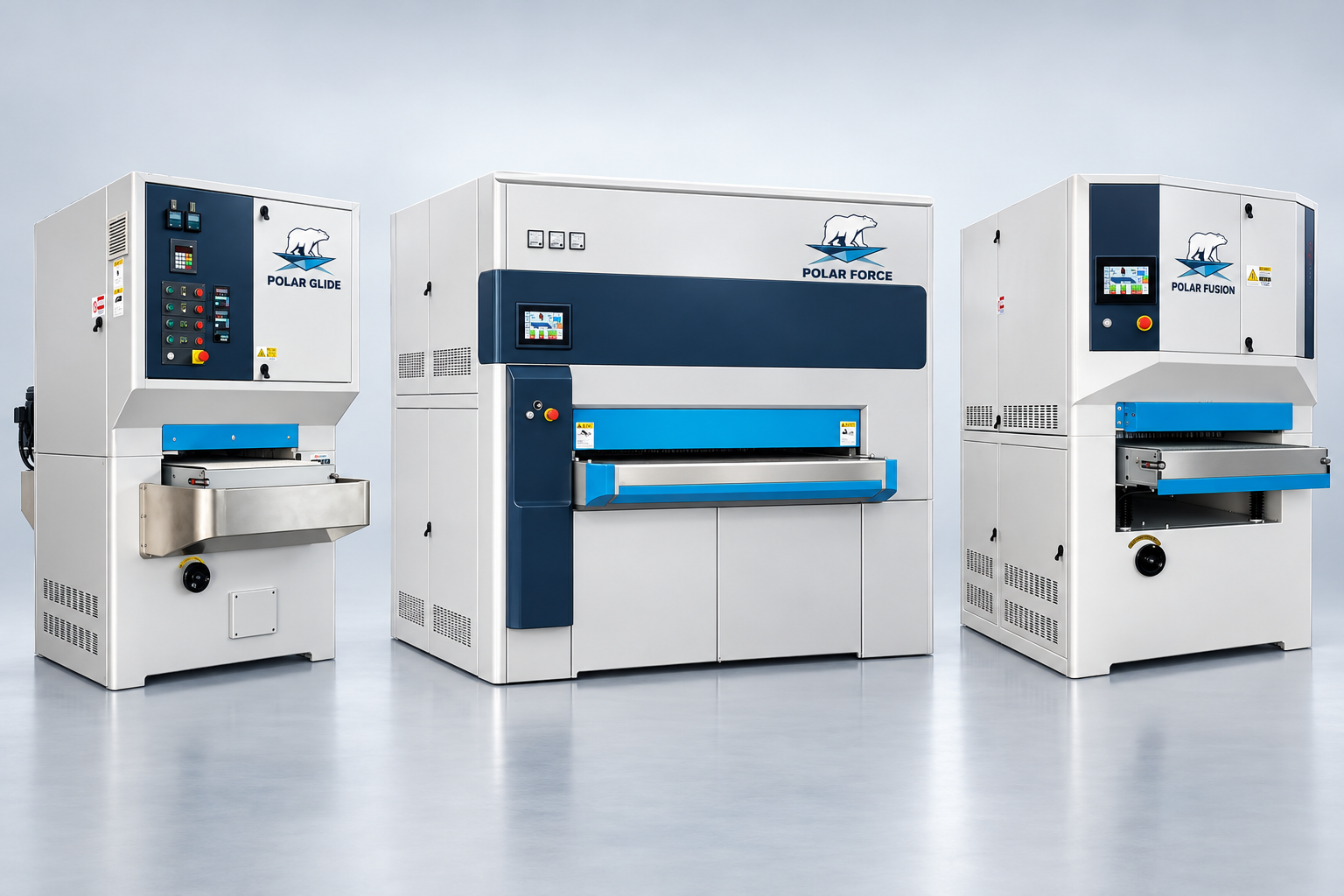
Glide · Force · Fusion
Choose a surface finishing machine for the work your parts need. Specify the burr to remove, the edge radius to achieve or the grain direction on a visible face.
Branding illustration. Final machine configuration and appearance confirmed with your quotation.
Compare Glide, Force and Fusion
| Model | Application focus | What to confirm |
|---|---|---|
| Polar Glide | Light-duty surface sanding and finishing | Material, incoming surface, required finish and selected abrasive arrangement. |
| Polar Force | Heavier-duty sanding applications | Removal requirement, part handling, duty cycle and results on representative parts. |
| Polar Fusion | Combination-head sanding and finishing | Head sequence, abrasives, target appearance and whether additional passes are required. |
For a quotation, send the material, part dimensions, incoming surface condition, target finish and batch quantity. Ask Rise Tek to confirm working width, head arrangement and the result on a representative part.
Choose your Polar.
Start with the application, then confirm the configuration, sample results and delivered scope.
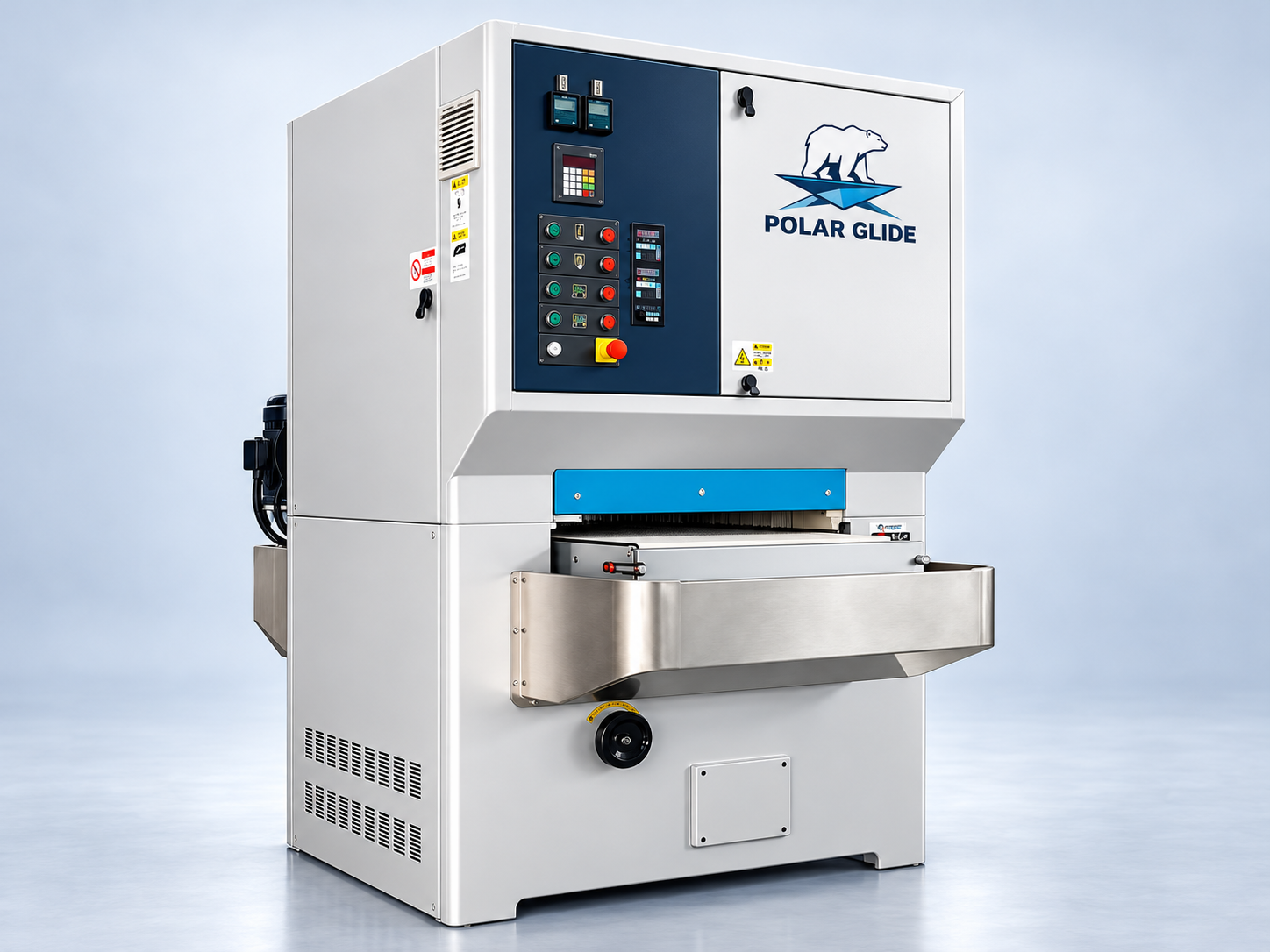
Polar Glide
A focused starting point for lighter sanding work. Review your material, incoming surface and target finish to define the right configuration.
Explore Glide ↗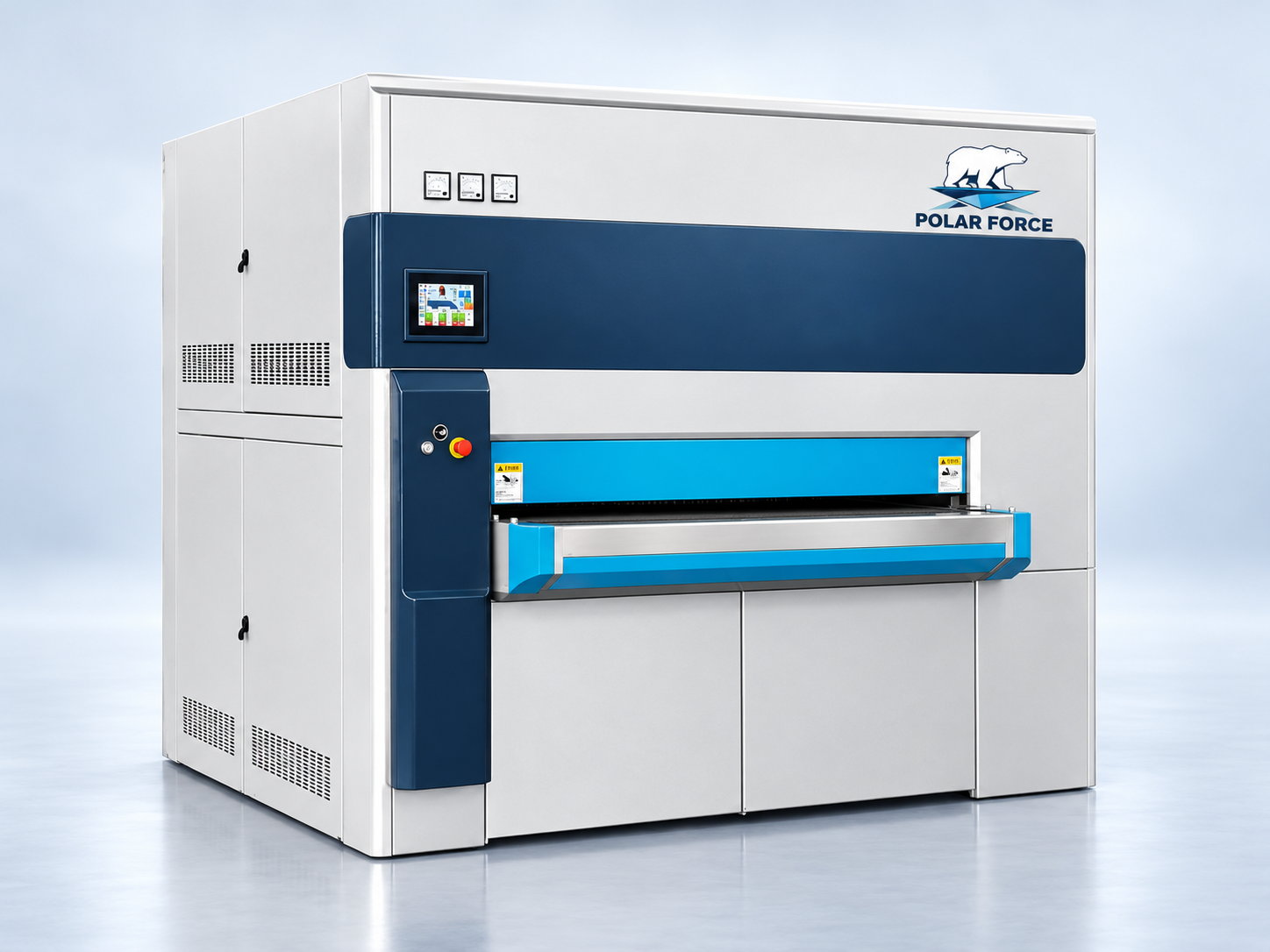
Polar Force
For shops evaluating a heavier-duty sanding platform. Match the machine configuration to your parts and production requirements.
Explore Force ↗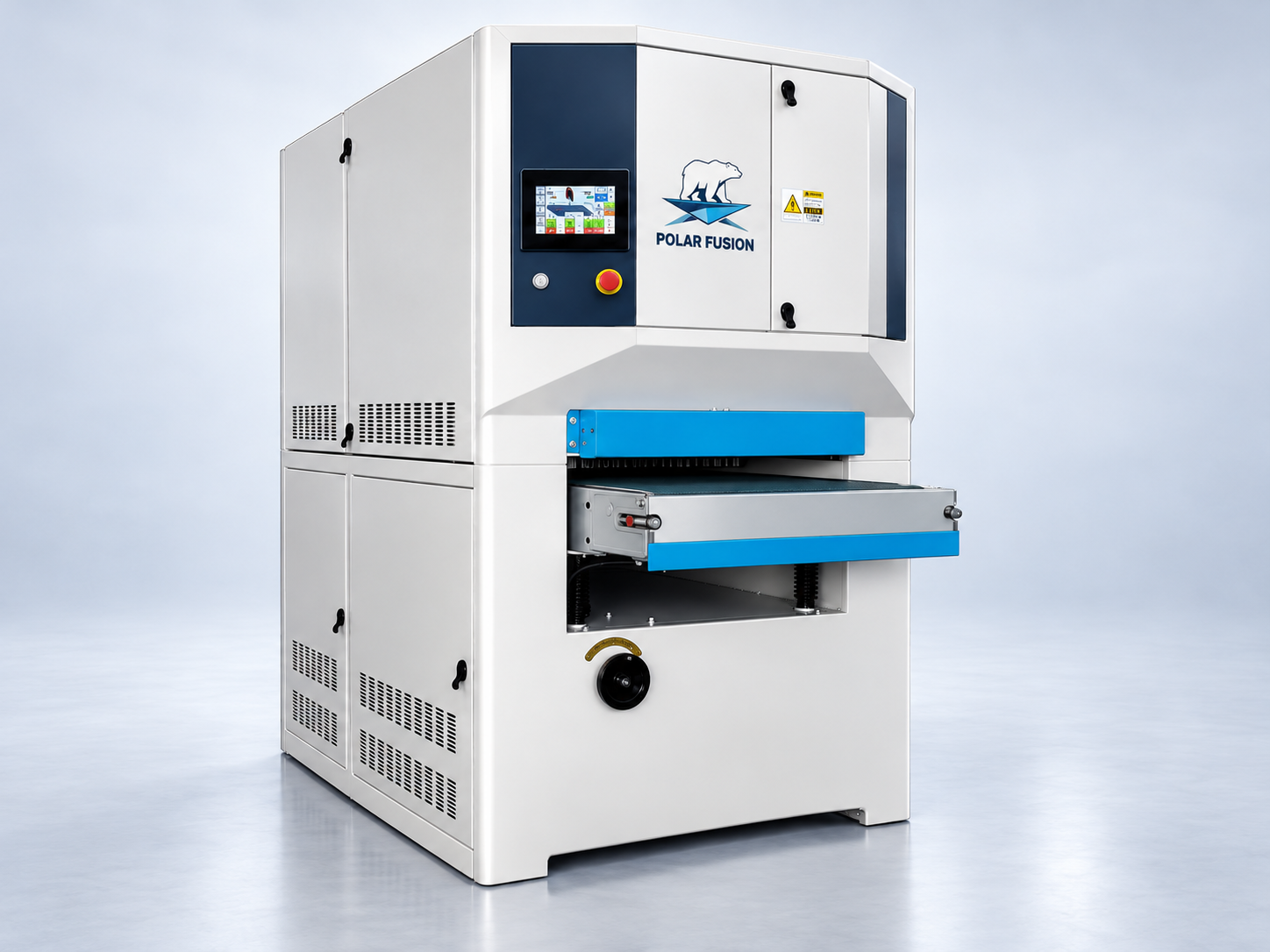
Polar Fusion
A combination-head platform for reviewing sanding and finishing stages together. Define the process around your required result.
Explore Fusion ↗Vibratory Bowls
For batches of loose parts, a vibratory bowl moves the parts through finishing media to deburr, radius or polish exposed surfaces. Match the media and cycle to the part geometry and finish sample.
FinishMaster tabletop and floor bowls at Machinist’s Vault ↗
Define the result before choosing the machine.
Outside and inside the sanding process.
Interior photographs show example metal-sander arrangements. Head count, drive layout and brush equipment vary by configuration.
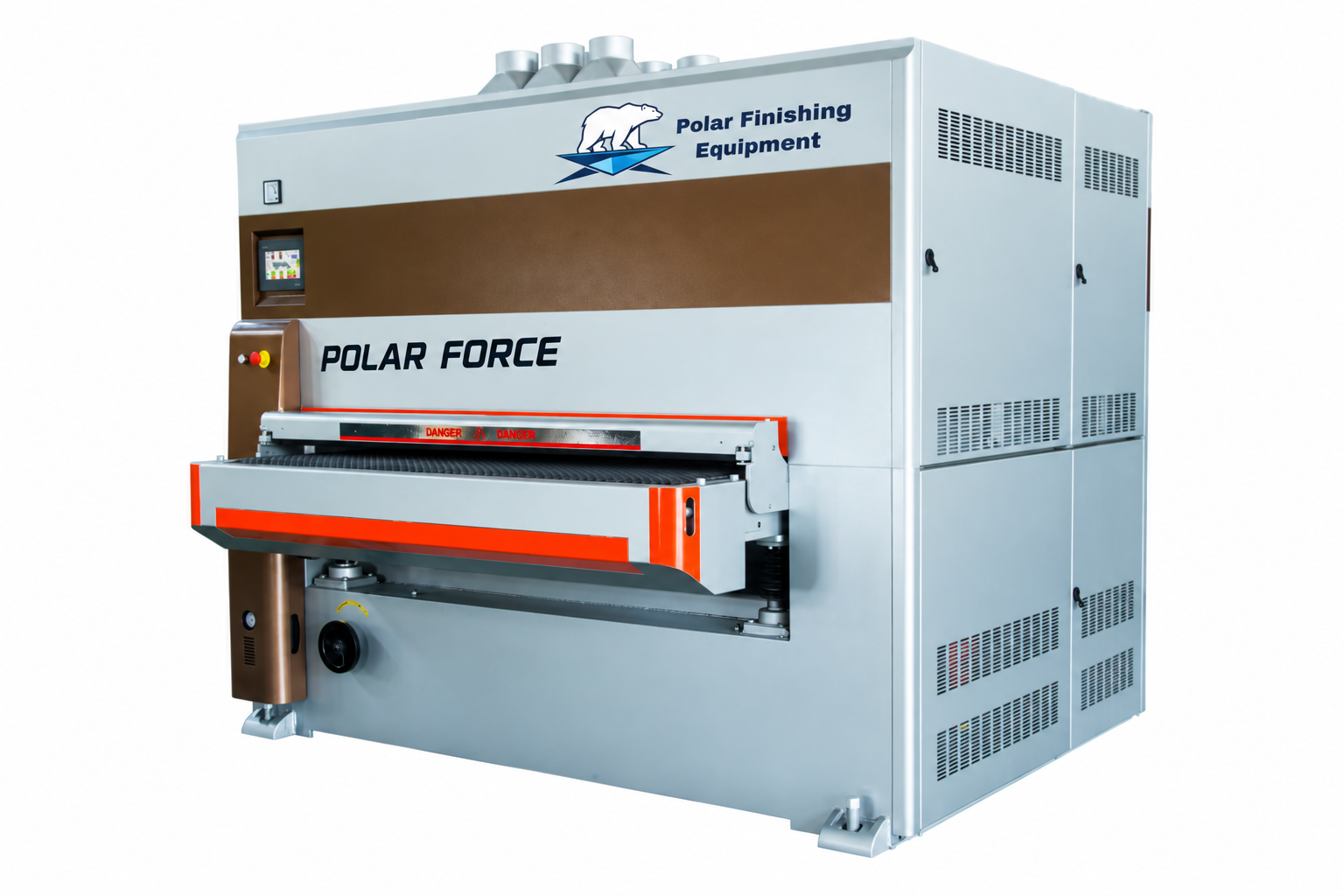
Exterior and operator access
Original catalogue exterior with Polar branding digitally applied. This example arrangement is not the 900 mm specification reference; confirm the supplied machine and finish in your quotation.
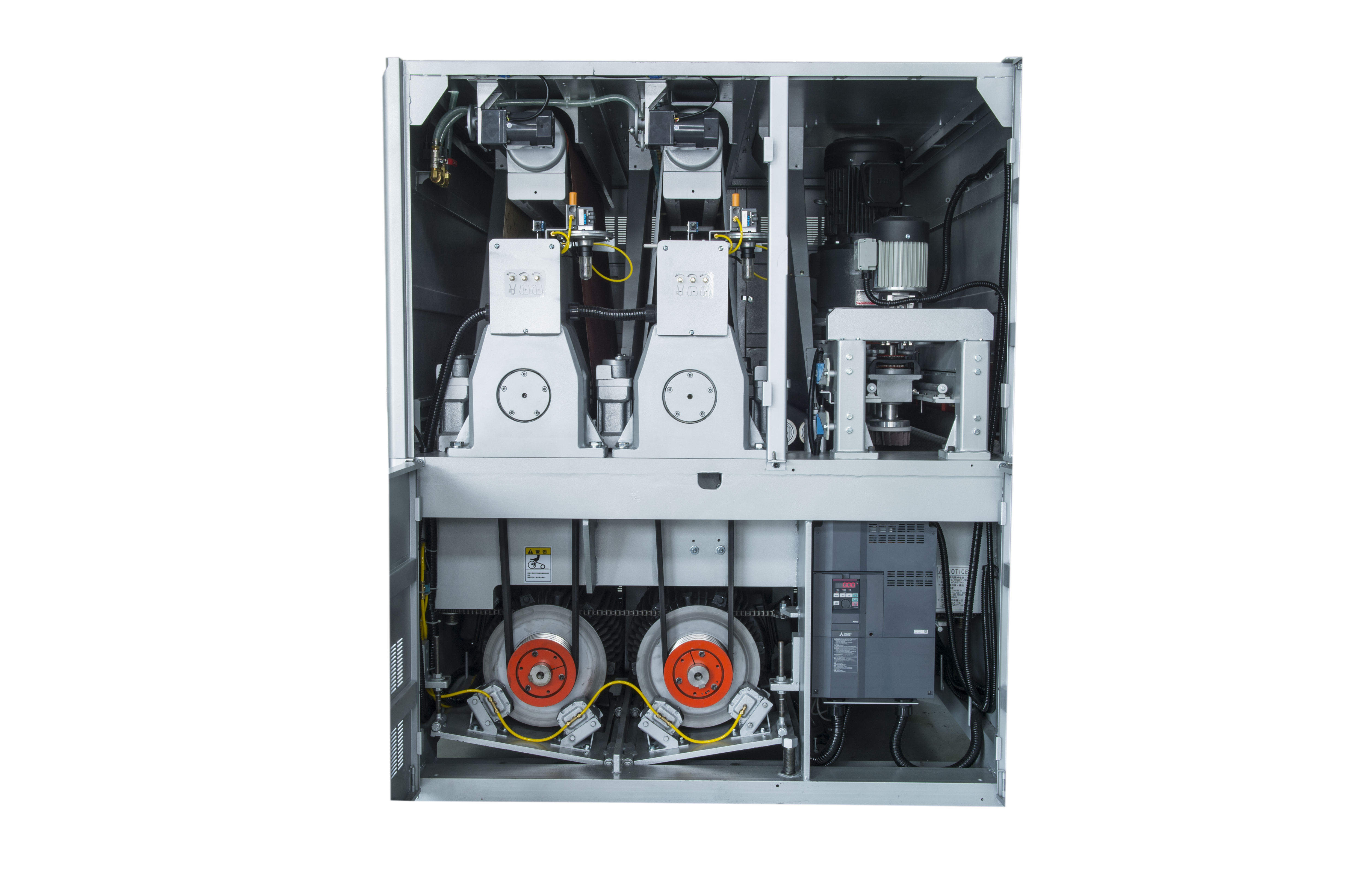
Belt and brush arrangement
Open-side view of an example heavy-duty configuration, with belt mechanisms, drives and a disc-brush station.
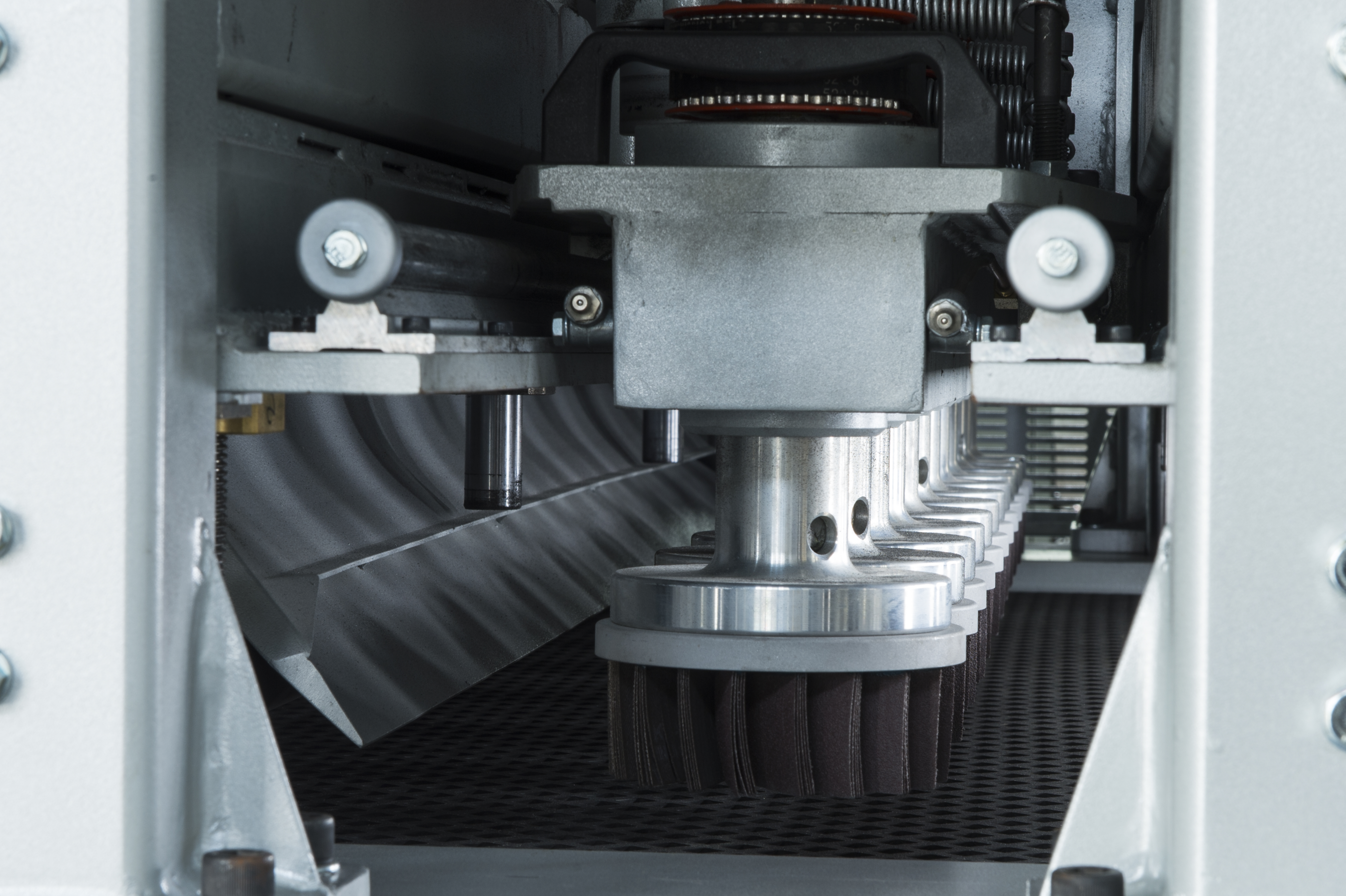
Disc-brush detail
Close-up of the brushing mechanism above the conveyor. Confirm brush diameter, tooling and workholding in the quotation.
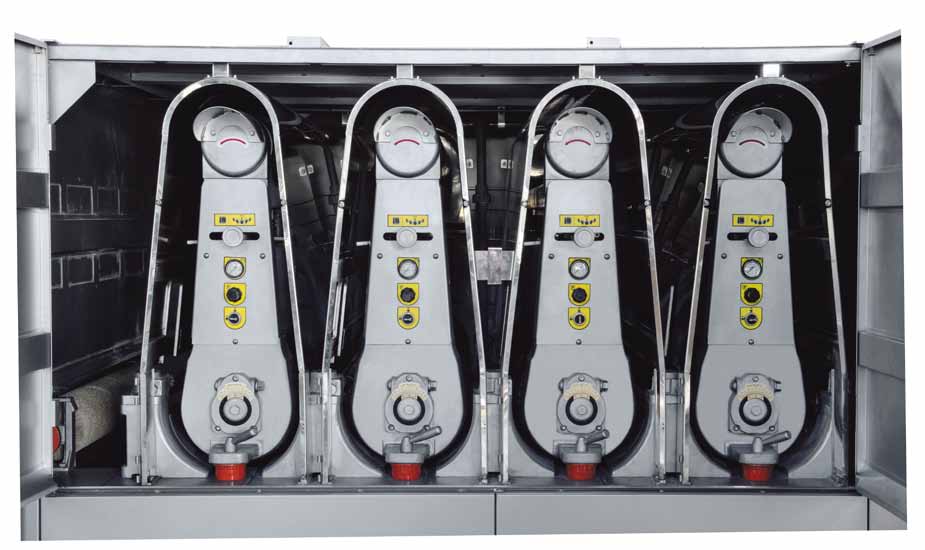
Multiple abrasive-belt heads
Catalogue example with four belt-head mechanisms. The number and order of heads are configuration-specific.
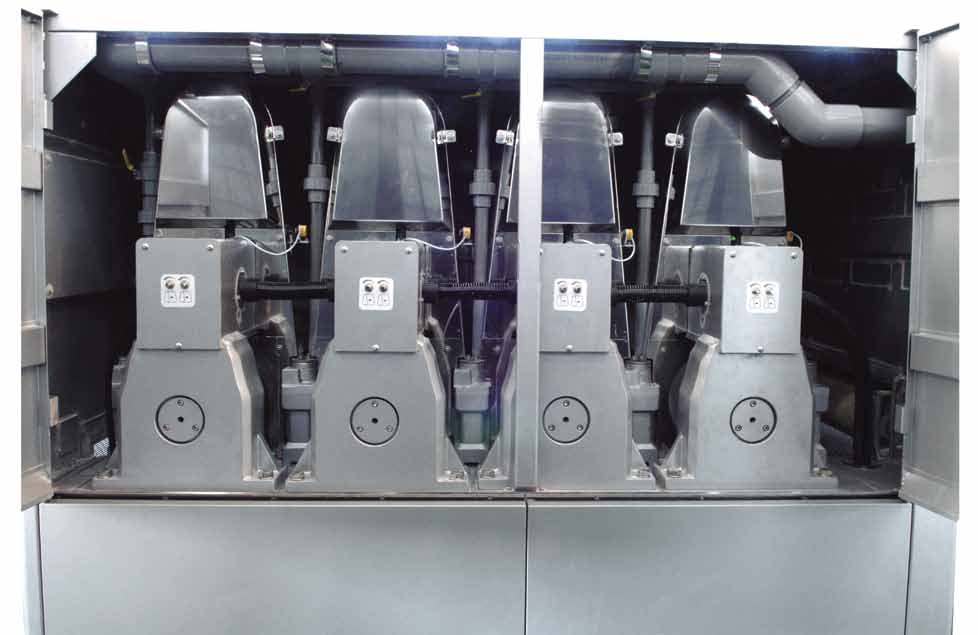
Rear mechanism access
A second view of the belt-head assemblies and extraction connections.
Top, bottom and combination heads.
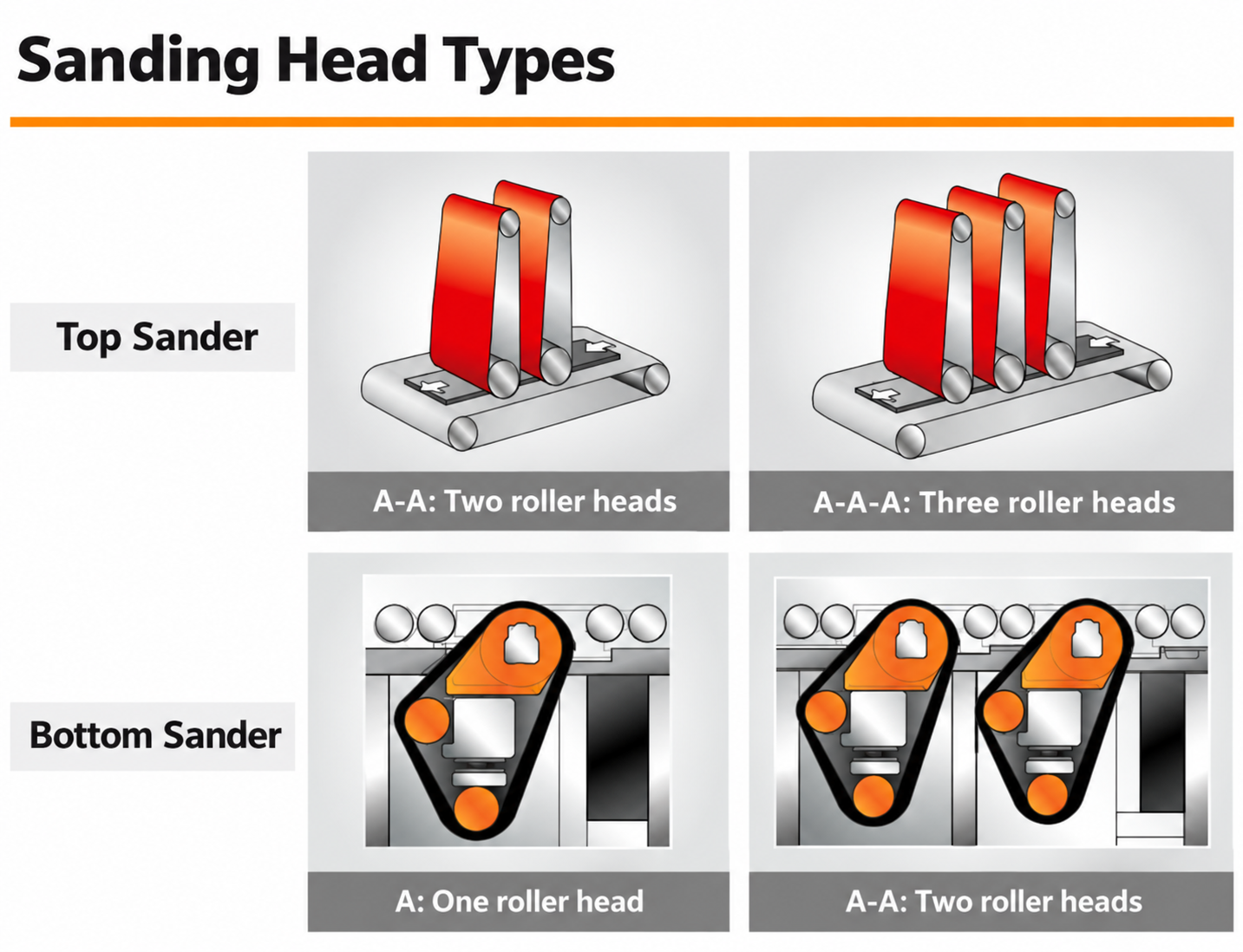
Choose the face and the sequence.
The metal-sander catalogue illustrates top sanding with two or three roller heads and bottom sanding with one or two roller heads. These are alternative machine arrangements; a top-sanding machine does not automatically include bottom sanding.
A roller head uses an abrasive belt over a contact roller. Brush or disc stages are selected separately around edge treatment, surface appearance and part geometry. For two-face work, confirm whether the proposed process uses separate machines, a dedicated line or part reversal.
Discuss your head configuration ↗Match the brush to the finish.
Original catalogue tooling photographs. These are selection options, not a statement that every brush is included or fits every Polar model.
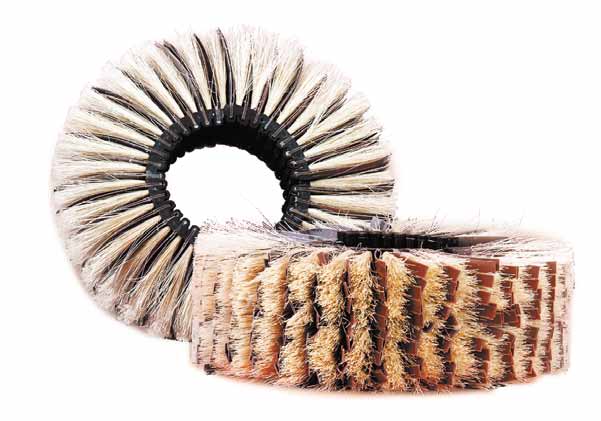
Abrasive-cloth brush
Abrasive flaps with supporting fibres. Specify the abrasive, grit and required surface treatment.
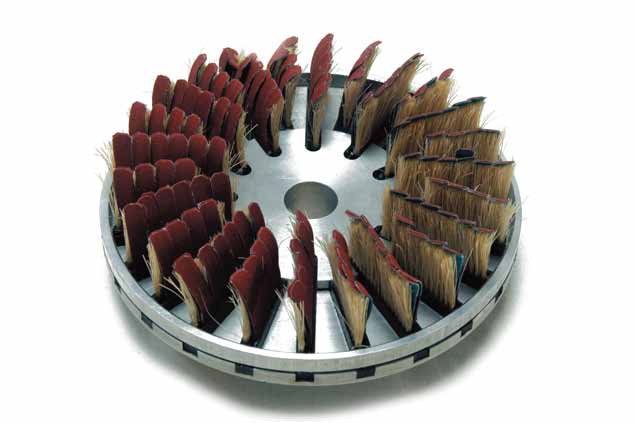
Disc brush
A disc-format tool for a compatible brushing station. Confirm part holding and the desired edge result.
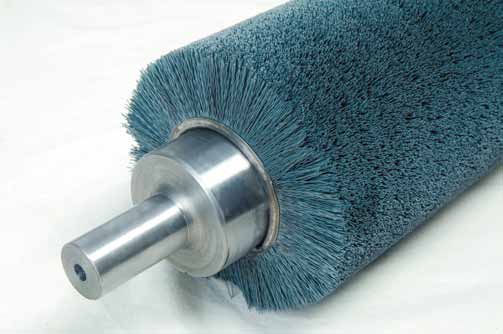
Nylon brush
A catalogue-listed brush format. Confirm filament type and compatibility with the work material.
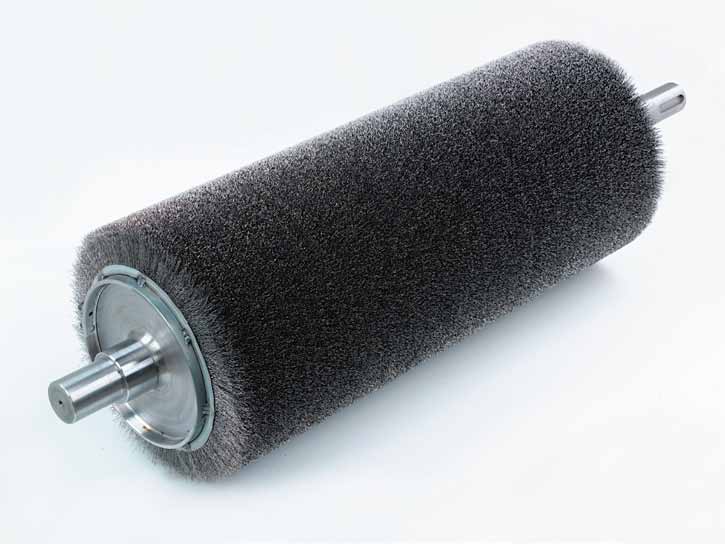
Wire brush
Select wire type and material compatibility; agree on acceptable marking and contamination controls.
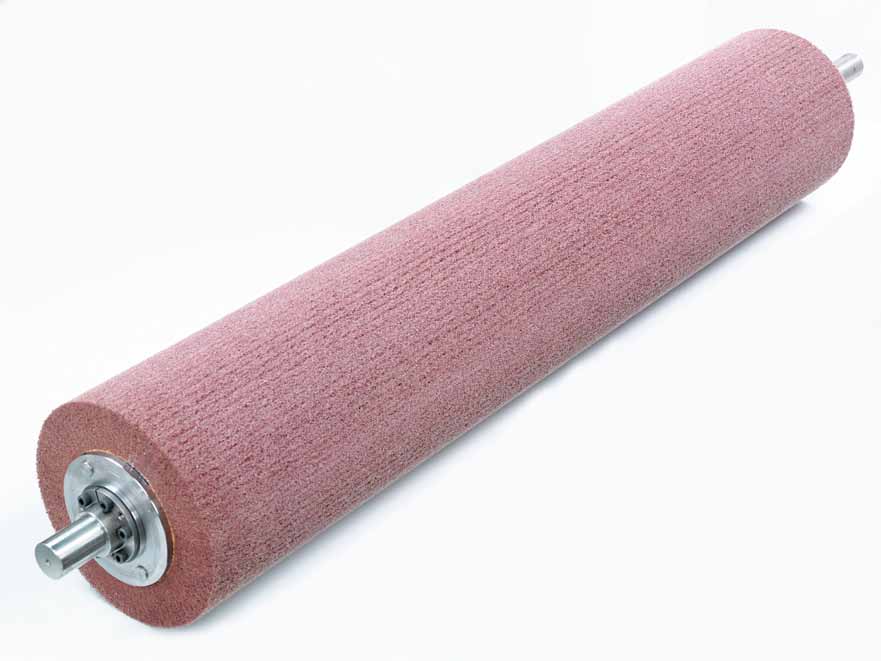
Non-woven brush
A non-woven abrasive format for evaluating blending and finishing requirements.
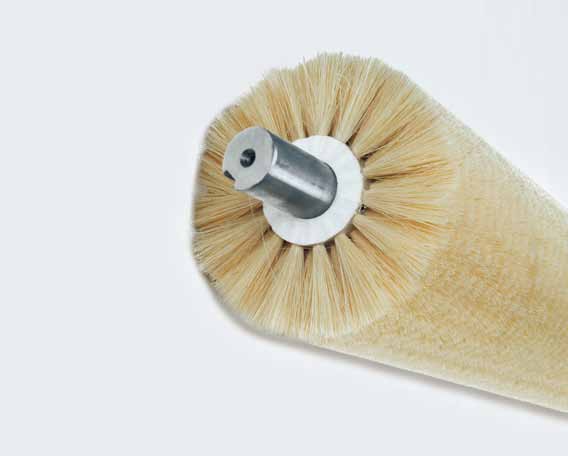
Fibre brush
A fibre-bristle format. Confirm its cleaning or finishing role in the selected machine.