
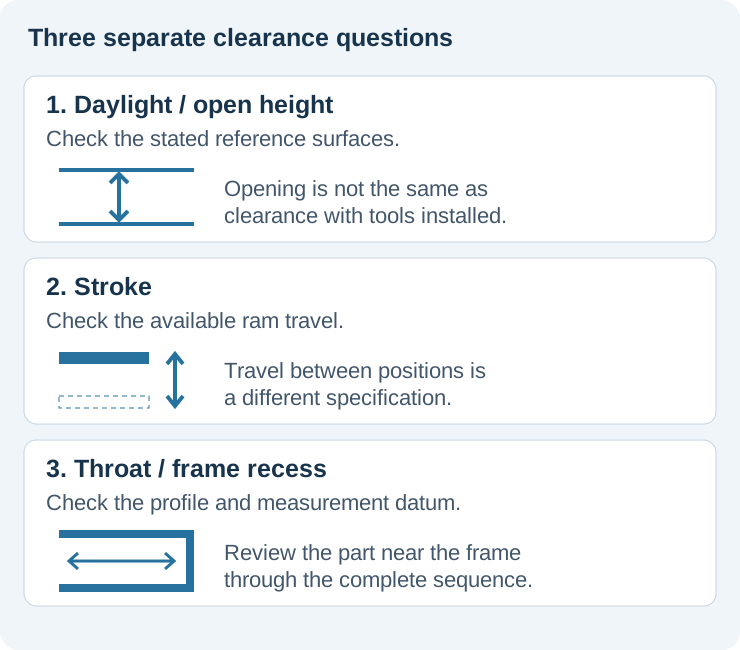
A press brake needs enough space to load, form, reposition and remove the whole part. Daylight, stroke and throat depth describe different aspects of that space. None of them, by itself, proves that a machine can complete your bend sequence.
For a buying decision, request the manufacturer's dimensional drawing and the proposed tool setup. Check the machine's reference points before comparing specifications: an opening quoted between machine surfaces is not necessarily the usable opening between the installed tools. This guide helps you prepare that review; it is not a machine-setting procedure.
What do daylight, stroke and throat depth mean?
| Term | Meaning | Buying question |
|---|---|---|
| Daylight / open height | The maximum opening measured between the reference surfaces specified by the manufacturer. | What opening remains with the quoted holders, clamps, punch and die installed? |
| Stroke | The available ram travel, as defined for that machine. | Can the proposed setup reach the forming position and reopen enough for the planned sequence? |
| Throat depth / gap | The frame recess behind the bending area; confirm its datum and profile in the drawing. | Will the part enter or rotate near a side frame without interference? |
HACO's OptiForm brochure lists maximum open height, effective open height, stroke and throat gap separately. That distinction is why the tool and holder arrangement belongs in the comparison. Use the current drawing for the particular model being quoted rather than carrying a dimension from another machine into your specification.
Start with the tool stack and the finished shape
Ask the supplier to show the installed punch, die, holders and adapters in the setup drawing. Taller tooling can help clear some formed flanges while taking up more of the opening. It is therefore not enough to subtract the thickness of the unbent sheet from the headline daylight value.
Review the part at every bend stage, including the final shape. The space needed to remove a formed box may differ from the space needed to insert its flat blank. A punch profile that clears one flange can still interfere later in the sequence. Bystronic's tooling-selection discussion illustrates why box geometry and punch shape need to be considered together; it is not a substitute for checking your proposed tooling.
Check access along the length as well as behind the tools
Bending length and the distance between side frames are separate specifications. A part's flange or return can meet a frame even when its straight bend length appears to fit the machine. Identify whether the part must be moved along the bed, turned or held outside a frame during any step, and ask the supplier to demonstrate the intended arrangement.
Include backgauge fingers, supports and other installed equipment in the interference review. Read our backgauge-axis guide to map the contact points. A nominal axis travel or throat dimension does not describe every obstruction around the part.
Ask for both a sequence review and a representative trial
Use an actual drawing revision and the proposed tooling library for any software review. Confirm that the modeled machine includes the relevant frames, tools and accessories. A simulation can help identify collisions, but its result depends on the geometry and configuration entered.
For a difficult part, ask for a physical demonstration of loading, every bend, repositioning and removal under the supplier's approved procedures. Record any deviation from the quoted setup. Do not treat an improvised workaround or the removal of safeguarding as a valid demonstration of the machine's suitability.
Build a clearance requirement for the quotation
Send the flat and formed drawings, material, tooling constraints and the parts that cause problems today. Request a marked setup drawing identifying the dimension reference points, tool stack, critical clearances and any sequence limitations. Ask for confirmation that the demonstrated configuration is the one included in the offer.
Download the blank clearance review sheet. Use it alongside the sample-bend scorecard, then compare hydraulic and servo-electric press brakes against the same parts. A larger opening may solve a geometric constraint, but it does not establish force capacity, tooling strength or finished-part accuracy.
Enclosure example: review the formed box and its removal
For an electrical enclosure, send both the flat pattern and the formed drawing, including return flanges, corner details and any installed features that affect handling. Ask the supplier to review partially formed states as well as the final box. This is an illustrative review approach, not a prescribed bend order for a particular design.
A side wall that clears the tooling early in the sequence may approach a punch, clamp or frame after another flange is formed. The finished box also needs a feasible removal path. Ask for the proposed tool profiles, segment arrangement and part positions to appear in the review, including any required repositioning. AMADA's tooling overview discusses how punch profiles and clamp interference affect the available bending area; those features are configuration-specific.
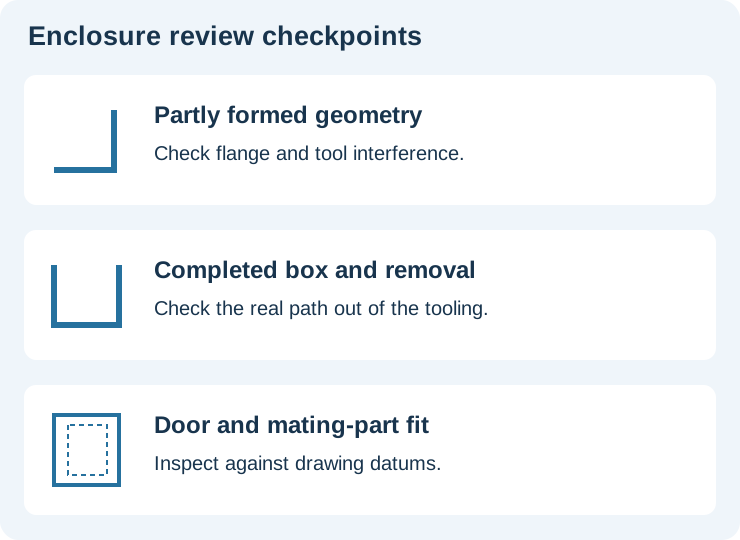
Record every configuration change needed to complete the demonstration. If a different tool or support is used, confirm it appears in the offer. Use the enclosure review worksheet to separate clearance findings from the finished-part and assembly checks. Geometric clearance alone does not prove force capacity, tool suitability or an enclosure rating.
Check these out
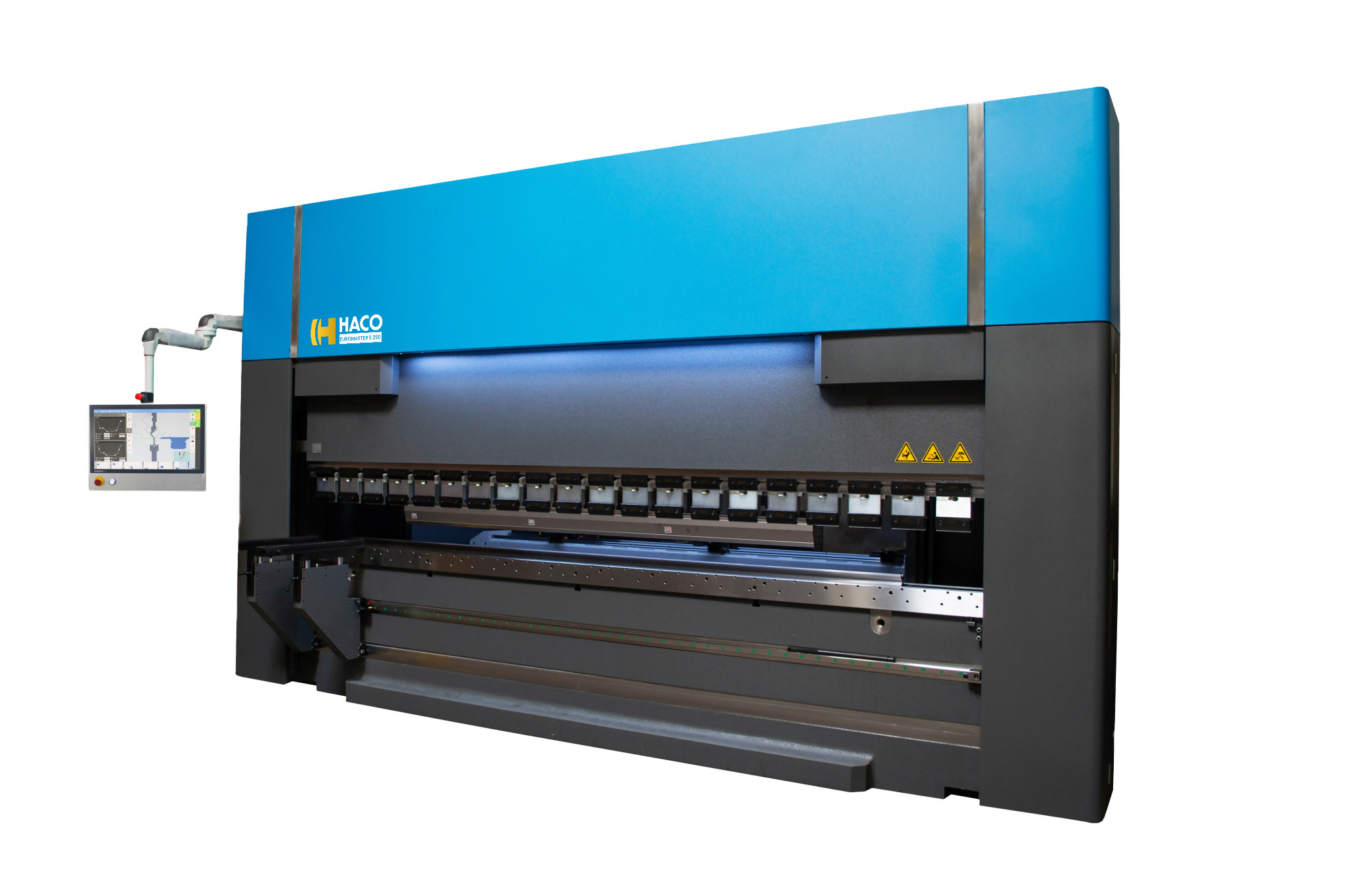
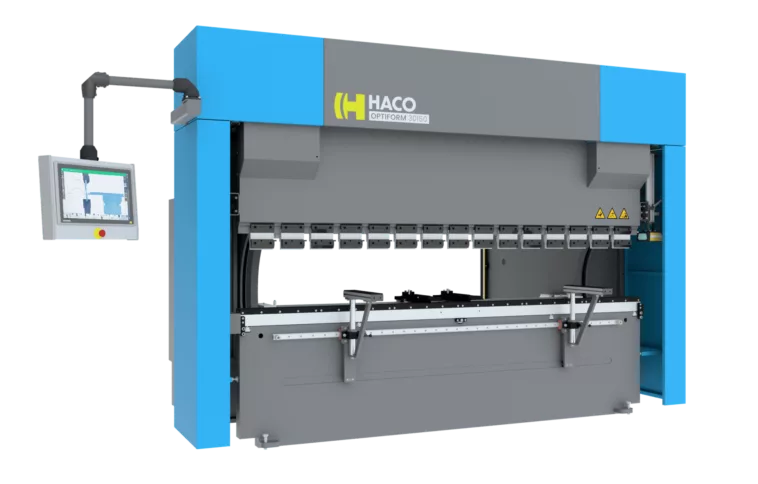
Explore these Rise Tek machines. Confirm the configuration and suitability for your application with our team.
Frequently asked questions
Is daylight the same as stroke?
No. Daylight describes an opening between specified reference surfaces; stroke describes ram travel. Check both on the manufacturer drawing for the proposed setup.
Does more throat depth mean a wider part will always fit?
No. The frame profile, part orientation, tooling, backgauge and full sequence also affect access. Ask for a review of the actual formed geometry.
Can I compare machines using maximum open height alone?
No. Confirm the reference surfaces and installed tool stack, then check loading, bending, repositioning and part removal with that setup.