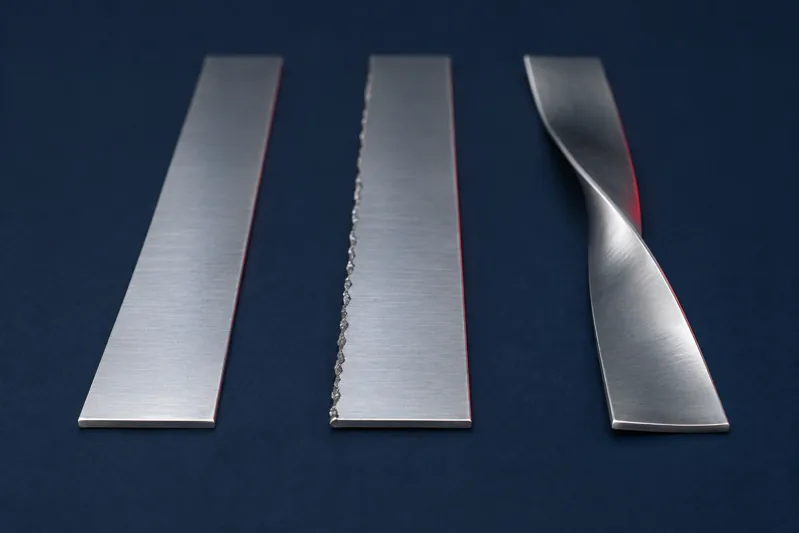
Accept a shear sample cut against the finished-blank requirements, not just the machine's capacity label. Agree the material, dimensions, edge condition and inspection method before the demonstration. Record each sample and any adjustments so that the result can be compared with the machine configuration in the quotation.
This guide helps Canadian fabricators prepare a buying demonstration for a sheet-metal shear. It complements our material and capacity guide. Capacity establishes a starting constraint; a sample review asks whether the proposed production route delivers the blank your next operation needs.
Define a representative sample and acceptance plan
Send the drawing revision, material grade and condition, thickness and intended cutting length. Identify the starting sheet condition and the required blank size. Include a routine part and a challenging production example, such as a narrower strip or a longer cut, only where the supplier confirms that it is within the machine's intended capability.
Specify the datums, inspection positions, measuring equipment and acceptance limits. A requirement such as clean edge is too open to interpretation unless the parties agree what it means. Distinguish a blank used directly in assembly from one that will be deburred, formed or machined. The acceptance plan should state whether the requirement applies before or after that work.
Record the demonstrated machine and setup
List the model, blade identification or suitability information, backgauge arrangement and sheet-support or handling equipment. Have the supplier record the setup used under the machine's operating procedures, including relevant adjustments between samples. Do not copy a blade-gap or cutting-angle setting from a different machine into your acceptance plan.
HARSLE's discussion of a swing-beam shear connects blade-clearance adjustment with cutting quality and describes test cutting after adjustment. Use that as context for recording setup changes; use the actual manufacturer's manual and supplier demonstration for your proposed equipment. This guide is not an adjustment procedure.
Inspect size, edge condition and distortion separately
| Check | Record |
|---|---|
| Blank dimensions | Actual readings at the drawing's agreed locations, including units and datums. |
| Squareness | The agreed method and readings; identify the reference edges and starting-sheet condition. |
| Cut edge | Edge observations and specified measurements before finishing, with identified photos where useful. |
| Bow or twist | Inspection stage, support condition and readings against the agreed requirement. |
| Surface finish | Marks or damage assessed against the required appearance and downstream use. |
Do not use a photograph alone as proof that dimensions or edge limits have been met. Connect photographs and readings to a sample ID, drawing revision and inspection stage. Qualified personnel should inspect samples using appropriate handling and measurement procedures; sharp cut edges require suitable precautions.
If a sample is straightened, deburred or otherwise corrected, retain its original results and record the additional work. A finished blank may be acceptable after that operation, but the added time and equipment belong in the production comparison. Do not present a corrected result as the untouched output of the shear.
Check repeat samples and the next operation
Agree on a useful sample quantity with the supplier and record all inspected results. One satisfactory blank does not establish production capability across every material, width or batch. Note when the operator repositions material, changes a setting or repeats a cut, and identify which results came before and after the change.
Where relevant, take representative blanks through the intended bending or assembly stage. This helps distinguish a cut-quality issue from a requirement that only becomes visible later. For HVAC production, use the shear-versus-fiber-laser comparison to keep secondary operations and handling in the evaluation.
Close the trial with a written acceptance record
Separate setup time from repeat-part time and record loading, cutting, unloading, inspection and finishing within the agreed scope. State the operator count and material-handling arrangement. A short cutting stroke is not the same as the time required to deliver an accepted blank.
Mark each requirement demonstrated, not demonstrated or requiring follow-up. Name the owner of unresolved items and agree which checks will be repeated at delivery or commissioning. If the trial used accessories absent from the quotation, ask for the discrepancy to be resolved in writing.
Download the blank shear acceptance worksheet. For existing cut-quality problems, see our shear troubleshooting guide. To discuss a demonstration, send Rise Tek your material, drawing and acceptance requirements.
Check these out
Explore these Rise Tek machines. Confirm the configuration and suitability for your application with our team.


Frequently asked questions
What burr height should a shear sample meet?
Use the limit and measurement method agreed for your part and downstream process. There is no universal acceptance value for every material, thickness and application.
Does an accurate backgauge guarantee an accurate blank?
No. Inspect the finished blank against its drawing. Material positioning, support, cutting conditions and the measurement method also belong in the review.
Should samples be inspected before deburring?
Record the as-cut condition first where practical and safe, then inspect the finished condition separately if deburring is part of the intended route. Keep both stages identified.