Most first-time press brake buyers focus entirely on tonnage, bed length, and controller — and rarely think about tooling standard until they need to buy their second punch set. By then, the decision has already been made for them by whatever came with the machine. It's worth understanding the trade-off before you buy, because switching later is expensive.
What "Tooling Standard" Actually Means
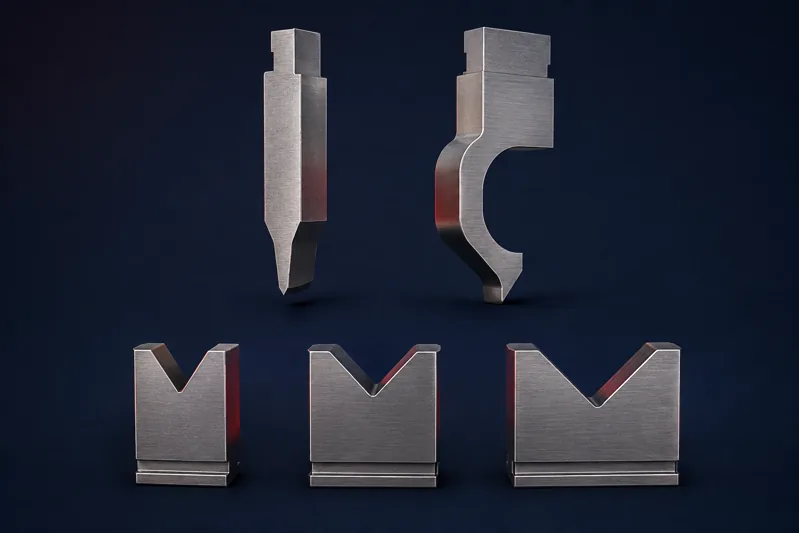
A press brake's tooling standard refers to the clamping geometry that holds the punch to the ram and the die to the bed — not the profile or size of the tooling itself. Two machines can both use "European standard" tooling and still take different punch profiles for different jobs, but as long as they share the same clamping standard, tooling is interchangeable between them (subject to tonnage and length ratings).
European Standard (Wila-Compatible)
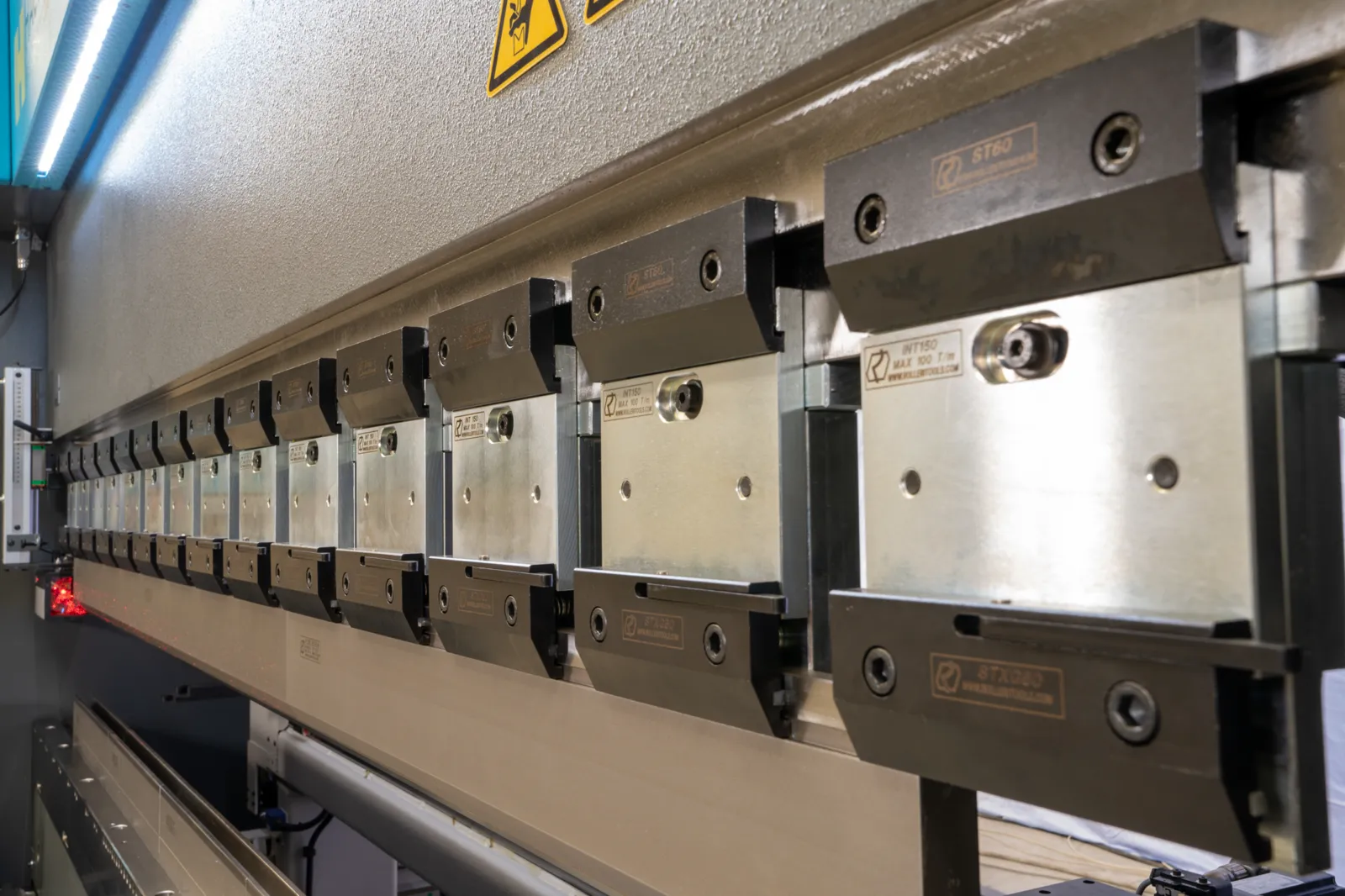
European standard tooling uses a segmented clamping system — tooling comes in shorter modular lengths that combine to cover the full bed length, rather than one continuous bar. This standard, closely associated with the Dutch manufacturer Wila, has become the most broadly interchangeable tooling system in the industry, with multiple tooling manufacturers producing compatible punches and dies.
- Widest global availability of compatible tooling from multiple suppliers
- Segmented sets allow mixing tooling lengths for irregular part geometry
- The standard used by Dener and Haco press brakes sold by Rise Tek
American-Style Tooling
American-style clamping tends to be tied more closely to the specific machine manufacturer rather than following one universal cross-brand standard. This isn't necessarily a quality issue — it can work perfectly well on the machine it was designed for — but it narrows your sourcing options if you need replacement tooling, want to expand your tooling library, or ever plan to standardize tooling across multiple machines from different brands.
Why the Decision Matters More Than It Looks
The tooling standard question rarely feels urgent when you're comparing machines on a quote sheet, because every machine ships with some starter tooling included. The cost shows up later — when you need a specialty punch profile, when your shop grows and you add a second machine, or when your original tooling supplier discontinues a line and you need an alternative source.
Retrofitting a machine's clamping system to a different tooling standard means replacing the tool holders and clamping hardware on the machine itself — not just buying new punches and dies. It's a real project, not a simple swap. This is why the standard decision matters most at the time you buy the machine, not after.
| Factor | European Standard | American-Style |
|---|---|---|
| Cross-brand interchangeability | High | Limited |
| Number of compatible suppliers | Multiple | Fewer, often brand-specific |
| Segmented tooling for irregular parts | Yes, standard | Varies by manufacturer |
| Used on Dener / Haco (Rise Tek) | Yes | — |
Our Recommendation for Canadian Shops
For most Canadian fabrication shops, European standard tooling is the safer long-term choice specifically because of sourcing flexibility — you're not dependent on a single supplier's pricing, lead times, or continued support for a specific tooling line. This is why Rise Tek's Dener and Haco press brakes ship with European-standard tool holders as the default.
If you already own a machine on a different standard, that's not a reason to panic — it's a reason to plan any tooling expansion deliberately and confirm compatibility before you order, rather than assuming a "European style" part from an unfamiliar supplier will fit without checking clamp geometry first.
🔧Related Reading
- Bend Allowance Calculator — free tool
- Press Brake Tooling Selection Guide: Punches, V-Dies & Standards
- What is a CNC Press Brake? Complete Guide for Canadian Fabricators
- CNC Press Brake Buyer's Guide: Tonnage, Length & Control Type Explained
- CNC Press Brakes at Rise Tek — Hydraulic, Servo-Electric & Ball Screw