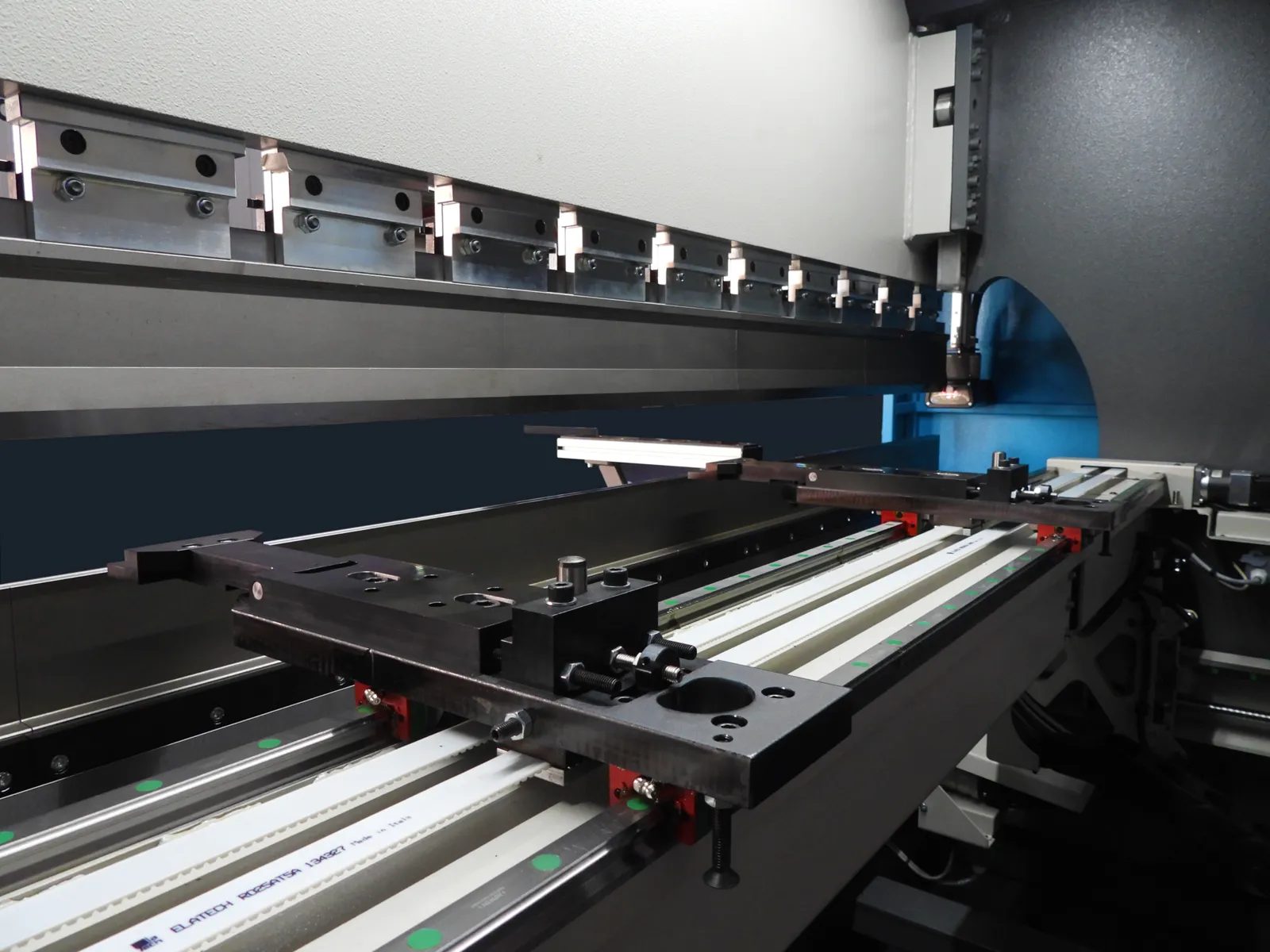
Tonnage, bed length, and controller usually top the checklist when comparing press brakes. Safety features tend to get a quick glance and a nod — until you're the one confirming, after delivery, whether the machine you bought is actually compliant out of the box or needs an add-on before it can run legally.
Standard vs. Optional: Confirm It, Don't Assume It
A point-of-operation light curtain is the most common standard safety system on modern CNC press brakes — an infrared beam barrier across the danger zone that stops the ram if the beam is broken. Beyond that baseline, exactly what's standard versus optional varies by manufacturer and model. This is exactly why it belongs in your written quote, not in the "I assumed it was included" category after the machine arrives.
| Feature | Typically | Why It Matters |
|---|---|---|
| Point-of-operation light curtain | Standard on most modern CNC machines | Primary guarding for CSA Z142 / provincial OHS compliance |
| Laser area scanner | Often an optional upgrade | Monitors irregular protected zones a fixed curtain can't cover |
| Operator training | Included by some dealers, not all | Required for legal, competent operation under Canadian OHS rules |
| Ongoing interlock verification support | Varies significantly by dealer | Safety systems need periodic verification, not just initial setup |
Why This Is a Compliance Question, Not Just an Injury-Prevention One
CNC press brakes in Canadian workplaces must comply with CSA Z142 and provincial OHS regulations, which require guarding the point of operation. A machine that ships with adequate standard guarding gets you to a compliant starting point immediately. A machine that only reaches compliance through optional add-ons means those add-ons need to be part of your budget and delivery timeline before the machine can be legally and safely put into production — not an afterthought discovered during a workplace inspection.
Training and Support: The Part That's Easy to Forget to Ask About
Canadian OHS regulations require employers to ensure workers are competent before operating hazardous equipment. That means operator training isn't a nice-to-have — it's a real requirement, and it's worth knowing upfront whether it's built into the purchase or billed separately later. Rise Tek includes on-site operator training as part of every press brake sale, covering machine controls, the installed safety systems, and interlock testing.
It's also worth asking what happens after the initial training — light curtains and interlocks need periodic verification, not just a one-time check at installation. A dealer who can service and verify safety systems in your region is worth more than a slightly lower price from one who can't.
🛡️The cheapest quote on paper can become the most expensive machine on the floor if the safety configuration you actually need turns out to be an optional line item you didn't know to ask about.
Questions to Ask Before You Buy
- Exactly what point-of-operation guarding is standard on this specific model, and what's optional?
- Is operator training included in the purchase price, or billed separately?
- What ongoing service and interlock verification support is available in my region?
- Is the manufacturer's safety documentation provided in a form my OHS program can use directly?