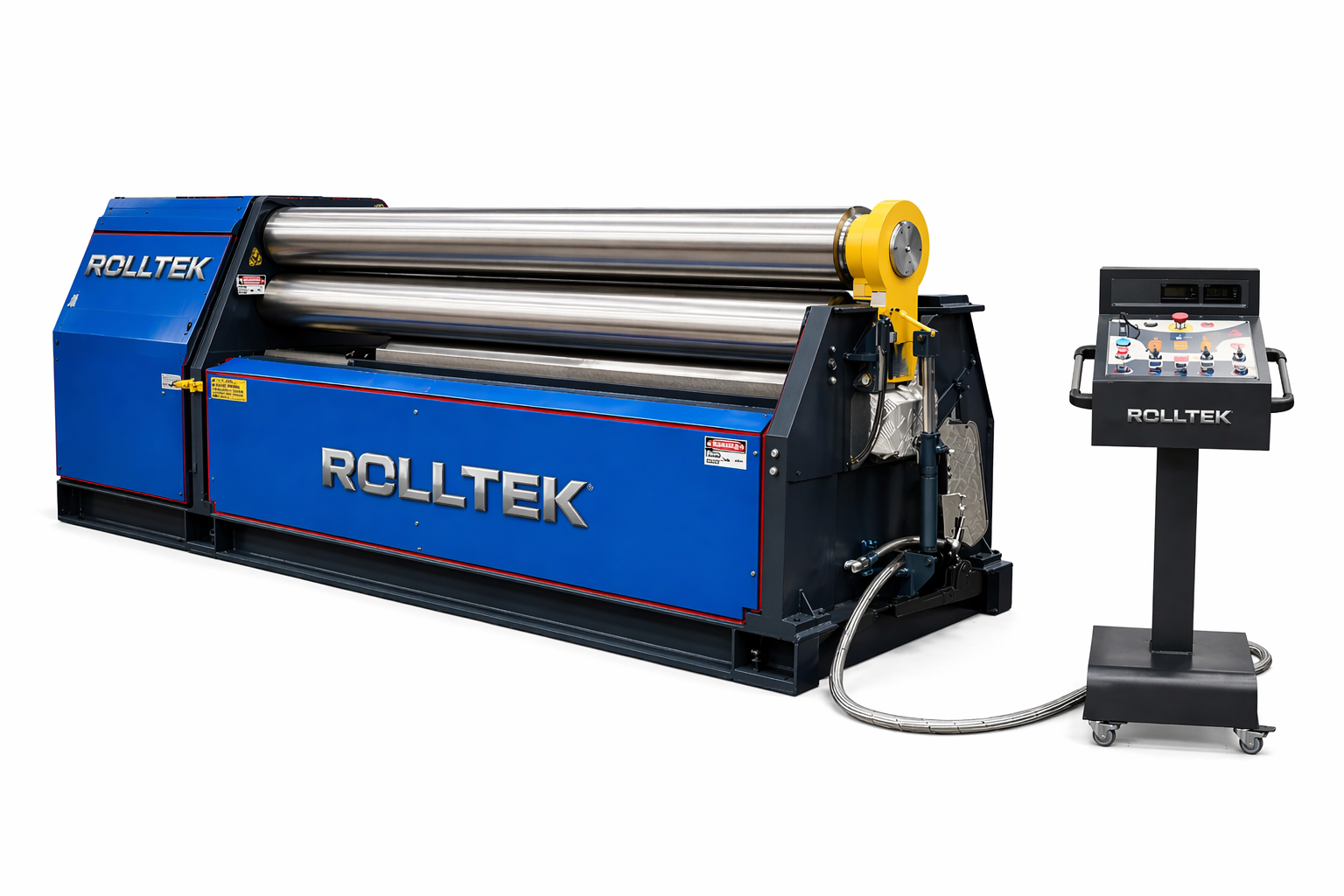
A press brake and an angle roll aren't competing for the same job — they're built for fundamentally different shapes of bend. A press brake makes a single, straight bend line. An angle roll produces a continuous curve along the length of a profile. If curved structural work shows up occasionally in your shop, it's worth understanding exactly where that difference stops being a technicality and starts being a real limitation.
Why a Press Brake Can't Just Substitute
A press brake bends a flat sheet or plate along one straight line per stroke. To approximate a curve, a shop can use bump bending — a series of short, incremental bends along the length of a profile that, from a distance, starts to look like an arc. It can get visually close on forgiving jobs. But it's a facet-by-facet approximation, not a true continuous radius, and it's slow: every bump is a separate setup-and-stroke cycle, which adds up fast on anything beyond a one-off part.
For architectural or structural work where the curve itself is the specification — not just a rough visual approximation — bump bending on a press brake is rarely the right tool for the job, regardless of how skilled the operator is.
What Angle Rolls Are Actually Built For
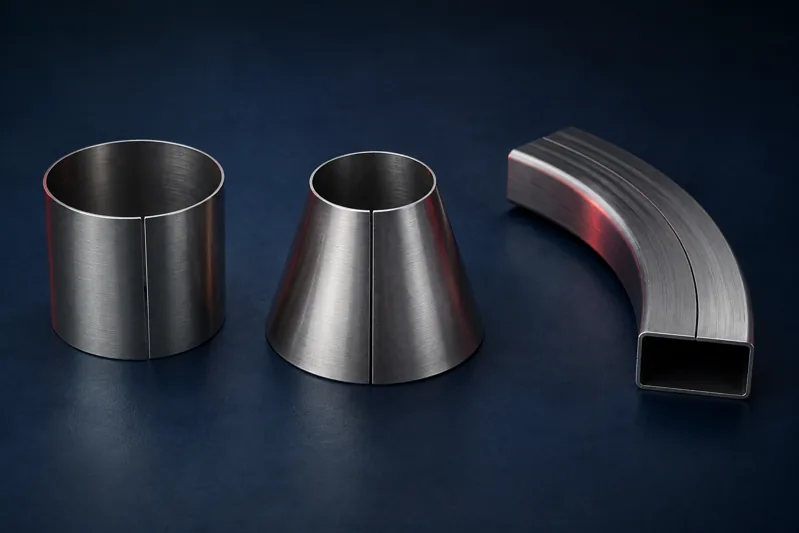
Angle rolls (also called profile or section benders) are purpose-built to curve structural shapes continuously along their length: W-beam (wide flange), L-angle, T-sections, S-beam, C-channel, square and rectangular bar, hollow structural sections, tube, pipe, and round bar. This is a genuinely different equipment category from a press brake, which is built around flat sheet and plate rather than structural profiles.
| Factor | Press Brake (Bump Bending) | Angle Roll |
|---|---|---|
| Result | Faceted approximation of a curve | True continuous radius |
| Speed per part | Slow — separate stroke per facet | Fast — continuous pass |
| Best suited to | Flat sheet and plate, straight bends | Structural profiles: beams, angle, channel, tube, pipe |
| Tight-tolerance curved work | Difficult to hold consistently | Built for it |
An angle roll isn't a "better press brake" — it does something a press brake fundamentally isn't built to do well. The two pieces of equipment answer different questions: does your part need a straight bend line, or a continuous curve along a structural profile?
The Signal That It's Time to Add Dedicated Equipment
There's no fixed volume threshold — it depends on how often curved structural work shows up in your job mix and how tight the curve tolerance needs to be. If curved work is rare and the tolerance is forgiving, bump bending on equipment you already own may still be the more sensible use of capital. If curved structural work shows up regularly, or the spec calls for a true continuous radius rather than a rough approximation, the math starts favoring a dedicated angle roll — every job after the purchase avoids re-paying the labor cost of bump bending from scratch.
🔺