← Back to Education Center
🔄 Plate Rolls & Angle Rolls

Plate Rolls & Angle Rolls
Training & Guides

Everything Canadian fabricators need to know about plate roll and angle roll operation — 3-roll vs 4-roll, cone rolling, section bending, capacity limits, and RollTek machine setup guides.

3-Roll & 4-Roll
Plate Roll Types
RollTek
Rise Tek's Roll Brand
Free
Always
Machine Types

Plate Rolls & Section Benders — What's the Difference?

Three types of bending machines serve different applications in a Canadian fab shop — here's when to use each.

🔄

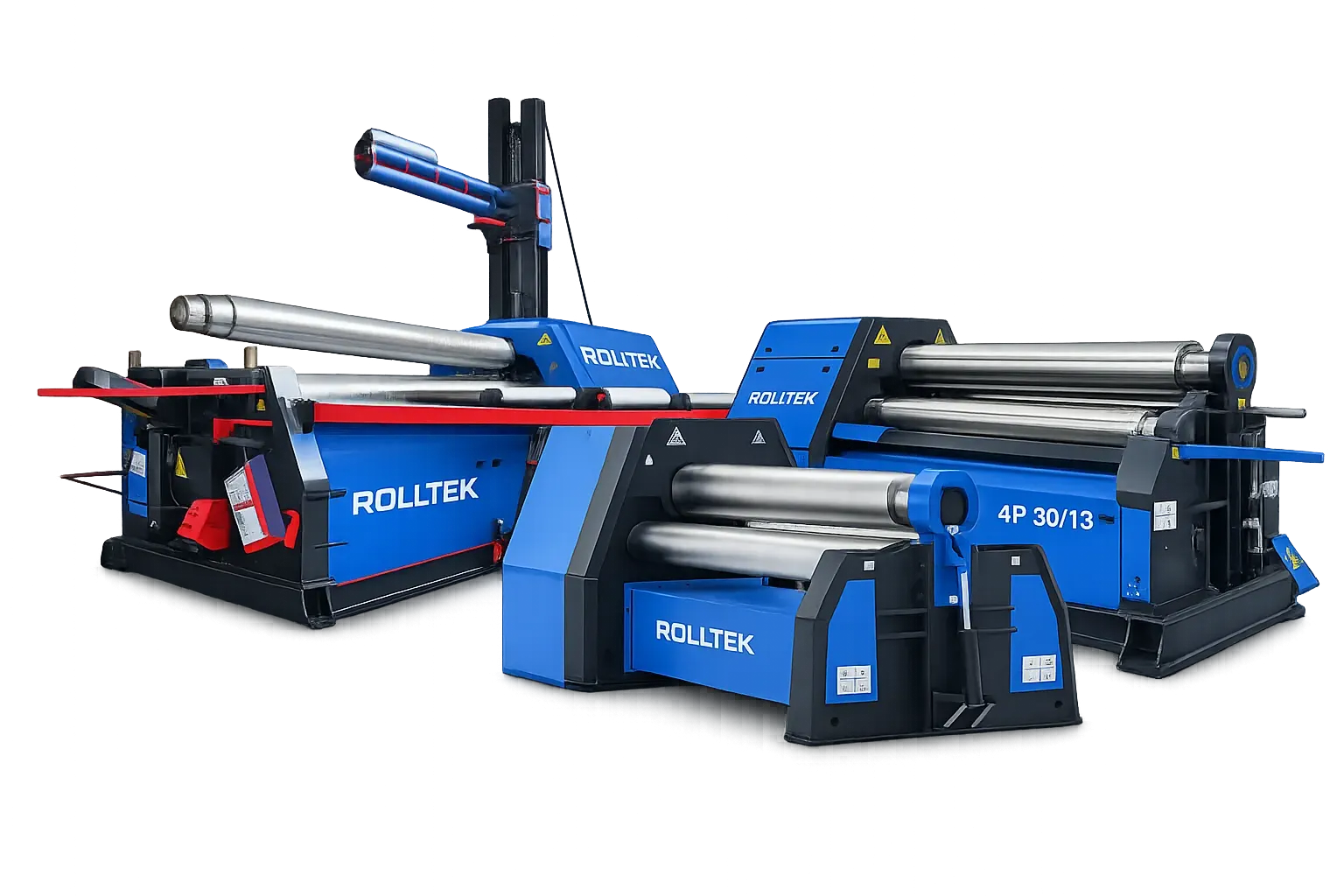
Plate Rolls

Bend flat plate and sheet into cylinders, cones, and partial arcs

Sheet & Plate
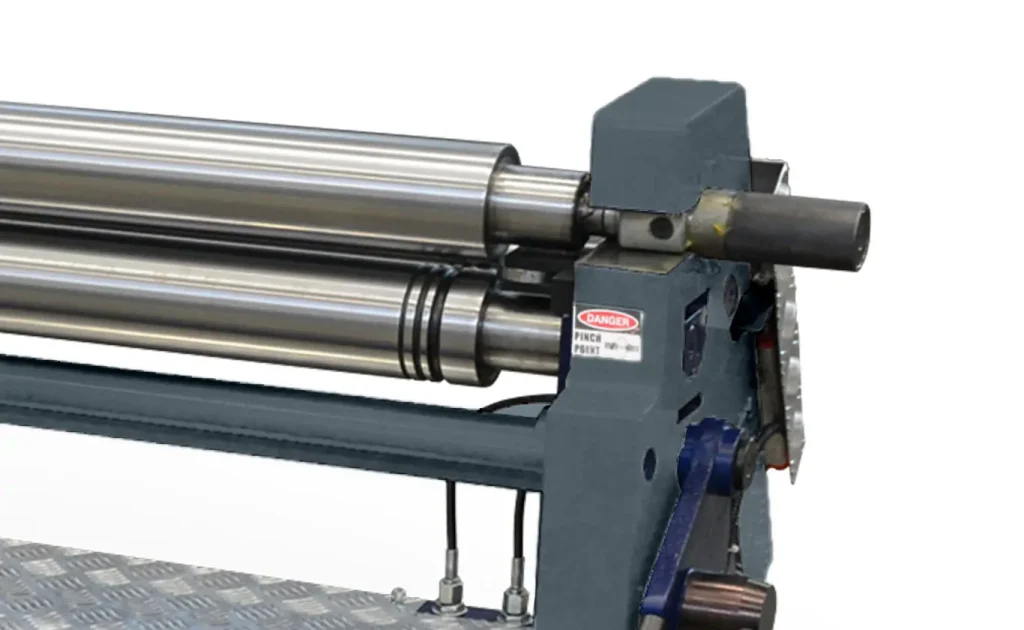
  • 3-roll symmetric: affordable, requires pre-bending, leaves flat tail at each end
  • 3-roll asymmetric: side roll reduces flat tail to ~1 roll diameter
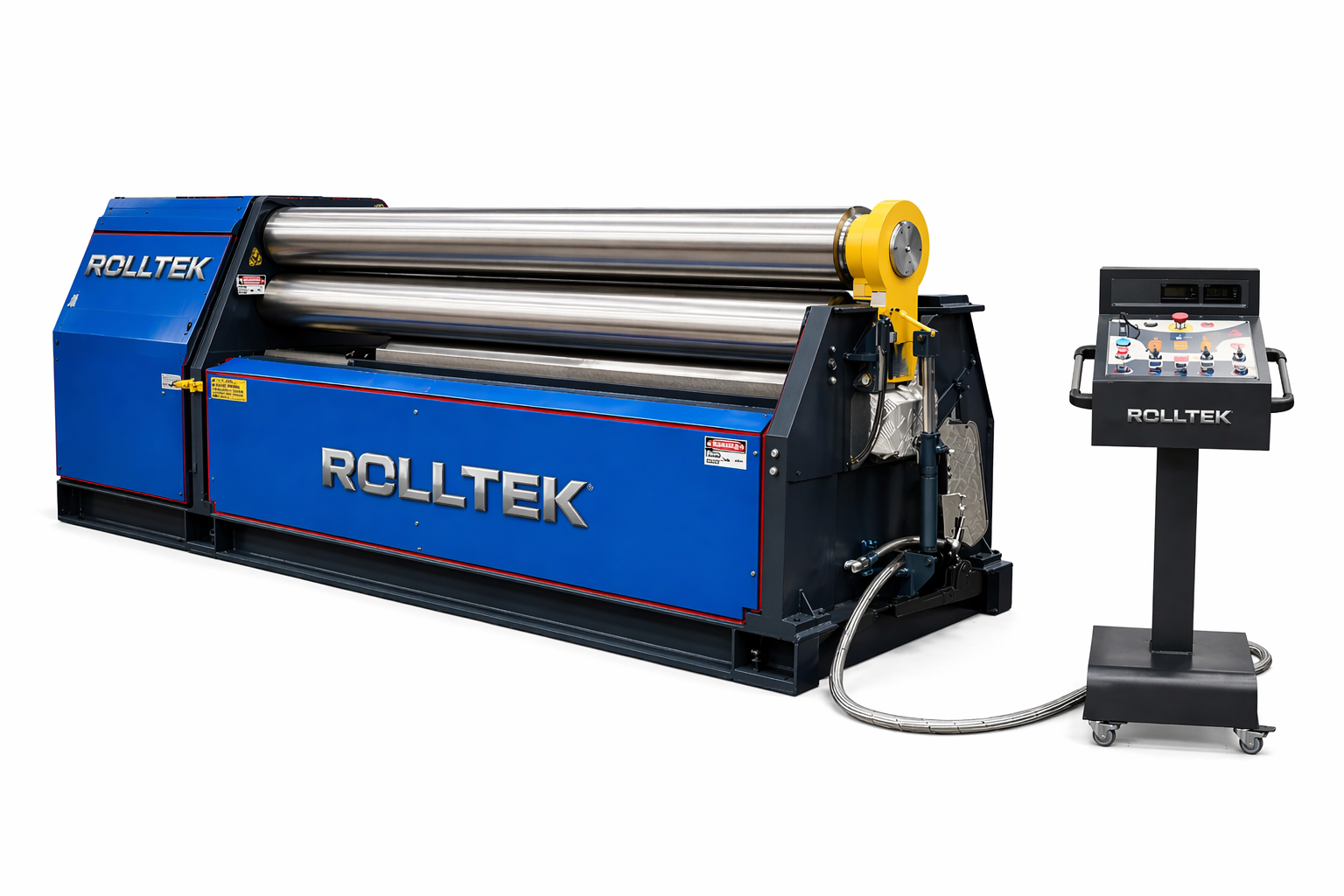
  • 4-roll CNC: grips both ends in one pass, no re-insertion, best for production
  • Capacities from 1mm × 1000mm to 100mm × 4000mm
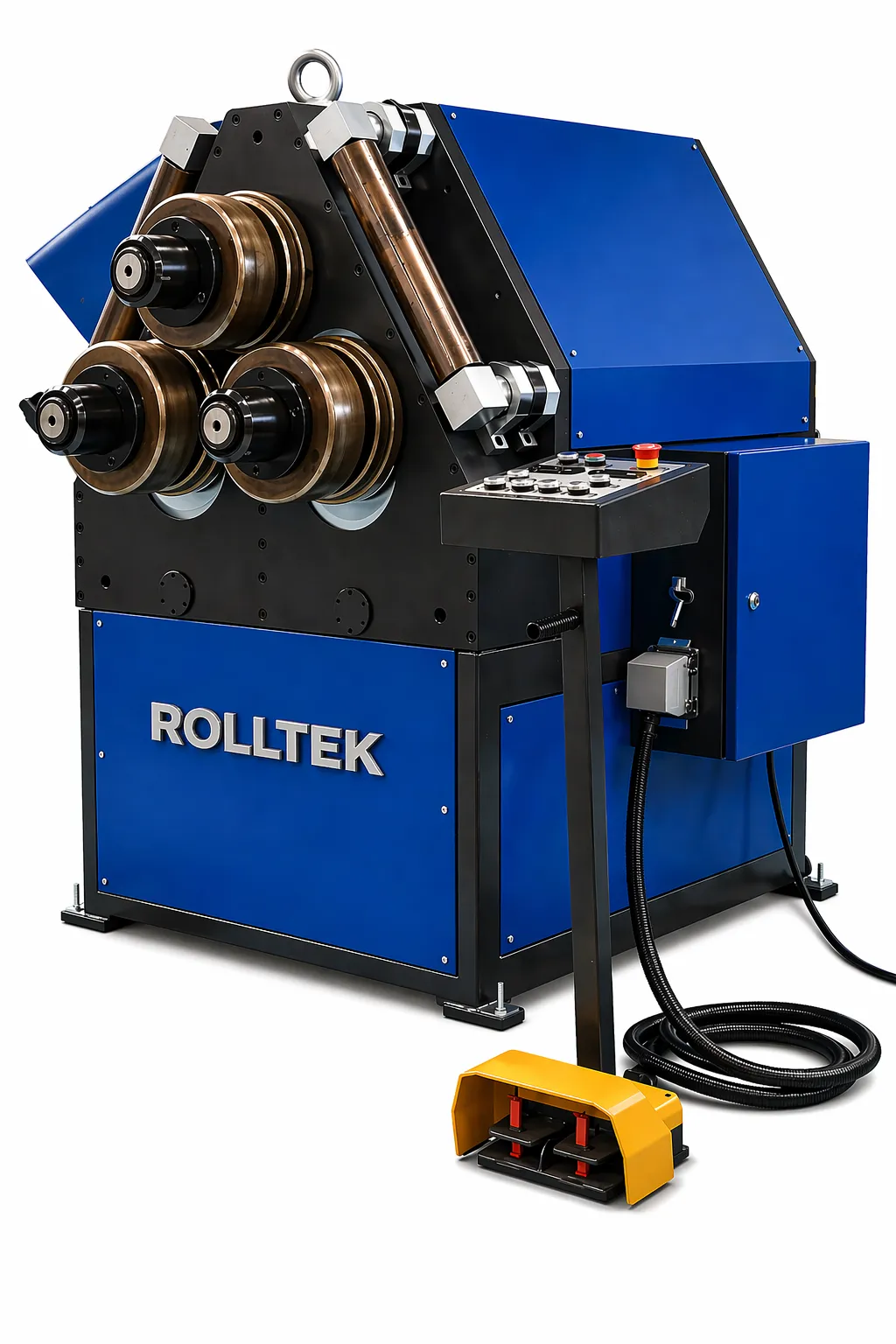
  • RollTek 3-roll and 4-roll plate rolls available through Rise Tek
📐

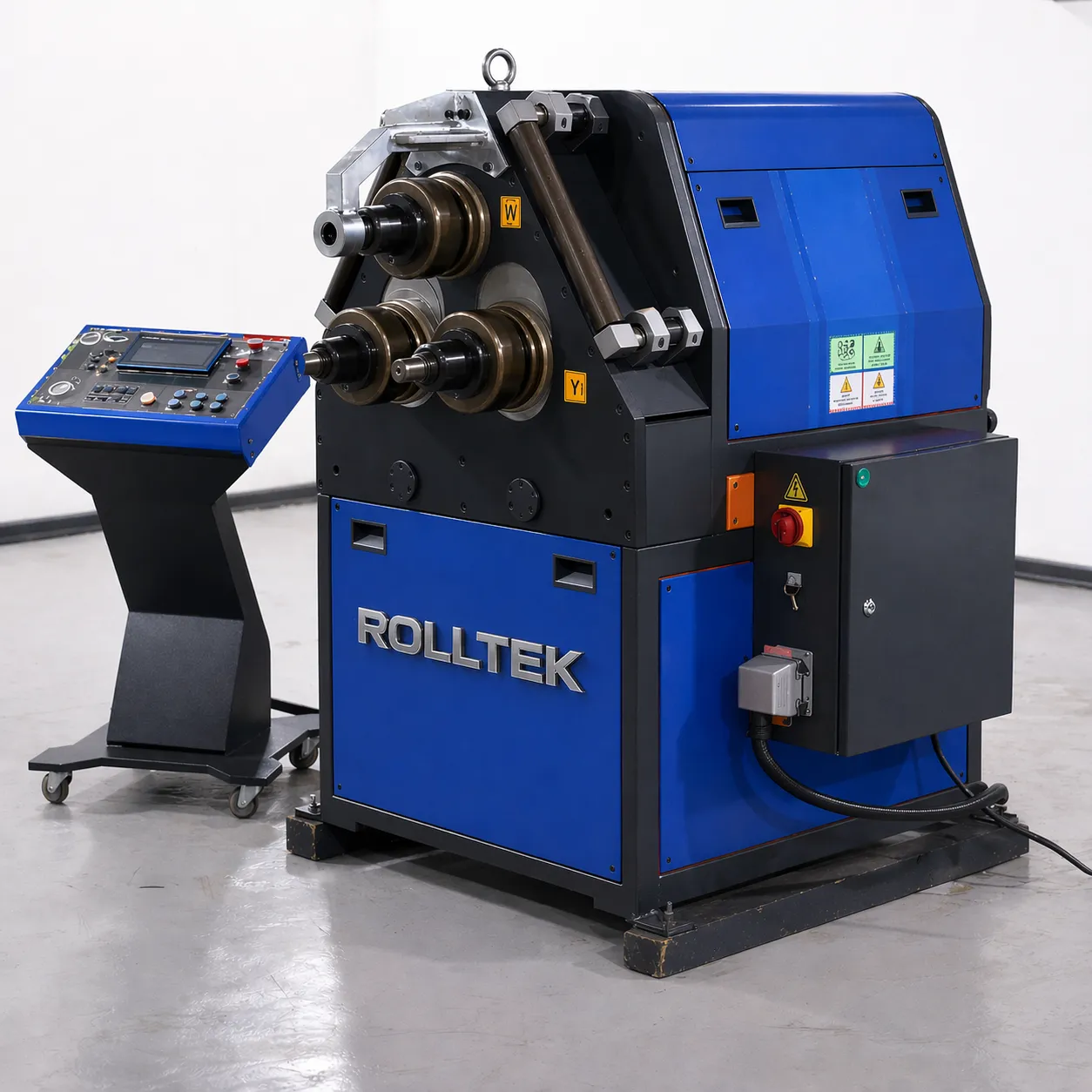
Angle Rolls / Section Rolls

Bend structural sections and profiles into curves and rings

Structural Sections
  • Processes angle iron, flat bar, square tube, round tube, C-channel
  • I-beam and H-beam bending on heavy-duty models
  • Easy-way vs hard-way angle iron rolling (different tooling inserts)
  • CNC radius control on modern units for consistent arc repeatability
  • Ideal for curved architectural frames, truck bodies, and ring fabrication
🏗️

Dishing / Flanging Machines

Form dished heads, flanges, and tank ends from flat blanks

Pressure Vessels
  • Used for pressure vessel heads, tank dome ends, and cone transitions
  • Works in combination with plate rolls for complete vessel fabrication
  • Common in tank fabrication, agricultural equipment, and HVAC manufacturing
  • Requires flanging tooling sized to specific head diameter and thickness
  • Ask Rise Tek about integrated plate roll + dishing machine packages
Comparison

3-Roll vs 4-Roll Plate Rolls

Which roll configuration is right for your shop's workflow?

Feature 3-Roll Symmetric 3-Roll Asymmetric 4-Roll CNC
Flat tail at endsYes — pre-bend requiredSmall (~1 roll dia.)Minimal — grips both ends
Re-insertion requiredYes (flip for pre-bend)Yes (once per end)No
Cone rollingDifficult / manualPossible with skillYes — CNC taper control
Production speedSlowMediumFast
RepeatabilityOperator-dependentOperator-dependentHigh — CNC controlled
Capital costLowestMid-rangeHighest
Best forLight-gauge, low volumeGeneral shop useProduction, precision
Training Articles

Plate Roll & Angle Roll Guides

Operation, setup, capacity, and troubleshooting guides for rolling machines in Canadian shops.

🔄 📘 Full Guide
🔄 Plate Rolls

How to Roll a Perfect Cylinder: 3-Roll and 4-Roll Technique Guide — Coming Soon

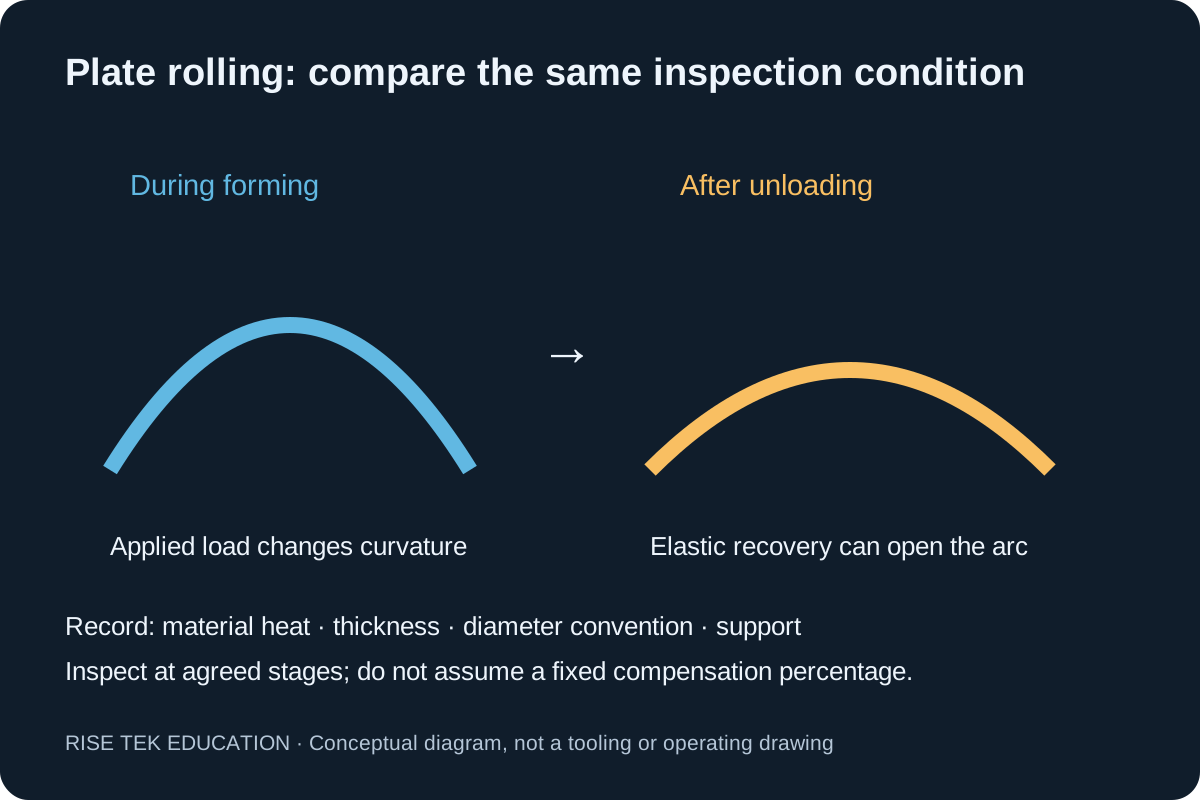
Step-by-step cylinder rolling technique for 3-roll symmetric and 4-roll machines — pre-bend setup, roll gap settings, springback compensation, and closing the seam.

🔺 📐 Cone Rolling
🔄 Plate Rolls

Cone Rolling on a CNC Plate Roll: Setup and Programming — Coming Soon

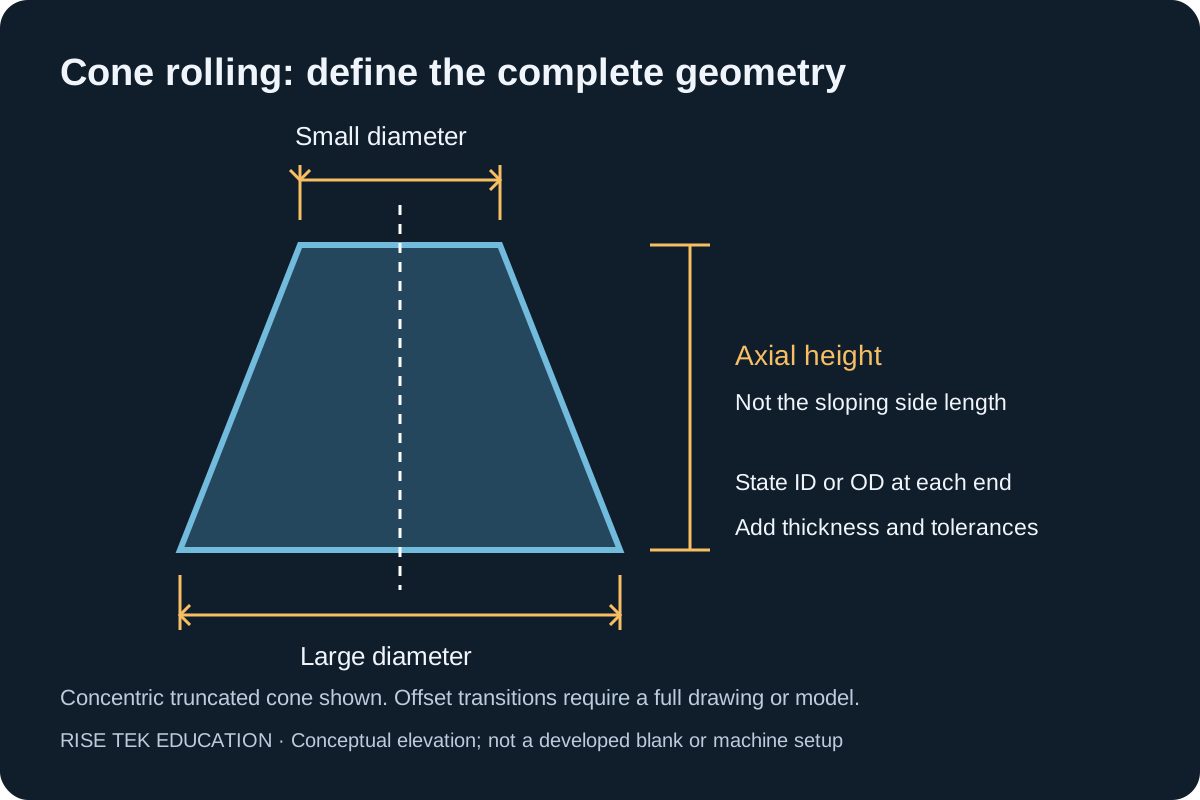
How to roll conical frustums on a CNC plate roll — cone half-angle calculation, blank layout (developed length), taper tilt settings, and quality checks.

📐 📐 Angle Rolls
📐 Angle Rolls

Angle Roll Tooling Guide: Easy-Way vs Hard-Way & Section Types — Coming Soon

Tooling inserts for angle iron (easy-way and hard-way), flat bar, square hollow section, round tube, C-channel, and I-beam bending — selection and setup guide.

Interested in a Plate Roll?

Rise Tek carries RollTek 3-roll and 4-roll CNC plate rolls from 1000mm to 3000mm working width. Inquire for specifications and pricing for your material capacity requirements.

🔄 View Plate Rolls →
FAQ

Plate Roll & Angle Roll Questions

A 3-roll symmetric plate roll cannot pinch-roll the flat tail end, leaving an un-bent flat section at each end. A 3-roll asymmetric plate roll adds an adjustable side roll, reducing the flat tail significantly. A 4-roll plate roll has two bottom rolls and two side rolls — it can grip and roll both ends without removing the plate, leaving minimal flat tail and allowing precise rolling in a single pass. 4-roll machines are faster for production cylinders and deliver higher repeatability.
Pre-bending eliminates the flat section that symmetric rolls leave at the lead and trail edges. It requires rolling the first 100–200mm of each plate end before rolling the full cylinder. Pre-bending requires removing the plate, flipping it, pre-bending the other end, then rolling the full cylinder. 4-roll machines perform pre-bending automatically in a single setup — this is the main productivity advantage of the 4-roll configuration.
The minimum rolling diameter is typically 1.5–3× the top roll diameter, depending on material yield strength and thickness. Manufacturers publish a capacity chart specifying minimum diameter per material grade and thickness. For stainless steel, add 20–40% to the mild steel minimum diameter. Always confirm against the machine's official capacity chart — exceeding minimum diameter limits damages both the material and the roll crowns.
Yes. Cone rolling is performed on CNC plate rolls with independently adjustable roll positions — the top roll is tilted at an angle relative to the bottom rolls, creating a tapered gap that produces a conical frustum. The cone half-angle is programmed into the CNC controller. RollTek CNC plate rolls from Rise Tek support cone rolling via the controller. Manual cone rolling is also possible on mechanical rolls with skill and test pieces.
An angle roll can bend: angle iron (L-sections) in both easy-way and hard-way orientation; square and rectangular hollow sections; flat bar (on edge or flat); round bar; I-beams, H-beams, and channel (C-section); pipe and tube (round and square). Three-roll section benders with CNC radius control are used for curved architectural frames, railings, truck bodies, and structural ring fabrication.
Plate rolls can process mild steel, structural steel (Grade 350 CSA G40.21), stainless steel, aluminum, copper, and pre-painted steel. Material hardness and yield strength directly affect required tonnage and minimum rolling diameter — stainless steel requires 40–60% more force than mild steel of the same thickness. Hardox and abrasion-resistant steels require specialized high-tonnage rolls and manufacturer consultation.
Plate roll capacity is expressed as: maximum rolling length × maximum thickness for mild steel at a specified minimum diameter. Example: 2000mm × 12mm at Dmin 400mm for mild steel. For stainless steel, reduce the maximum thickness by 30–40%. For aluminum, increase maximum thickness by 20–30%. Always verify your job requirements against the machine's official capacity table — overloading a plate roll causes permanent crown deformation in the rolls.
Plate roll maintenance: (1) lubricate roll bearing housings and gear drives per schedule (typically monthly under production load); (2) check and adjust gear backlash annually; (3) inspect roll crowns for wear or deflection marks; (4) verify CNC position encoder calibration annually; (5) check hydraulic system oil and filter on hydraulic models every 2,000–3,000 hours. Clean scale and debris off the rolls after each shift to prevent surface marks on the next material.

Looking for a Plate Roll or Angle Roll in Canada?

Rise Tek carries RollTek plate rolls and section benders with Canadian delivery and setup. Get specifications and pricing for your capacity requirements.

View Plate Rolls → Back to Education Center