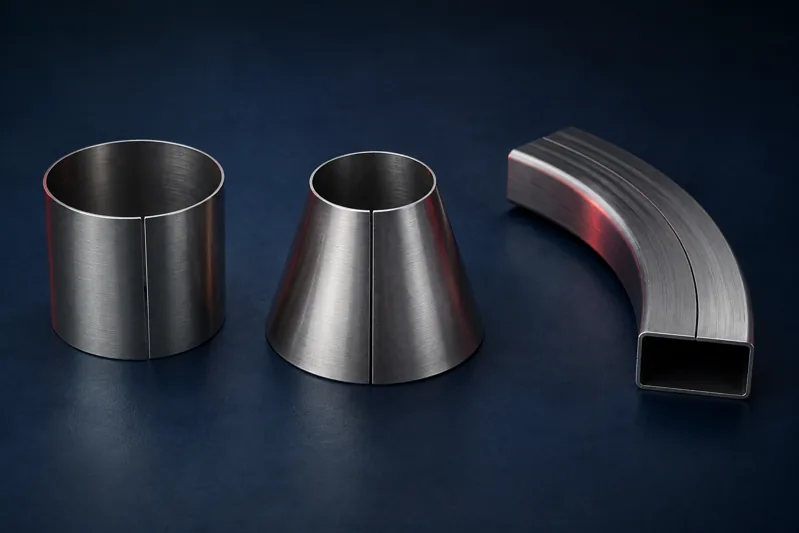
Plate roll capacity must cover both rolling and pre-bending at the required material, width and finished diameter. A machine's headline rolling thickness may exceed the thickness it can pre-bend under the same conditions. Confirm both operations before treating a model's maximum thickness as a match for your cylinder.
This guide helps buyers prepare a clear application request for plate rolling equipment. It does not replace the selected manufacturer's capacity chart or operating procedure.
What is the difference between rolling and pre-bending?
Rolling forms the main curvature of the plate. Pre-bending forms the end regions so the finished shell can meet the permitted end-flat requirement. The required sequence and remaining straight portion depend on the machine, material and job.
Manufacturers can publish different ratings for these operations. The Faccin 4HEL brochure, for example, separates rolling and pre-bending capacity and distinguishes material categories. It illustrates why buyers should request both figures; it does not specify the capacity of a Rise Tek machine.
Compare the whole capacity condition
| Input | What the supplier must confirm |
|---|---|
| Material grade and condition | The strength assumptions and suitability of the proposed configuration. |
| Plate thickness and width | Rolling and pre-bending capacity for the actual plate, including stated tolerances. |
| Finished diameter | Whether the requirement is inside or outside diameter and whether it is within the approved range. |
| End condition | Permitted straight length and how it will be achieved and inspected. |
| Shape and handling | Requirements for cylinders, partial arcs or cones, plus support and part removal. |
State the dimension definitions on the drawing. Plate width along the rolls and developed blank length around the cylinder are different dimensions. Likewise, the top-roll diameter is a machine dimension; it is not automatically the minimum finished shell diameter for every job.
A simple example of a capacity mismatch
Consider a hypothetical quote stating 10 mm rolling capacity and 8 mm pre-bending capacity for the same specified material, width and diameter. A 10 mm job that also requires pre-bent ends is not fully covered by the 10 mm rolling headline.
The supplier might propose another configuration or a different approved production route. Establish the extra equipment, handling, finishing and acceptance implications before comparing that route with a machine that can perform the complete requirement. These numbers illustrate the comparison only; they are not specifications for a product.
Why diameter and material need written confirmation
Ask for capacity at your required finished diameter, not simply the smallest diameter mentioned in a brochure. Confirm how the rating changes across the actual range of thicknesses, widths and material strengths you intend to process.
Do not apply a universal mild-steel-to-stainless conversion or a fixed multiple of top-roll diameter. Obtain the applicable capacity information from the manufacturer. A generic percentage cannot establish whether a particular job is approved.
Test the complete shell, including its ends
Provide a drawing showing diameter tolerance, roundness or profile requirements, end-flat limits and the required condition at the seam. Define the inspection method and whether the sample is assessed before or after welding or another subsequent operation.
Record the material, plate dimensions and machine configuration used in the trial. Observe loading, the approved forming sequence, any repositioning and removal. Include handling and correction time when comparing output rather than reporting only the time the rolls are turning.
A 3-roll versus 4-roll comparison is useful only alongside the job requirements. Review our configuration comparison, then ask the supplier to demonstrate the proposed machine on your work.
Turn the drawing into a quote checklist
Download the blank plate-roll capacity review sheet. Keep routine cylinders, occasional heavy work and any cone requirements separate so the supplier can identify the configuration and limitations for each.
For the broader learning path, visit the Plate Rolls & Angle Rolls education section. Include support equipment, site access, operator training and acceptance responsibilities in the final quote.
Use the first-article inspection guide to record diameter, roundness, end flats and seam mismatch during the agreed trial.
Check these out
Send your drawing for a model-specific application review.
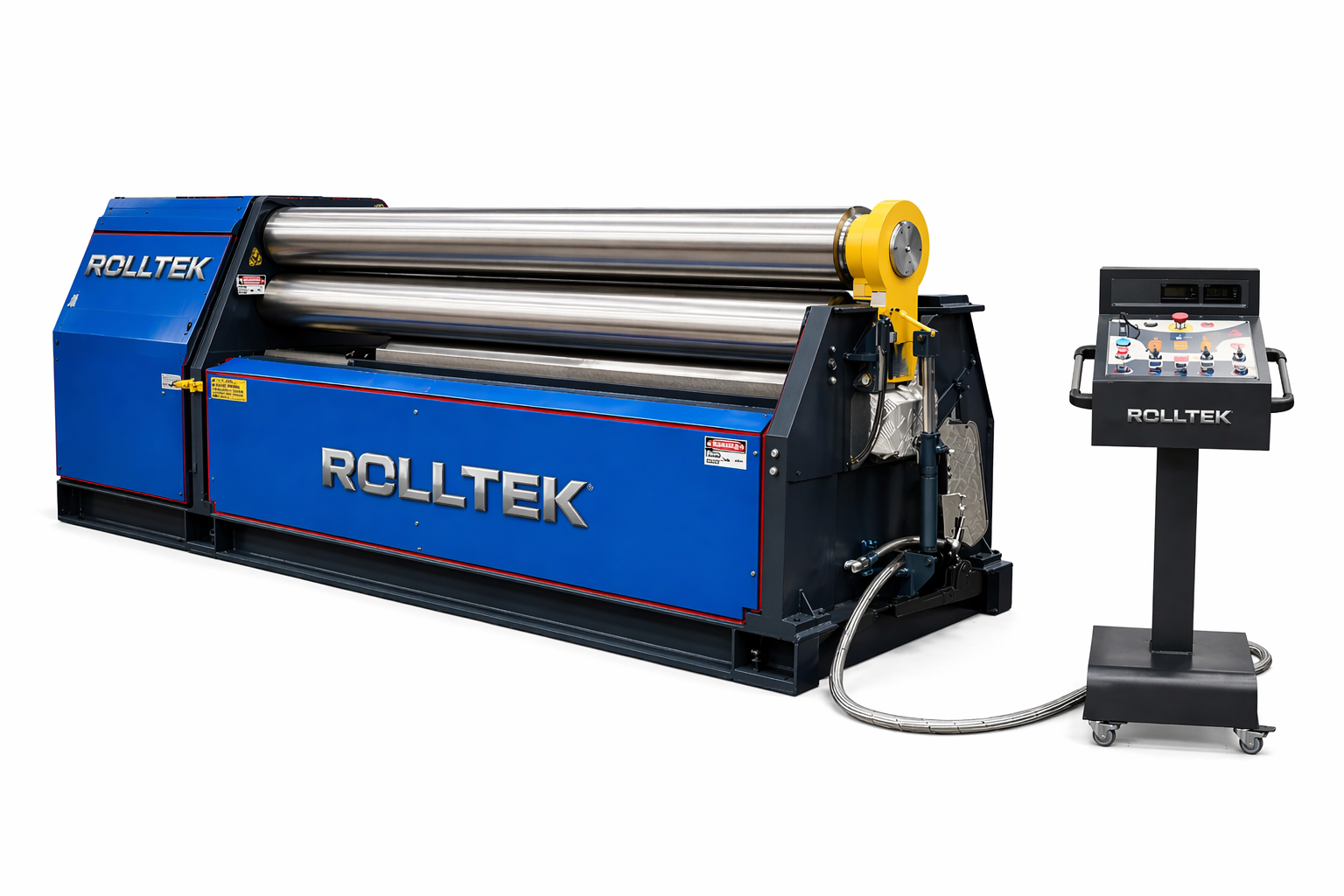
RollTek VERTEX 3-roll plate rolls
Review the selected model’s rolling and pre-bending capability against your drawing. Agree end-flat, diameter and seam inspection requirements for the trial.
Explore machines →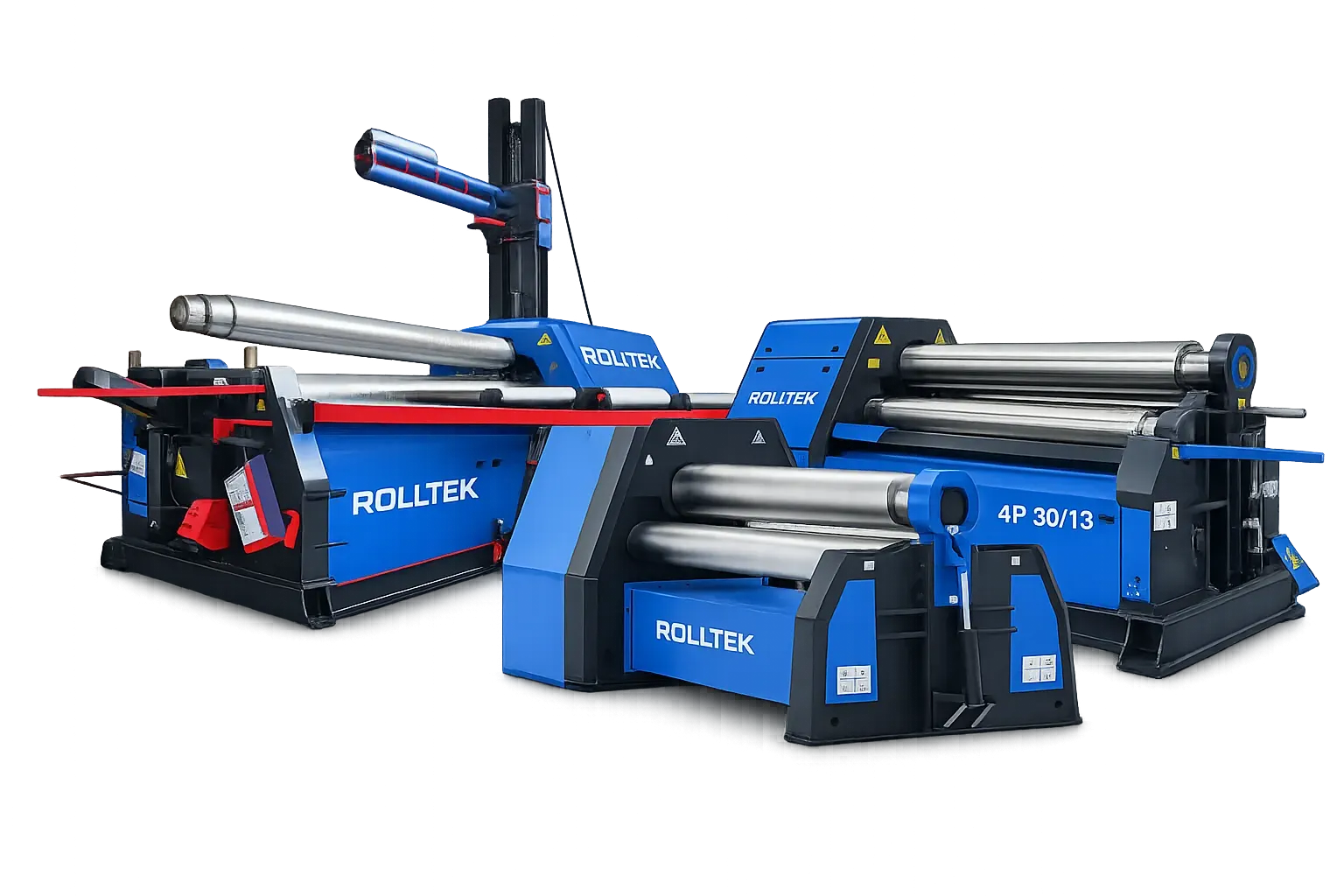
RollTek TITAN 4-roll plate rolls
Discuss the configuration, supports and inspection condition for representative shells. Four rolls alone do not guarantee roundness or seam acceptance.
Explore machines →Frequently asked questions
Does a 4-roll machine eliminate every straight end?
No universal zero-flat guarantee follows from roll count. Agree on the acceptable end condition and confirm it for the proposed machine and material.
Can I roll thicker plate if it is narrower?
Only within an approved capacity for that condition. Request manufacturer confirmation rather than extrapolating from a full-width rating.
Is CNC control a substitute for a capacity check?
No. Programming and repeatability features do not change the need to verify material, geometry, forming capacity and handling requirements.