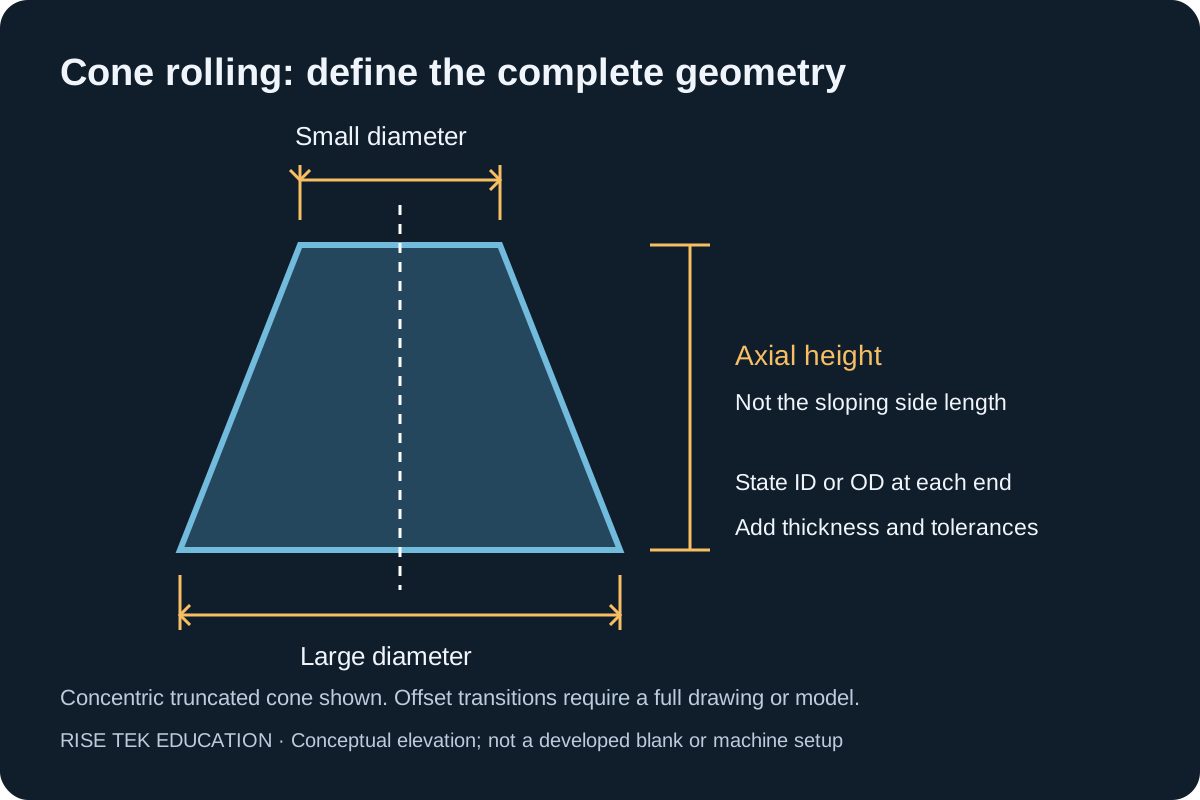
A cone-rolling enquiry needs the complete part geometry and a cone-specific machine review. A plate roll’s cylindrical thickness rating, maximum working length or “conical bending” feature does not confirm that it can produce your reducer, hopper section or tapered shell. For Canadian buyers, a clear drawing and application checklist make quotations easier to compare.
Start with both finished diameters, axial height, actual plate thickness and material grade. Add the seam arrangement, tolerances, required surface finish and expected quantity. This guide helps prepare an application review; the approved machine manual and training govern the operating process.
1. Describe the cone without ambiguous dimensions
State whether the part is a concentric truncated cone or an offset transition. For a concentric cone, identify the large and small diameters and the axial height between their planes. Distinguish axial height from slant length along the side. Mark whether each diameter is inside or outside, and identify any specified angle and its reference.
A diameter, height and thickness are not enough to describe every transition. Offset or eccentric parts, non-circular ends, straight collars, flanges and cut-outs need a full drawing or 3D model. Do not assume that equipment suitable for a concentric cone can produce a different shape by the same process.
| Item | What to specify | Why it matters |
|---|---|---|
| Geometry | Large and small diameters; ID/OD convention; axial height; any offset | Defines the finished shape and prevents radius/diameter or height/slant confusion |
| Material | Grade, condition, strength information and actual thickness | Cylindrical mild-steel ratings do not establish another material’s cone capacity |
| Blank | Developed drawing, dimensions, segments, cut-outs and trim allowance | The supplier must review the real plate presented to the rolls |
| Seam and edges | Seam quantity/location, edge preparation and allowed end flats | Affects end forming and subsequent fit-up |
| Inspection | Diameter, roundness, height, seam alignment and surface criteria | Defines the trial result to be accepted |
| Production | Batch size, repeat frequency, handling and finish requirements | Supports tooling, support and complete-cycle comparison |
2. Review the developed blank and seam plan
A finished cone drawing and a cutting pattern serve different purposes. Ask who prepares and approves the developed blank, including seam, trimming and any process allowances. A theoretical pattern does not by itself guarantee the finished dimensions after forming and welding.
For a simple concentric truncated cone, the ideal geometric development is an annular sector. Production allowances still need review for the material, thickness, edge preparation and fabrication method. An eccentric transition needs its own development; do not reuse a concentric-cone pattern. Mark the intended rolling orientation, seam edges and any segments on the supplied file.
Explain whether the part must be made in one piece or whether multiple formed segments are permitted. Let the supplier review the blank’s actual span and shape against the machine’s working envelope. Finished axial height should not be used as a substitute for that blank review.
3. Request cone-specific capacity confirmation
Ask the supplier to confirm the exact model and configuration for your grade, thickness, blank dimensions, small-end geometry and cone angle. Request any application-specific reduction in capacity in writing. There is no universal percentage by which every cylindrical rating can be reduced to obtain cone capacity.
Confirm the required cone attachment or guiding equipment, roll positioning capability and any limitations on the part. Review the small end, access around the rolls and the proposed removal arrangement together. A listed conical-bending feature establishes a feature to discuss, not a guaranteed minimum cone diameter or maximum cone thickness.
The RollTek VERTEX and TITAN pages list conical-bending equipment, with application confirmation required. Their published cylindrical and pre-bending tables should not be treated as cone-rating tables. Our plate-roll capacity guide explains why the rating conditions matter.
4. Agree end forming, supports and removal
Define permitted straight portions near the seam and the required edge alignment. Ask how the proposed process addresses those requirements, including any separate edge preparation, trimming or secondary work. A cone attachment does not promise zero end flats or a finished seam ready for welding without adjustment.
Review loading, part support during forming and removal after rolling. Give the supplier the part mass or the information needed to determine it, available lifting equipment, floor access and surface-protection requirements. Confirm which supports and handling accessories are included and compatible with the proposed motion. Their arrangement must come from the approved application review, not a generic diagram.
5. Inspect a representative sample
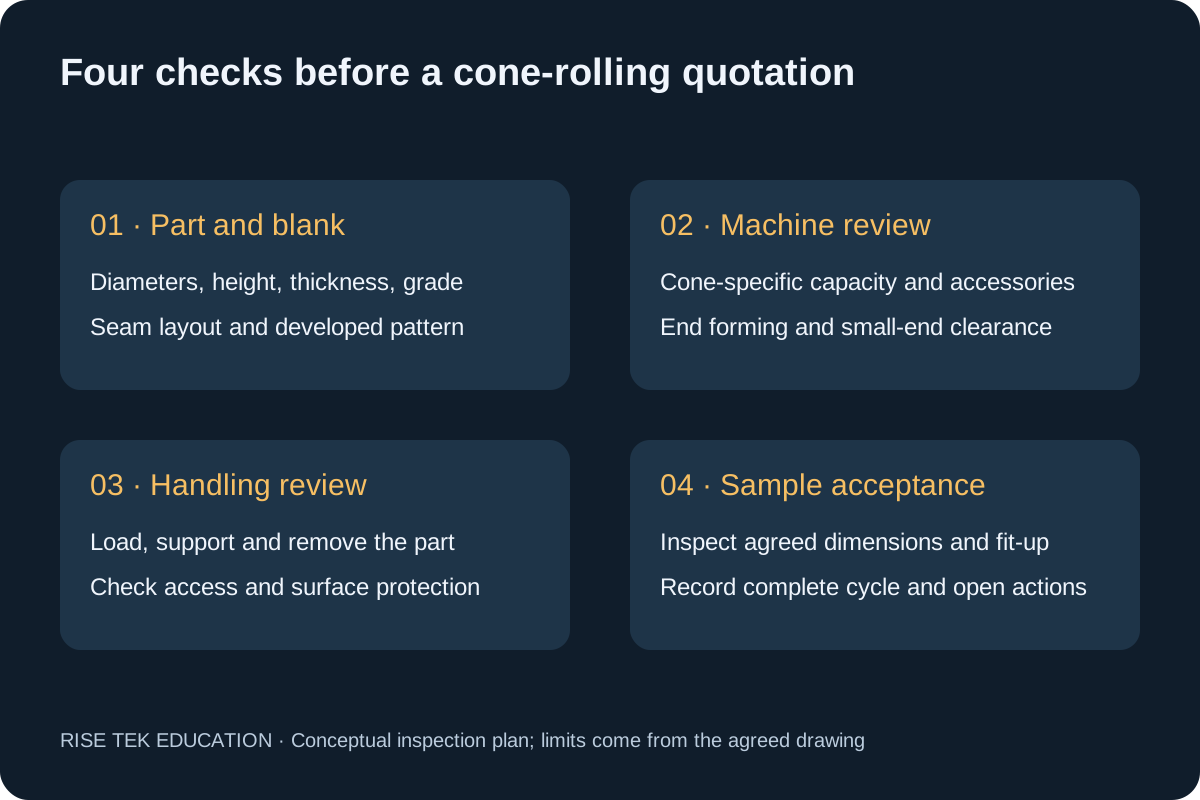
Use the actual material and representative geometry where practical. Agree the inspection stage and support condition before comparing results: an open rolled shell, a tacked shell and a welded assembly are different conditions. Record both end diameters, roundness at agreed locations, axial height, seam gap or edge mismatch and any specified surface requirements.
Keep tolerances on the drawing or inspection plan. Do not substitute a good-looking cone for measurements. Record first-part setup, corrections, unloading and inspection alongside the forming cycle. If repeatability matters, include consecutive parts or a repeat setup in the agreed trial scope.
Use our plate-roll sample-acceptance guide for the broader record and springback guide for consistent inspection conditions. A trial should not be used to infer automatic code compliance or guaranteed throughput on different work.
6. Compare the full quotation
For a Canadian installation, compare currency, quote validity, machine configuration, cone accessories, supports, tooling, commissioning, training and service scope. Identify freight, unloading, rigging and site preparation separately. Include any blank-development assistance and secondary operations needed to meet the drawing.
Download the blank cone-rolling application checklist. Send it with your drawing and ask Rise Tek to identify confirmed capabilities and open items. For the broader equipment choice, see 3-roll versus 4-roll plate rolls for Canadian buyers.
Complete the equipment scope with our plate-roll supports and handling quotation guide, covering accessory confirmation, site access and acceptance checks.
Check these out
Send your drawing for a model-specific application review.
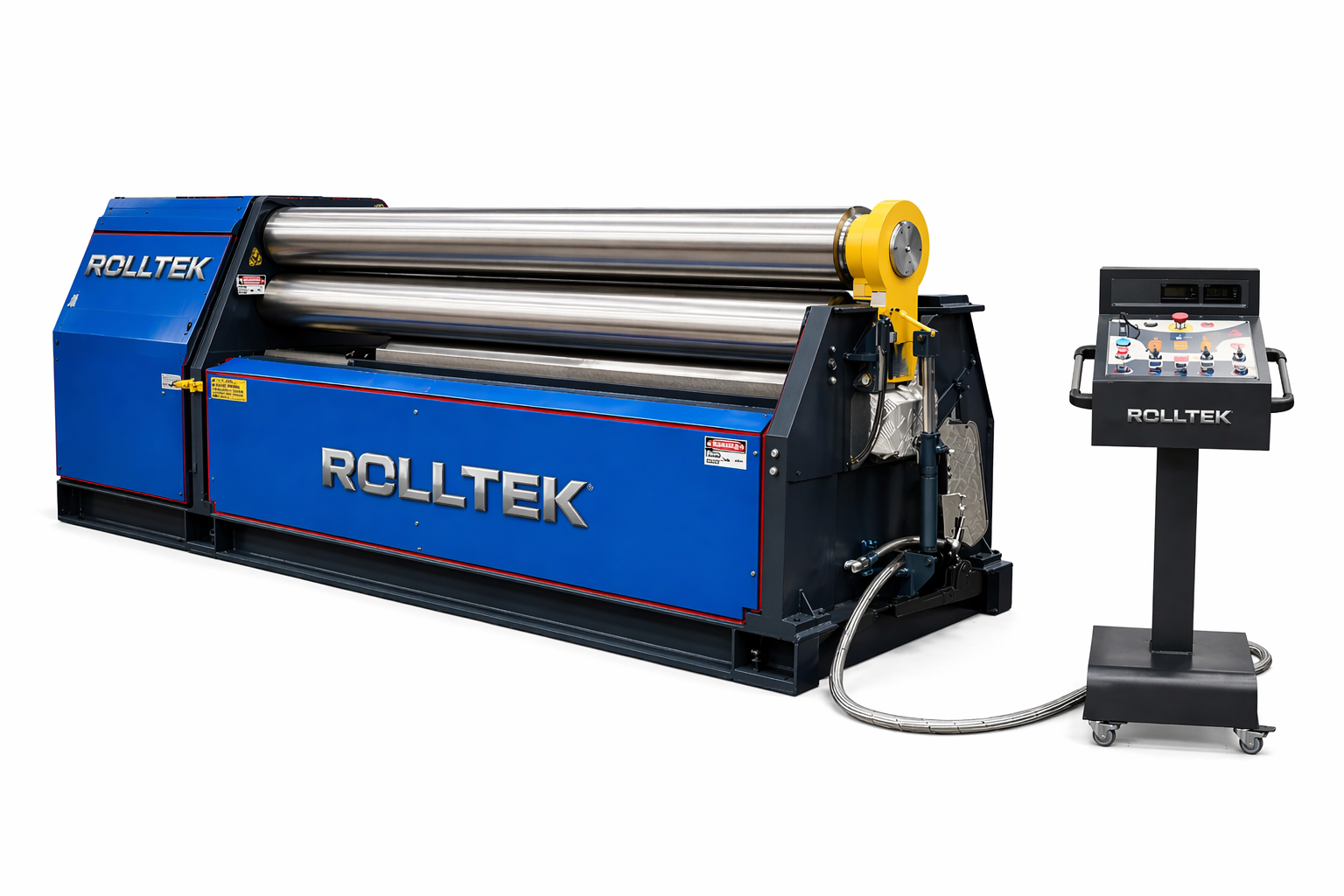
RollTek VERTEX 3-roll plate rolls
Discuss the selected tier, cone equipment, pre-bending requirements and handling sequence. Product image does not establish capacity for your cone.
Explore machines →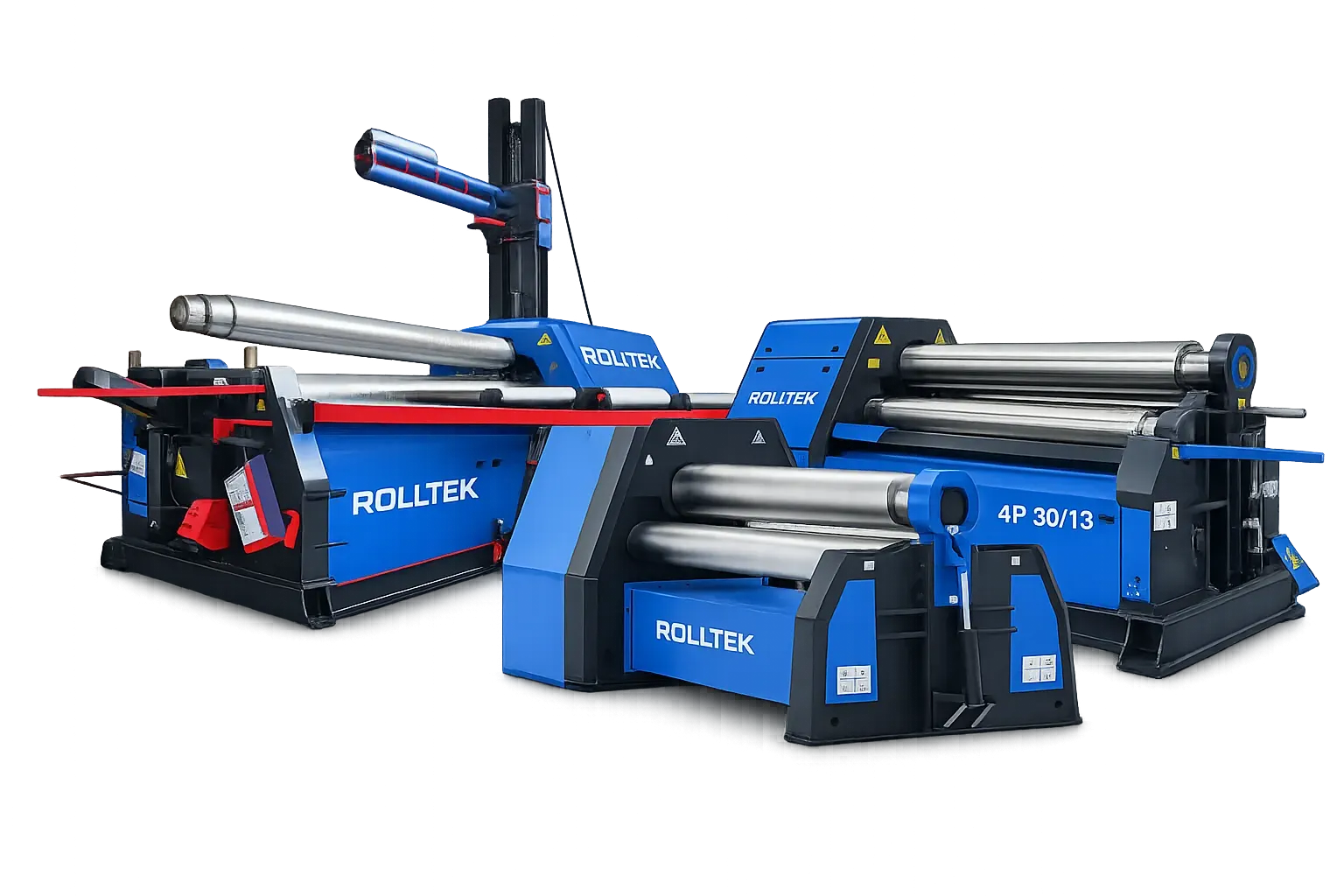
RollTek TITAN 4-roll plate rolls
Review the exact cone configuration, supports, small-end geometry and sample requirements. Confirm capability separately from cylindrical ratings.
Explore machines →Frequently asked questions
Can I use a plate roll’s cylindrical capacity for cone rolling?
Do not assume it applies. Request confirmation for the exact cone geometry, material, thickness, blank and machine configuration, including any application-specific capacity reduction.
What dimensions are needed for a cone-rolling quote?
Provide both finished diameters with an ID or OD convention, axial height, thickness, material and drawing. Include offsets, seam details, developed blank, tolerances and production quantity where applicable.
Is axial height the same as cone slant length?
No. Axial height is measured between the end planes along the axis. Slant length follows the side of a concentric cone. Label the required dimensions clearly.
Does a cone attachment guarantee a finished weld-ready seam?
No. Agree end-flat allowance, edge alignment, seam preparation and any secondary work. Inspect the sample in the agreed support and fabrication condition.
Can one cone checklist also define an eccentric reducer?
The checklist can organize the enquiry, but an offset or eccentric transition needs its own complete drawing, blank development and capability review. Do not apply a concentric-cone pattern automatically.