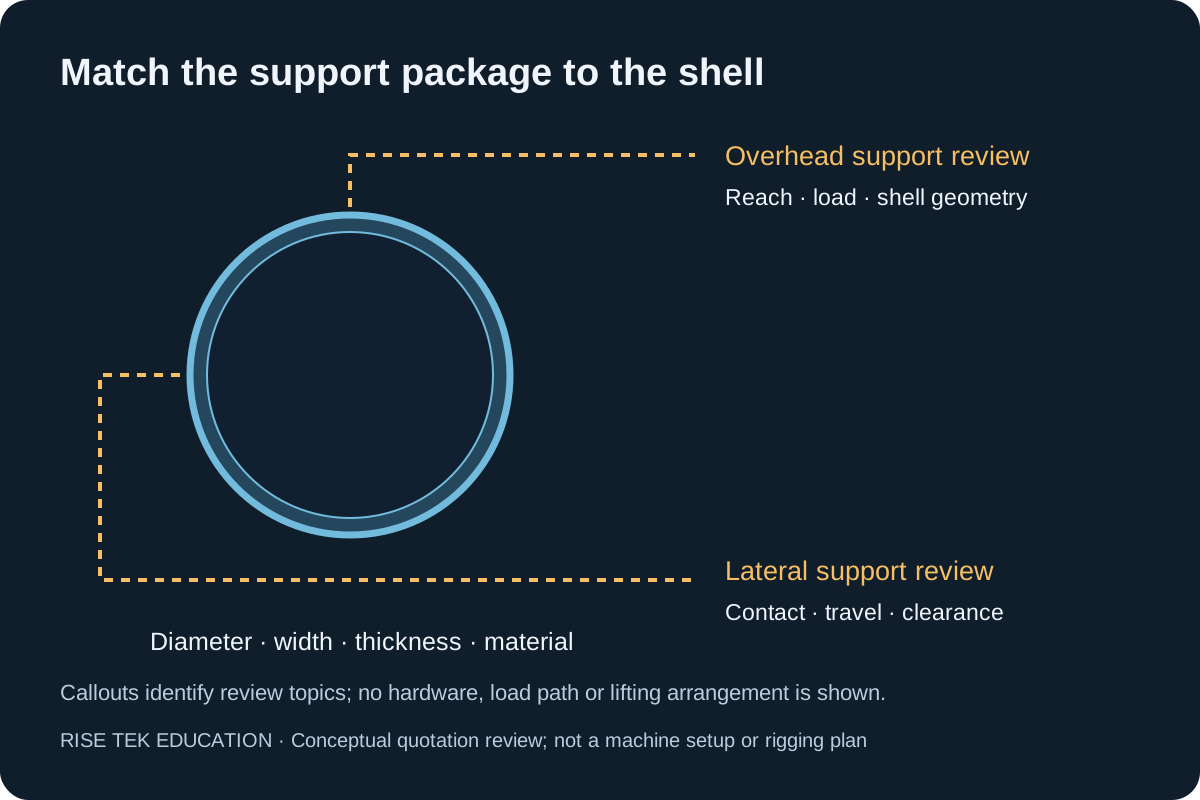
A plate-roll quotation should define how the plate is loaded, supported during forming and removed as a shell. A machine’s rolling capacity does not establish the capacity of its support accessories or the suitability of your shop’s handling equipment. For Canadian fabricators, comparing the complete package helps expose costs and application limits before the purchase.
Start with representative part drawings and the proposed shop layout. Ask the supplier to identify the exact support equipment, its applicable load and reach limits, the control functions and the responsibilities left to the buyer. This guide organizes a quotation review; the selected machine’s manual, training and approved site handling plan govern operation.
1. Give the supplier a representative part envelope
Describe the smallest and largest shells you expect to make, including finished diameter with an inside or outside convention, shell width, plate thickness, material grade and surface condition. Include part mass or the information needed to establish it. A broad thickness range alone is not a support specification.
Thin, large-diameter shells and heavier compact shells can pose different support questions. Ask the supplier to assess deformation under the part’s own weight, contact locations, available reach and interference throughout the proposed process. Do not use shell mass as the sole basis for selecting a support.
Identify open cylinders, closed or tacked shells, curved panels and cones separately. List cut-outs, collars, coatings or protected surfaces that affect contact or access. For tapered work, use the cone-rolling application checklist alongside this guide.
2. Separate forming supports from loading and lifting equipment
Overhead and lateral supports are accessory categories to discuss for shell support during forming. Infeed equipment addresses a different part of the job: presenting the blank to the machine. Finished-part removal is another review, including clearance and transfer to the next station. One accessory name does not define all three functions.
| Equipment or scope | Ask the supplier to confirm | Do not assume |
|---|---|---|
| Overhead support | Applicable shell sizes, rated load conditions, reach and permitted contact | A stated maximum load applies at every position |
| Lateral supports | Quantity, working range, articulation and surface contact arrangement | Every shell or cone can follow the same support motion |
| Infeed table or conveyor | Blank size and mass limits, alignment functions and interface | A table is included with the base machine |
| Part removal and transfer | Clearance envelope, compatible equipment and buyer/supplier responsibilities | A drop end alone provides a complete unloading system |
| Controls and integration | Manual or powered movements, stored functions and interaction with the machine | CNC on the plate roll makes every accessory automatic |
Request model-specific documentation. A forming support must not be treated as lifting equipment unless the manufacturer explicitly rates and approves it for that duty. Likewise, do not assume that an available shop crane can substitute for a forming support; the proposed arrangement needs application and site review.
3. Ask for ratings, interfaces and surface protection in writing
For each support, request its permitted load conditions and working envelope, including any position-dependent limits. Have the supplier identify the attachment and interface requirements for the selected machine. Confirm whether the option is factory installed, field installed or unavailable on that model.
Ask what contacts the plate and how it affects the required finish. Stainless, prefinished or appearance-sensitive work needs an agreed surface acceptance criterion and compatible contact materials. Do not promise mark-free production from an accessory description. Inspect representative surfaces during the trial.
Confirm the movements and operator actions included in the quoted control package. Record whether the supports move independently, integrate with a program or need manual adjustment. Any collision prevention or interlock functions should be identified in the actual configuration documentation, rather than inferred from an NC or CNC label.
4. Review the floor layout and responsibility boundaries
Supply a layout showing delivery access, the machine location, adjacent equipment and available handling resources. Request the manufacturer’s installation and working-envelope drawings, including support travel, service access and the space needed for part removal. Do not plan around the machine’s base footprint alone.
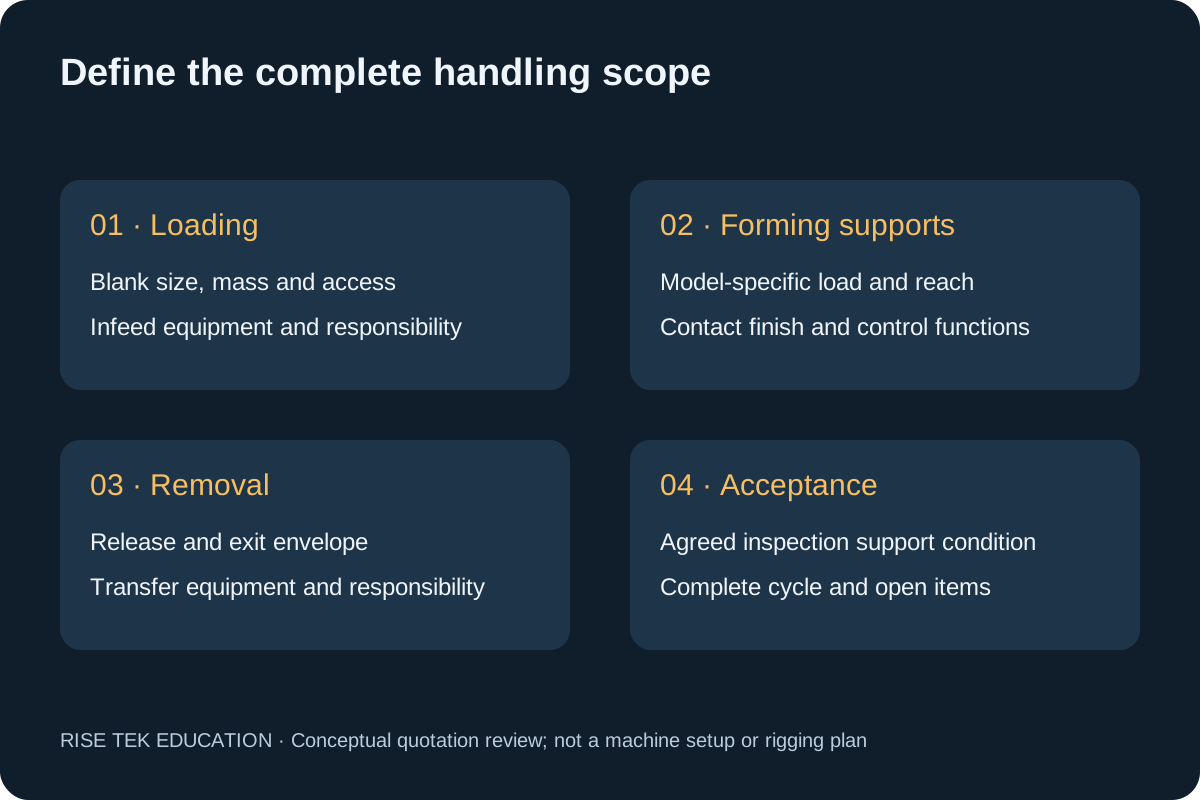
Separate unloading the delivered machine from loading production blanks and removing finished shells. These are different scopes, often with different providers. Ask who supplies each item, who installs it and who verifies the interfaces before commissioning.
For a Canadian site, provide electrical supply details and request the required utility, foundation and installation information for the exact configuration. Have the relevant site professionals review those requirements. A general brochure statement does not confirm the suitability of the proposed installation.
5. Accept the package using representative work
Agree a trial that covers the part family and the support requirements that matter to your shop. Record the material, blank, support configuration and operator actions used. Include loading, alignment, forming, unloading, inspection and any secondary work when measuring the complete cycle.
Agree when and how dimensions will be measured. An open shell, a supported shell and a tacked or welded assembly can give different results. Use a defined support condition for roundness, diameter and seam checks so that the trial and later production inspections are comparable. Our springback guide explains why inspection conditions matter.
Check surface condition and access as well as dimensions. Record corrections, handling delays and unresolved items. Supports do not guarantee a particular roundness tolerance, eliminate springback or establish a universal throughput gain. Use the plate-roll sample-acceptance guide to document the agreed result.
6. Compare a complete installed quotation
Ask for separate lines for the machine, overhead and lateral supports, infeed equipment, transfer equipment, controls, installation, commissioning and training. Mark every line as included, optional, buyer-supplied or excluded, with the responsible party named.
Compare currency, quote validity, freight, taxes, site preparation, service coverage and warranty scope on the same basis. Request a list of application confirmations still outstanding. A lower equipment subtotal may exclude work another supplier has already included.
Download the blank supports and handling quotation checklist. Send it with your drawings and layout to request a RollTek application review. For equipment selection, read the 3-roll versus 4-roll comparison and rolling and pre-bending capacity guide.
Define appearance requirements with our stainless plate-rolling finish and marking acceptance guide, covering reference samples, inspection conditions and repair approval.
Check these out
Send your drawing for a model-specific application review.
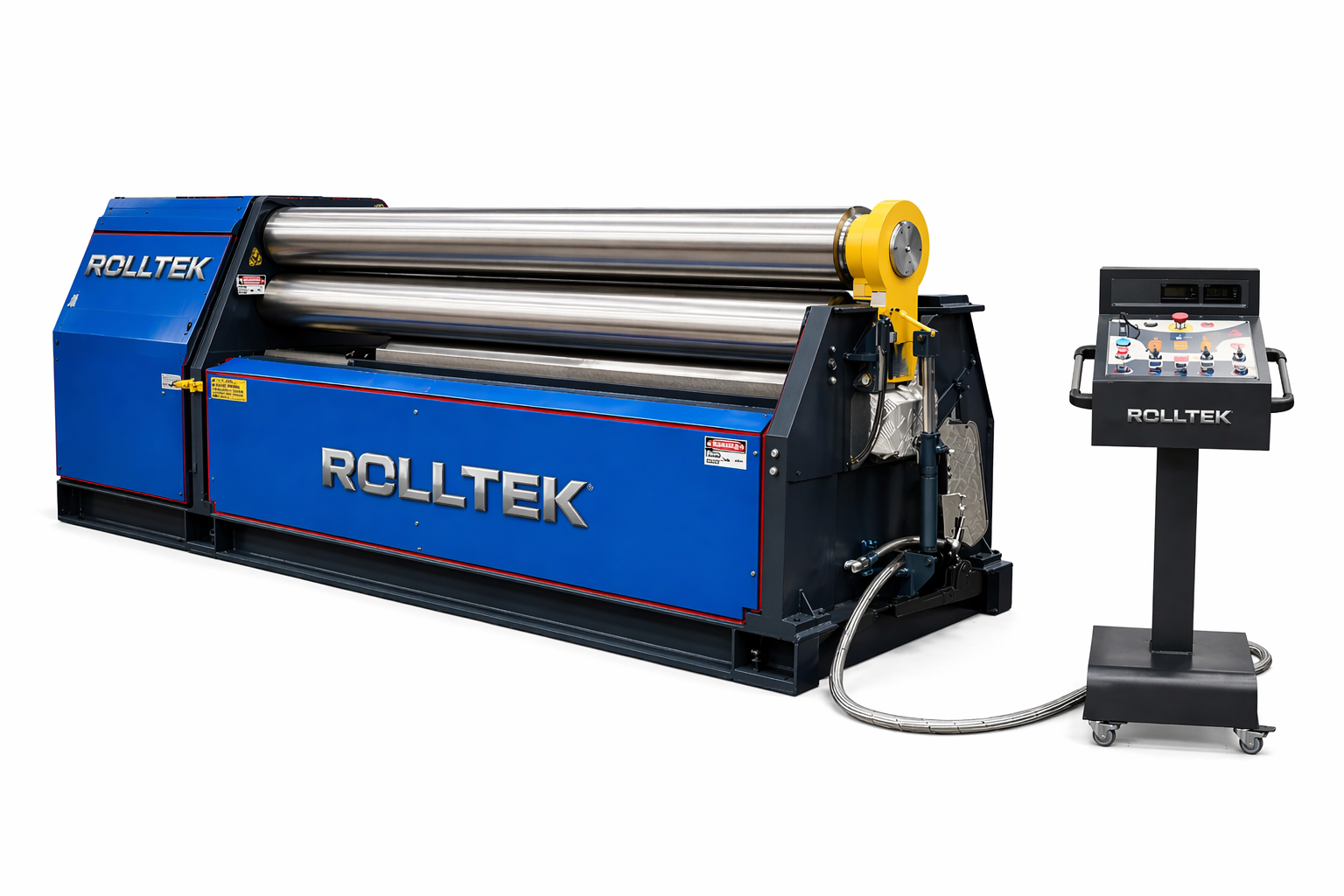
RollTek VERTEX 3-roll plate rolls
Review the selected VERTEX model, handling sequence and available support options for your shells. Confirm compatibility and included equipment in writing.
Explore machines →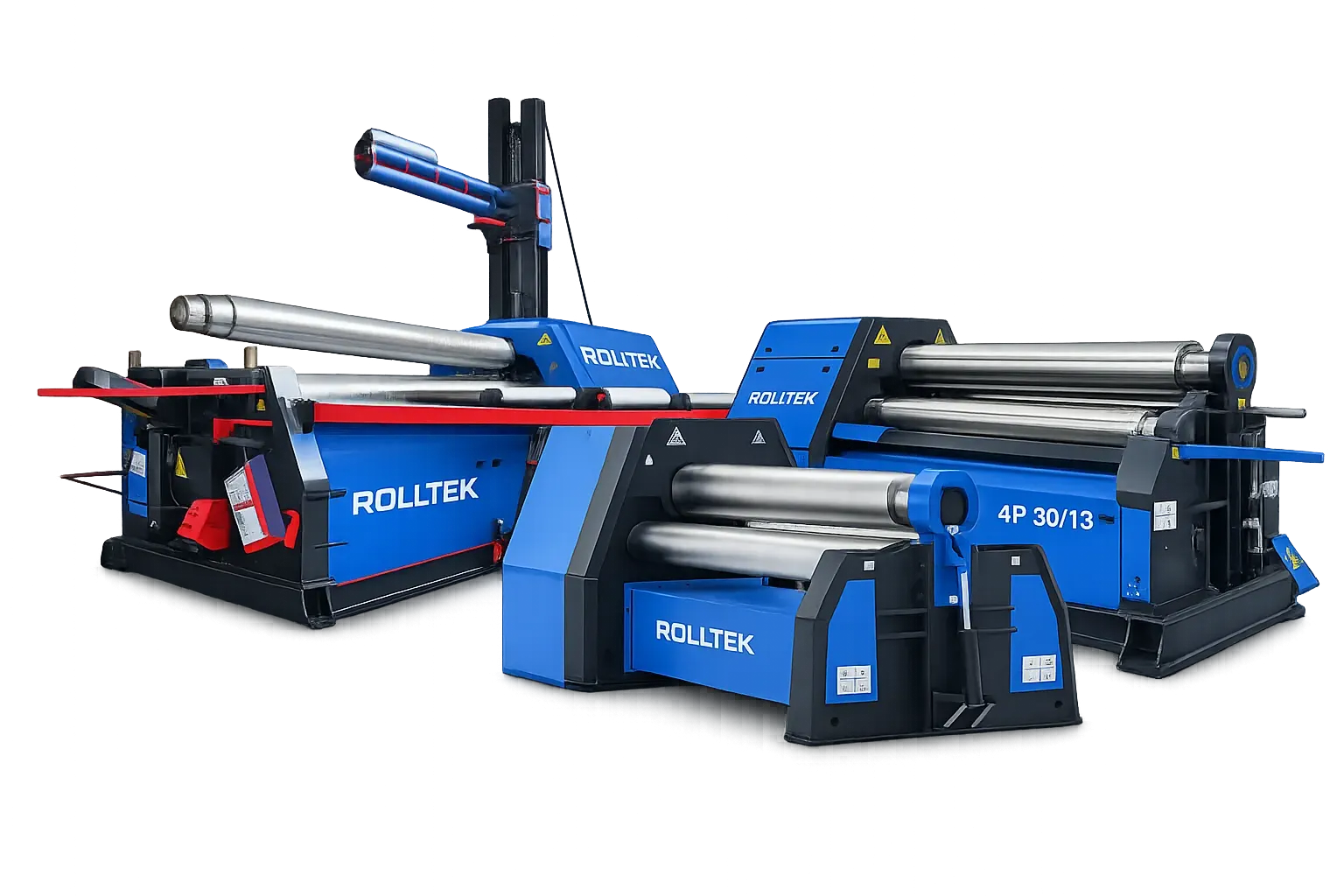
RollTek TITAN 4-roll plate rolls
Discuss the exact TITAN configuration, support controls and loading/removal scope. Product imagery does not establish accessory availability or load capacity.
Explore machines →Frequently asked questions
Are overhead and side supports included with every plate roll?
Do not assume they are. Ask for an itemized quotation identifying each accessory, its compatibility with the selected model and whether it is included, optional or buyer-supplied.
Can a forming support be used as a lifting device?
Only if the manufacturer explicitly rates and approves it for that duty. Obtain the applicable documentation and site handling review; a forming-support description alone is insufficient.
What information is needed to quote plate-roll supports?
Provide shell geometry, material, thickness, width, part mass or the information needed to determine it, surface requirements, production mix and a shop layout. Include loading and removal requirements.
Do supports guarantee roundness or eliminate springback?
No. Agree dimensional tolerances and the inspection support condition, then verify representative parts. Supports alone do not establish finished-part accuracy or remove material springback.
How should handling time be compared between quotations?
Measure the same representative job from loading through forming, removal and inspection. Include setup, adjustments and secondary work, and record the equipment and staffing used.